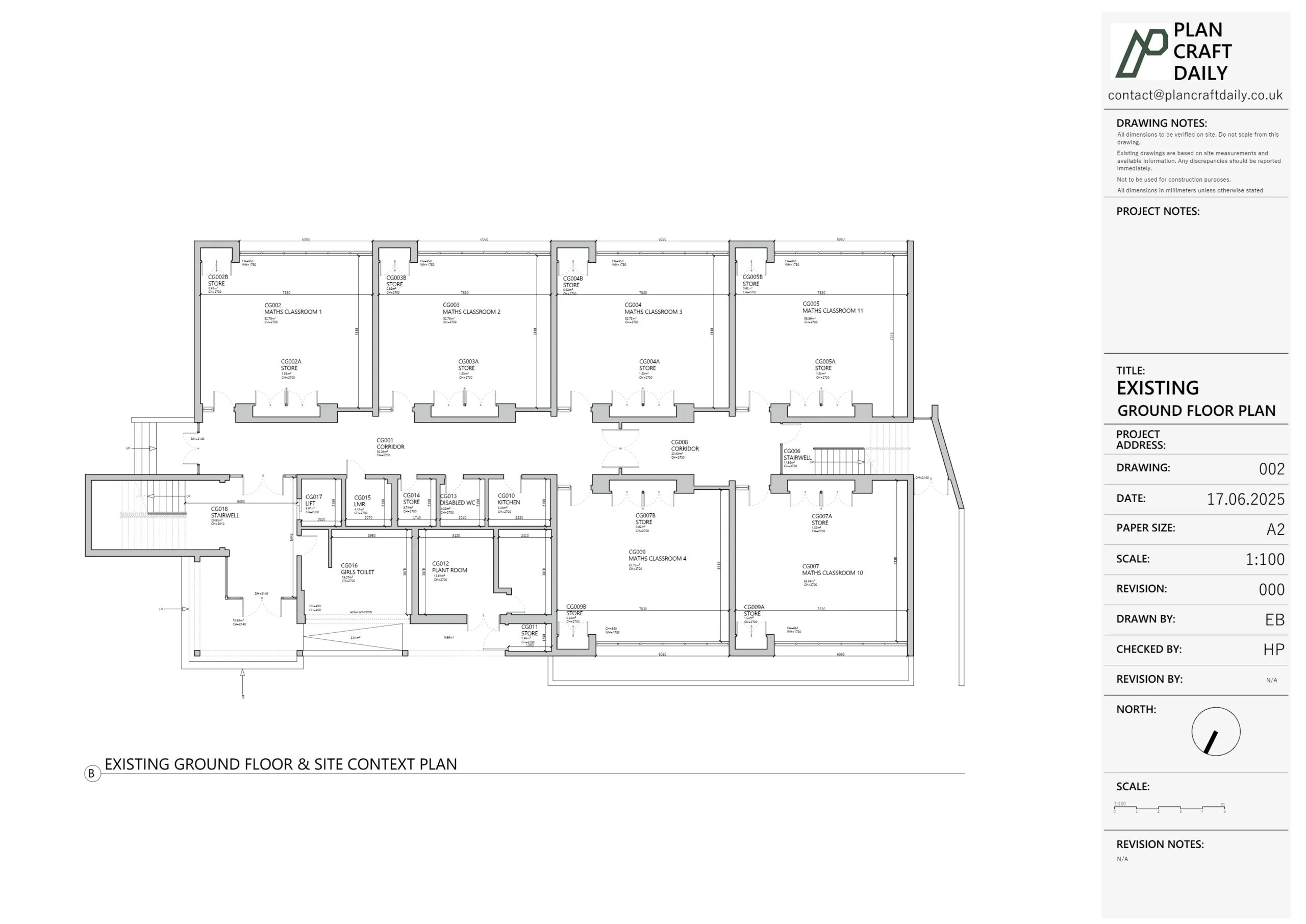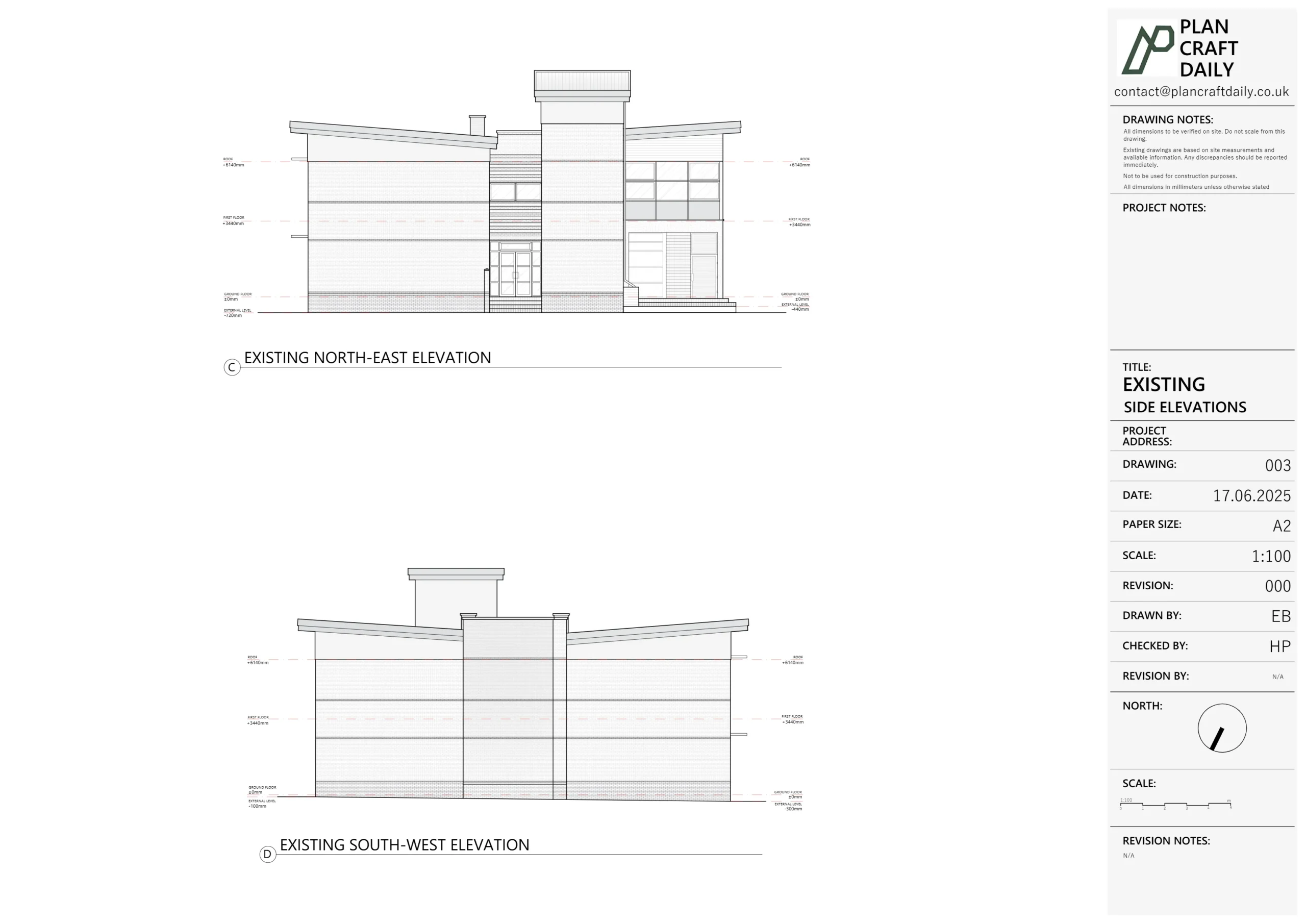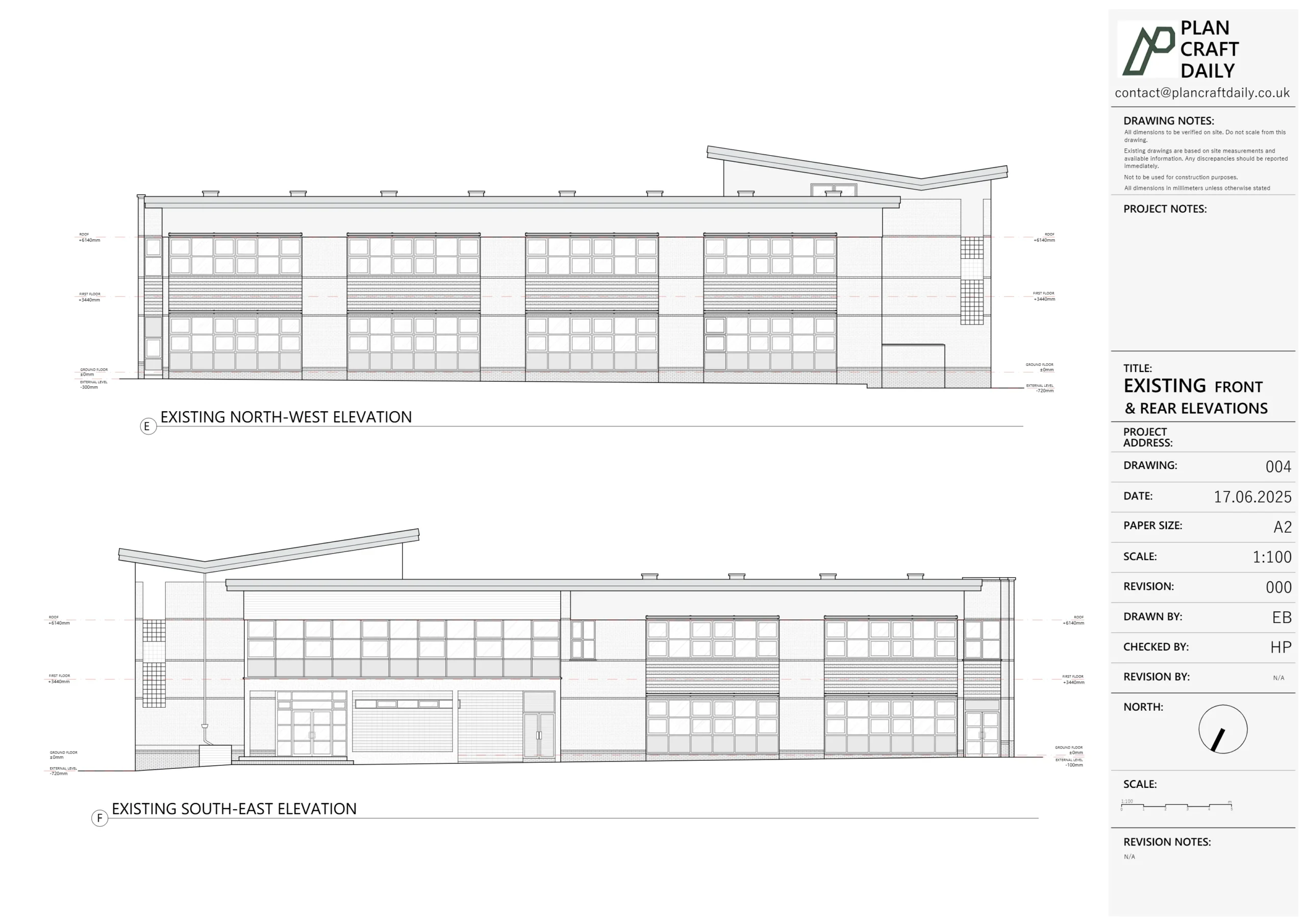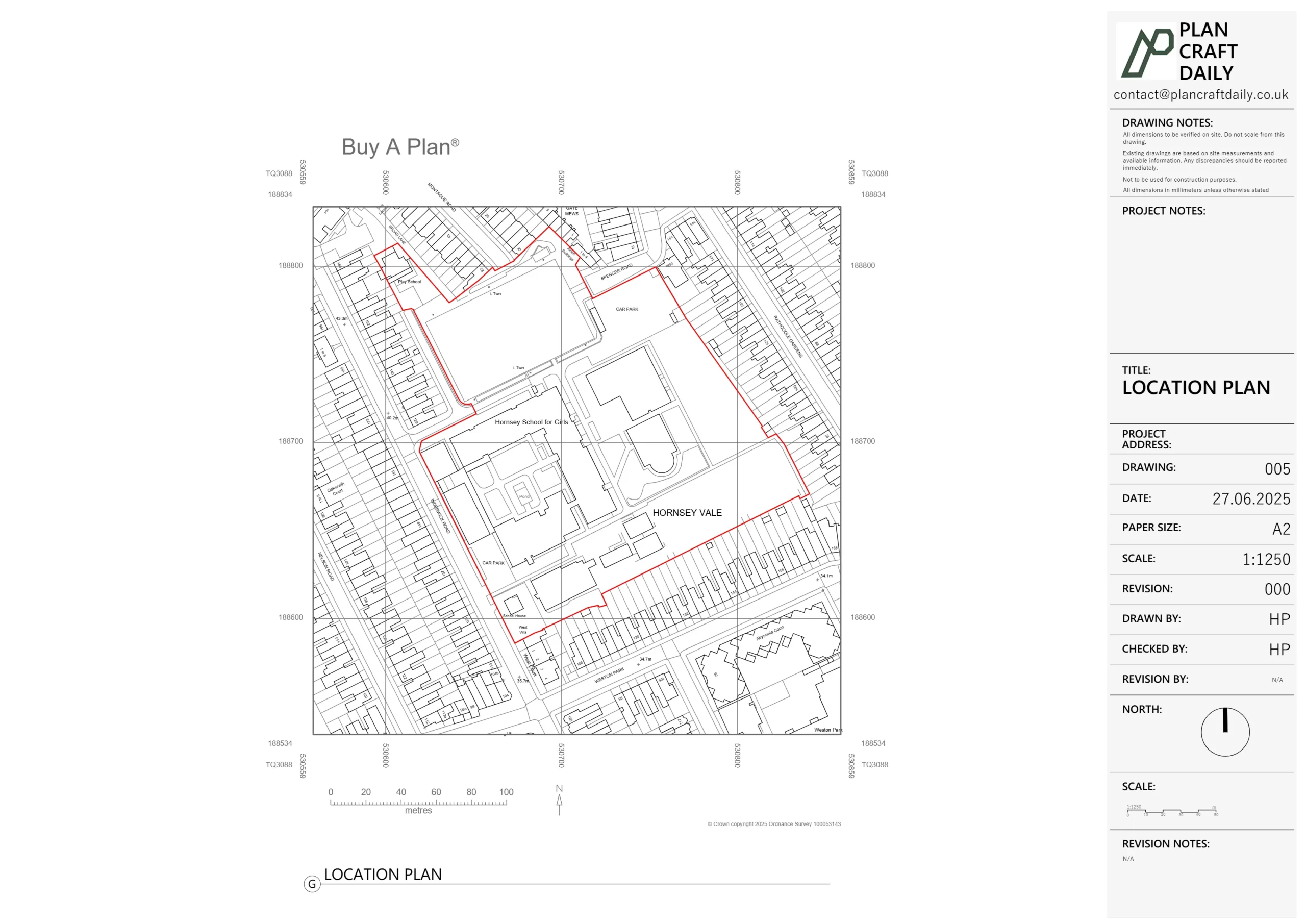
An architectural assistant, Kinjal, contacted us on behalf of a London practice for a measured survey and existing drawings of a property in Wembley.
The key complication:
- The loft conversion had already commenced, and
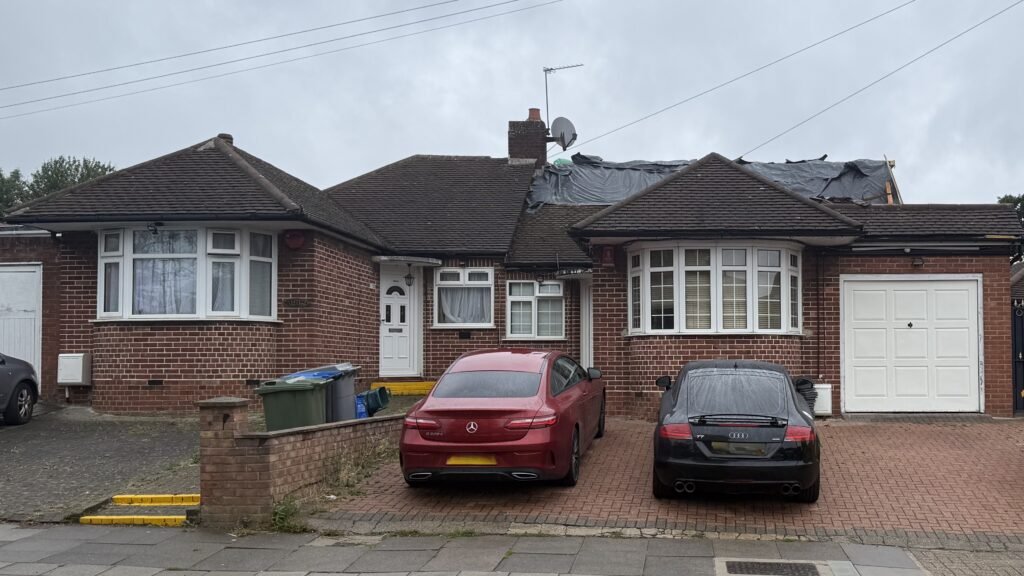
- The works weren’t visible on Google Maps or Street View.
So this wasn’t a simple “trace off the existing drawings” job. They needed accurate, on-site data of everything currently built, including the partially completed loft, so their design team could:
- Regularise and refine their proposals on top of reliable as-built information, and
- Move smoothly into the next stages of design and approvals.
Their brief was straightforward but detailed:
- Measured survey of everything currently existing
- Plans, elevations and sections suitable as a base for planning/regs
- Enough information from the loft area to understand structure and envelope, even though some internal elements were still in progress.
Because other projects were already in the diary, we initially suggested availability after 6 August. However, Kinjal explained that the client was keen to move faster, so we reshuffled the schedule and agreed to survey the following day, immediately after another nearby project.
How we carried out the survey – existing house plus live loft construction
Once the quotation was accepted and the initial invoice paid, we confirmed:
- Surveyor: Mustafa Bashkal
- Arrival time: 1:00–2:00 pm
On the day, Mustafa carried out a full measured building survey focusing on:
- Ground floor and first floor layouts
- The loft structure and envelope as far as construction allowed
- External walls and street-facing elevations
- Key openings (windows/doors) and roof geometries
- Any accessible changes that differed from what Google imagery suggested
In line with our standard method for this type of project, the survey combined:
- Laser distance measurement (disto),
- Internal 3D scanning to capture geometry efficiently for later cross-checking, and
- A comprehensive photo record, particularly useful where works were incomplete or concealed.
Because the loft was still under construction, there were areas where finishes, stairs, door positions, or some windows were not yet fully installed. We captured what we could measure reliably on the day and noted where information was necessarily provisional.
Turning the survey into drawings – a clean base for the architect’s design
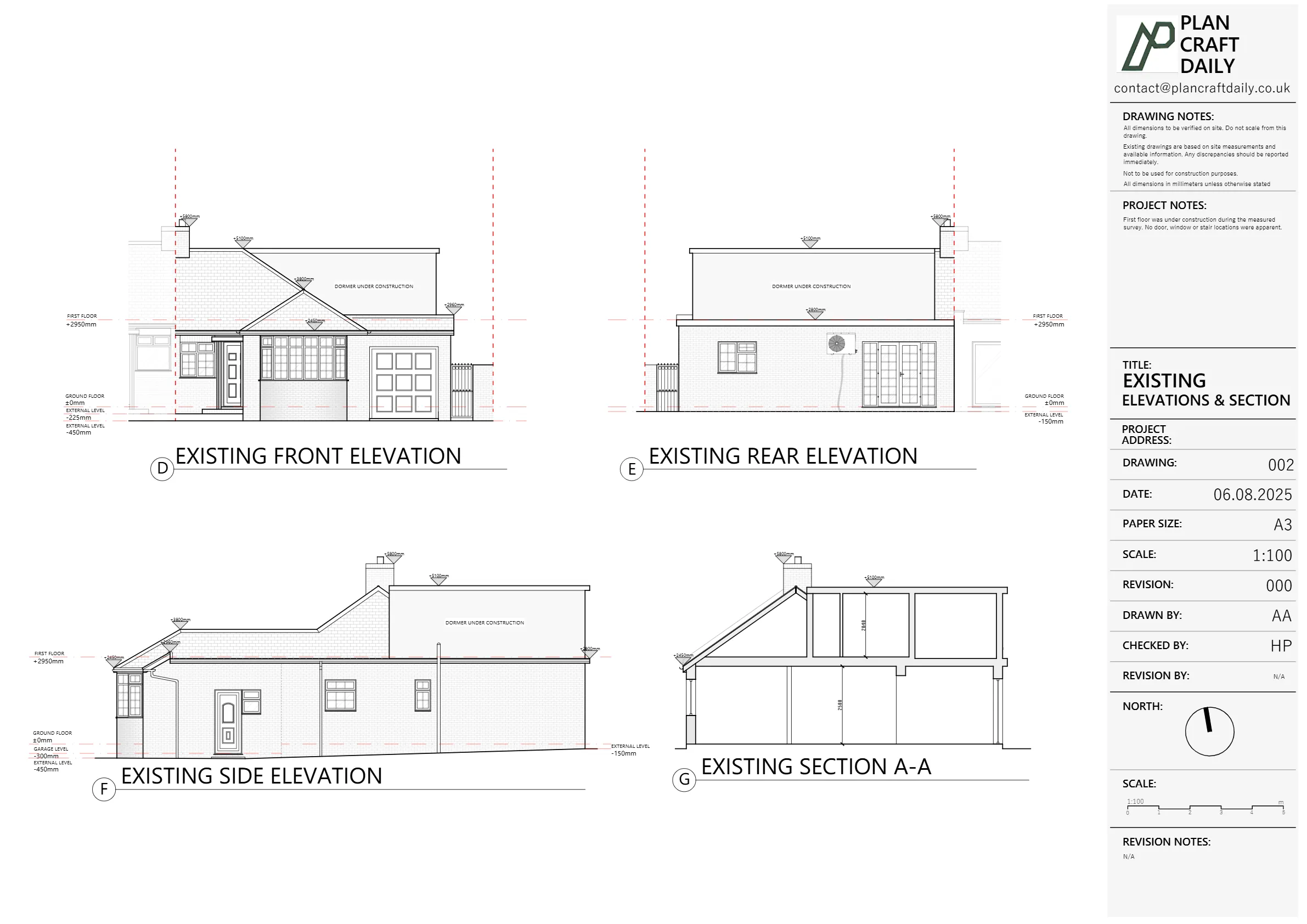
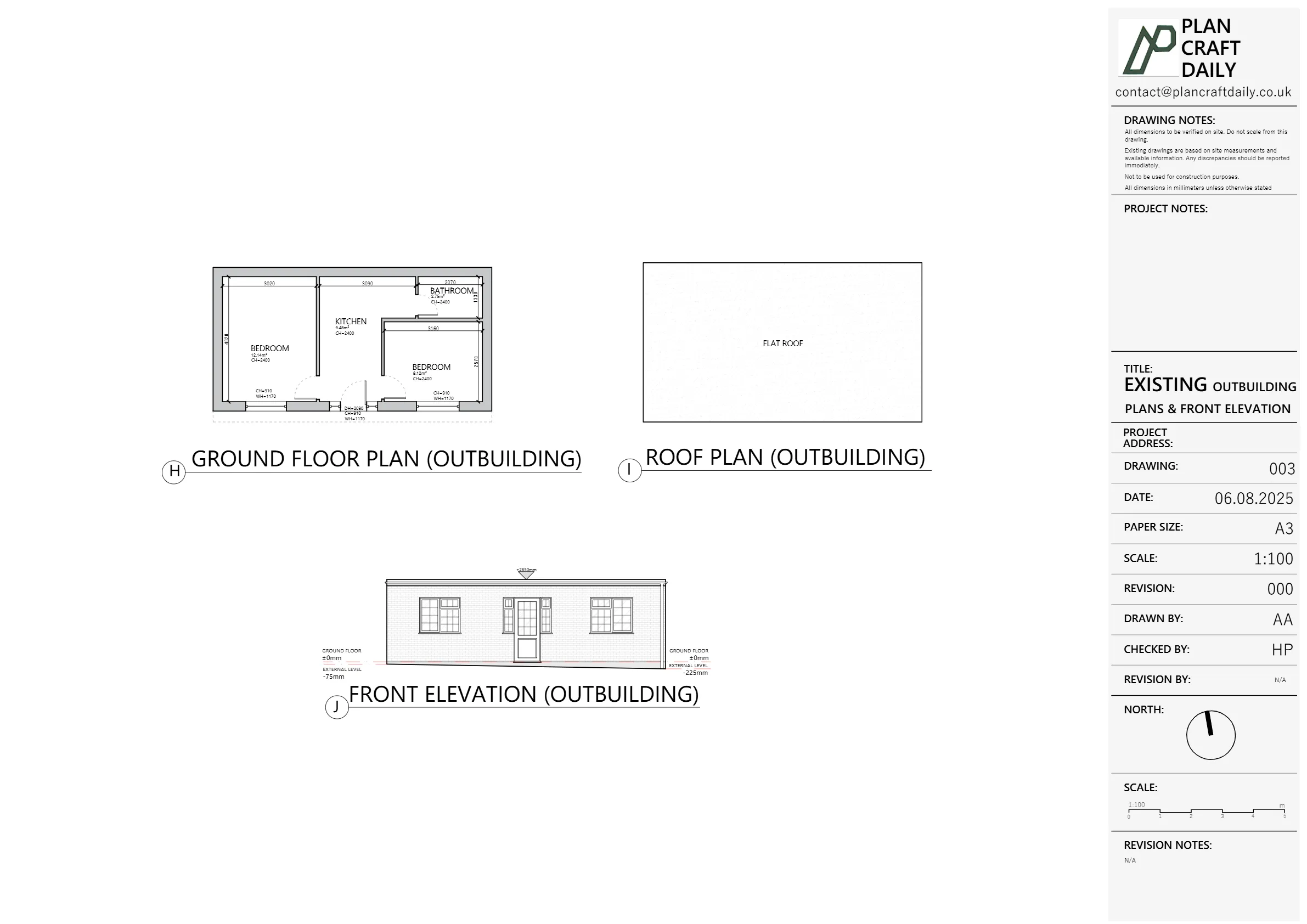
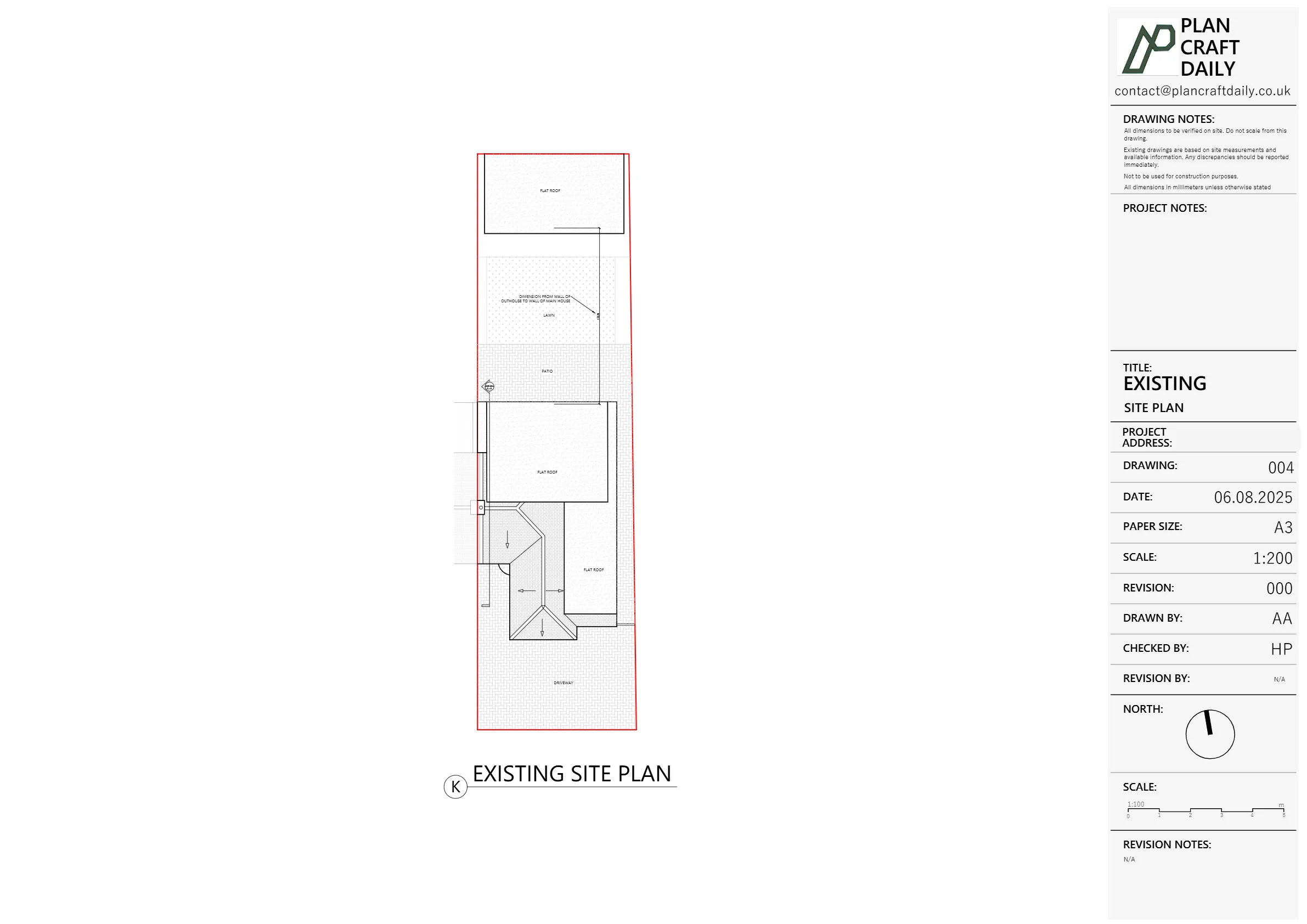
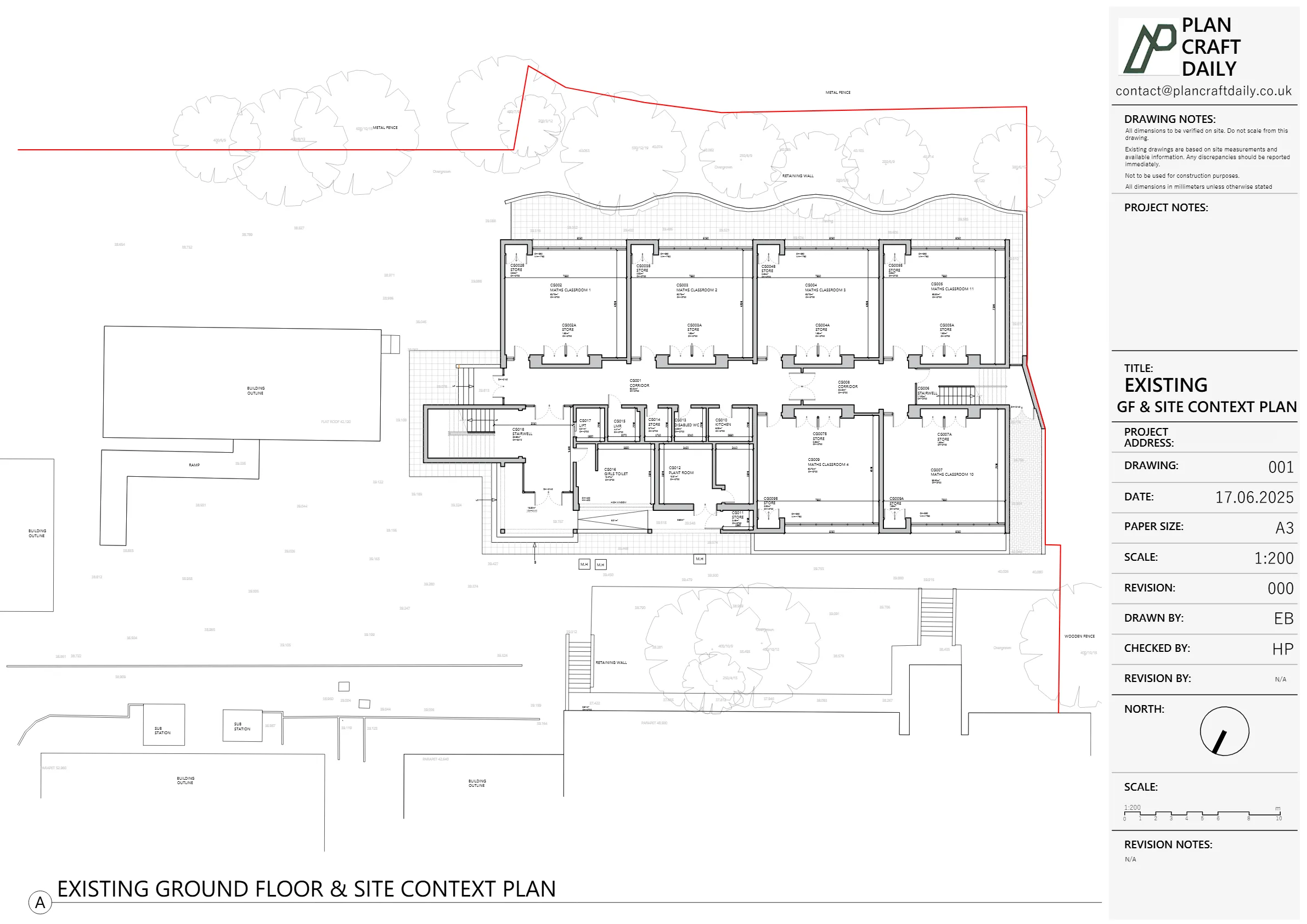
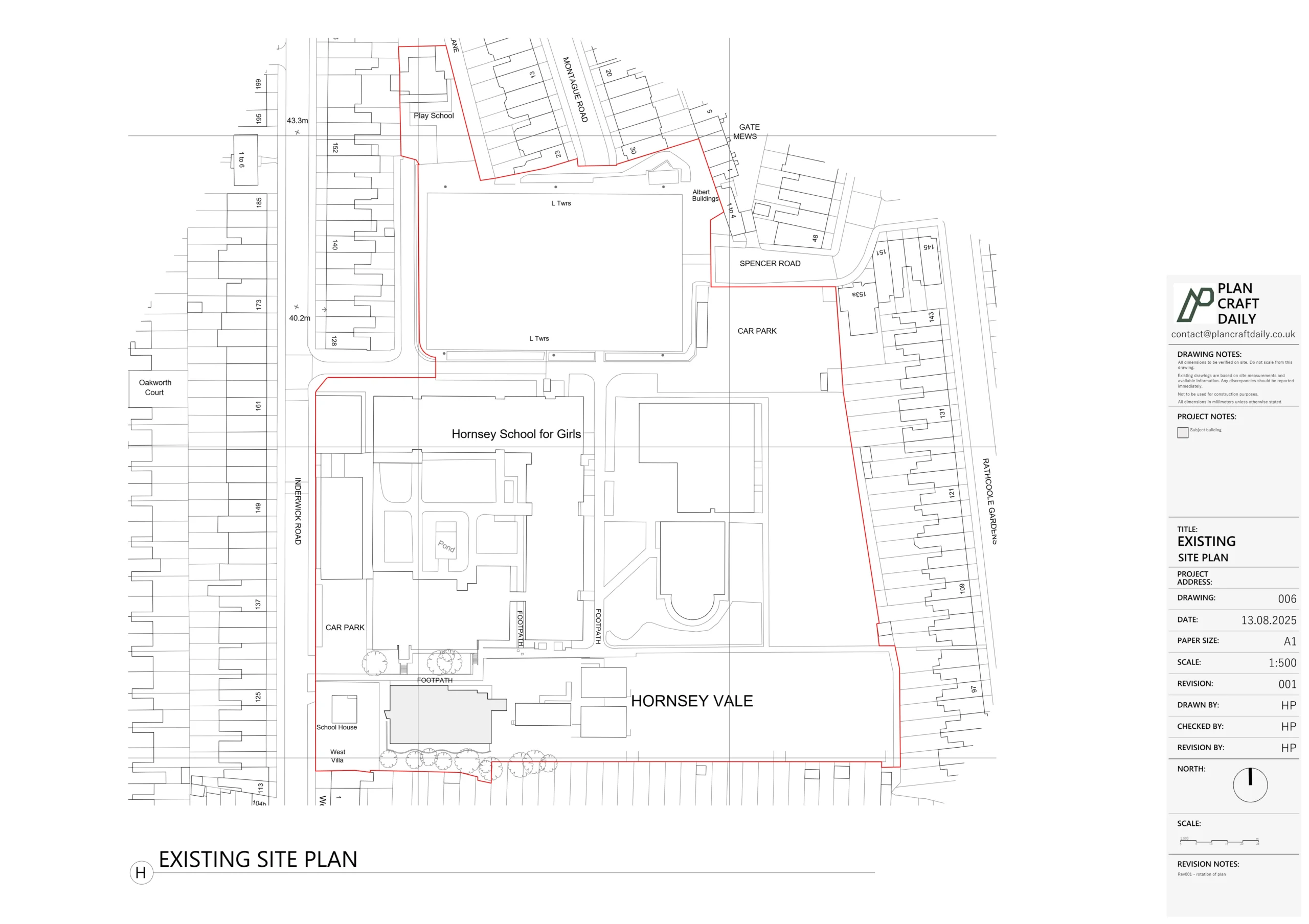
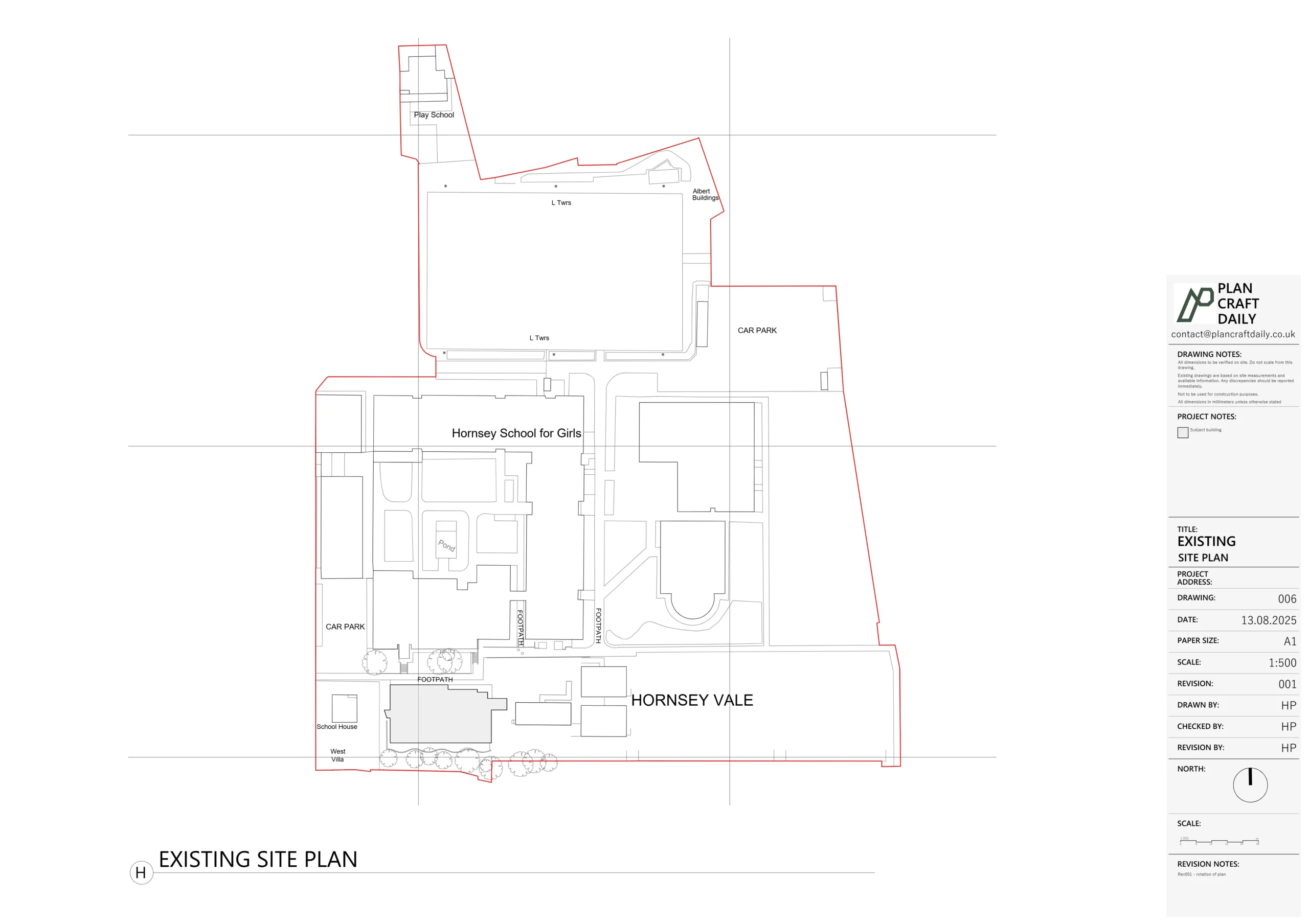
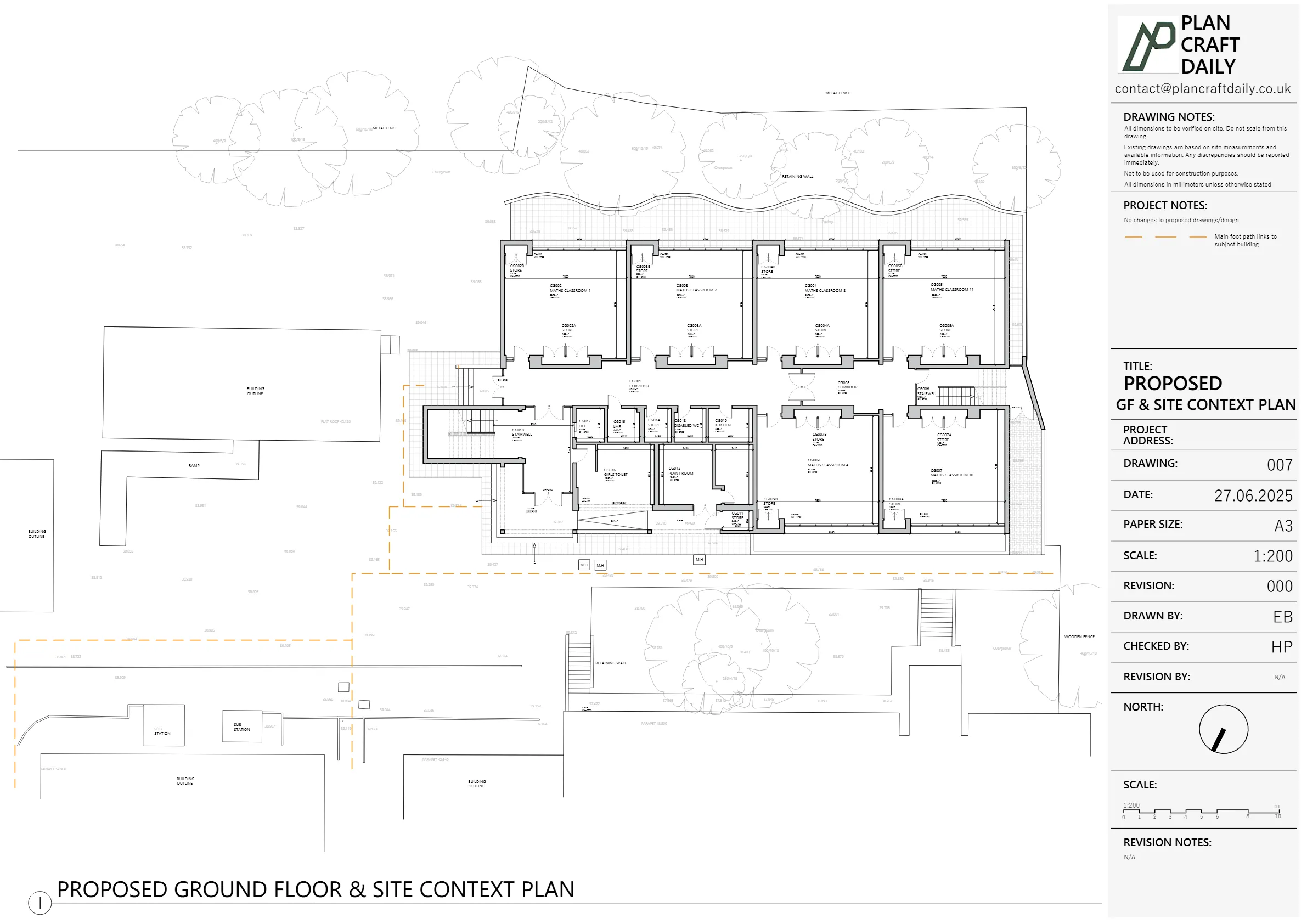
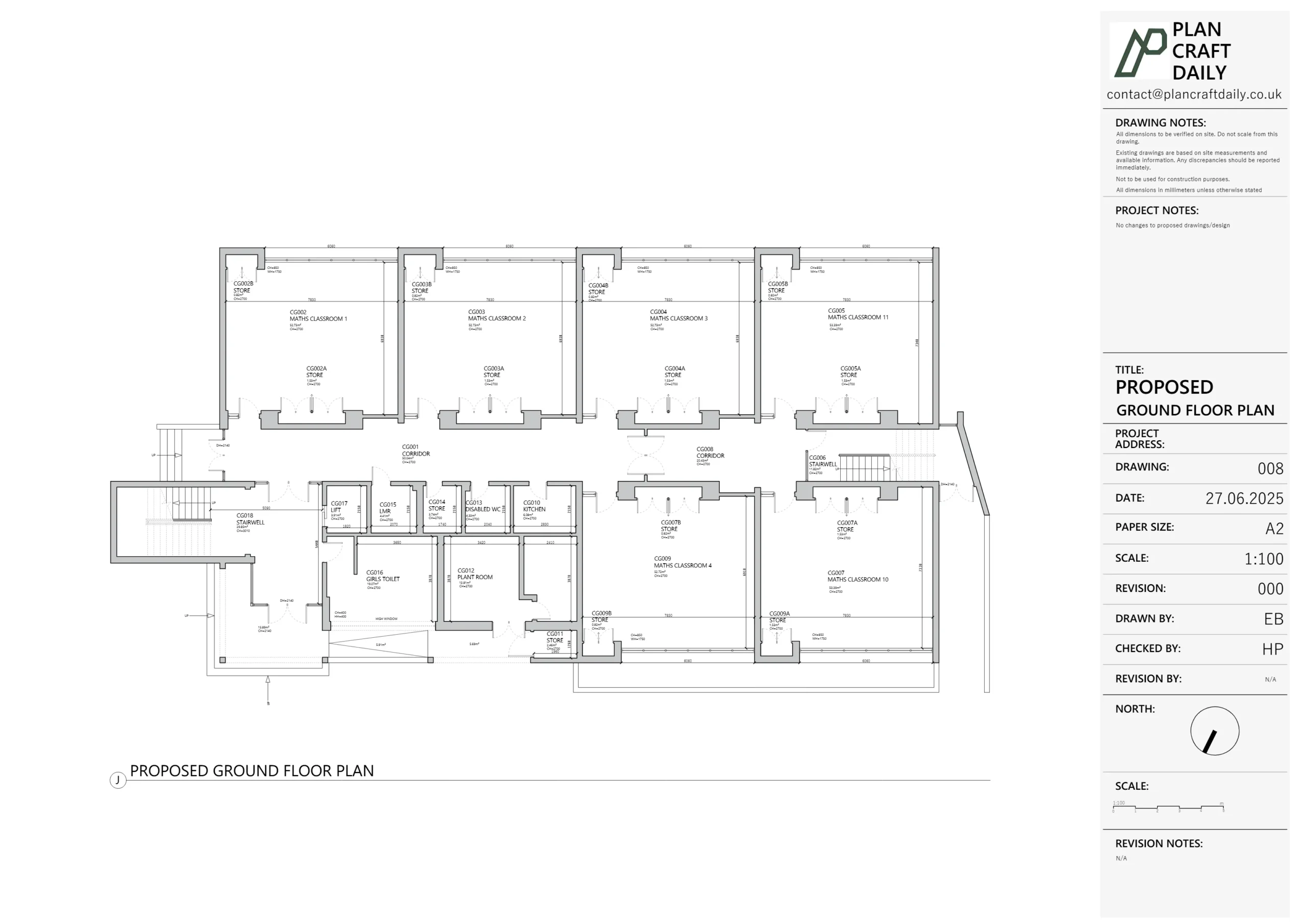
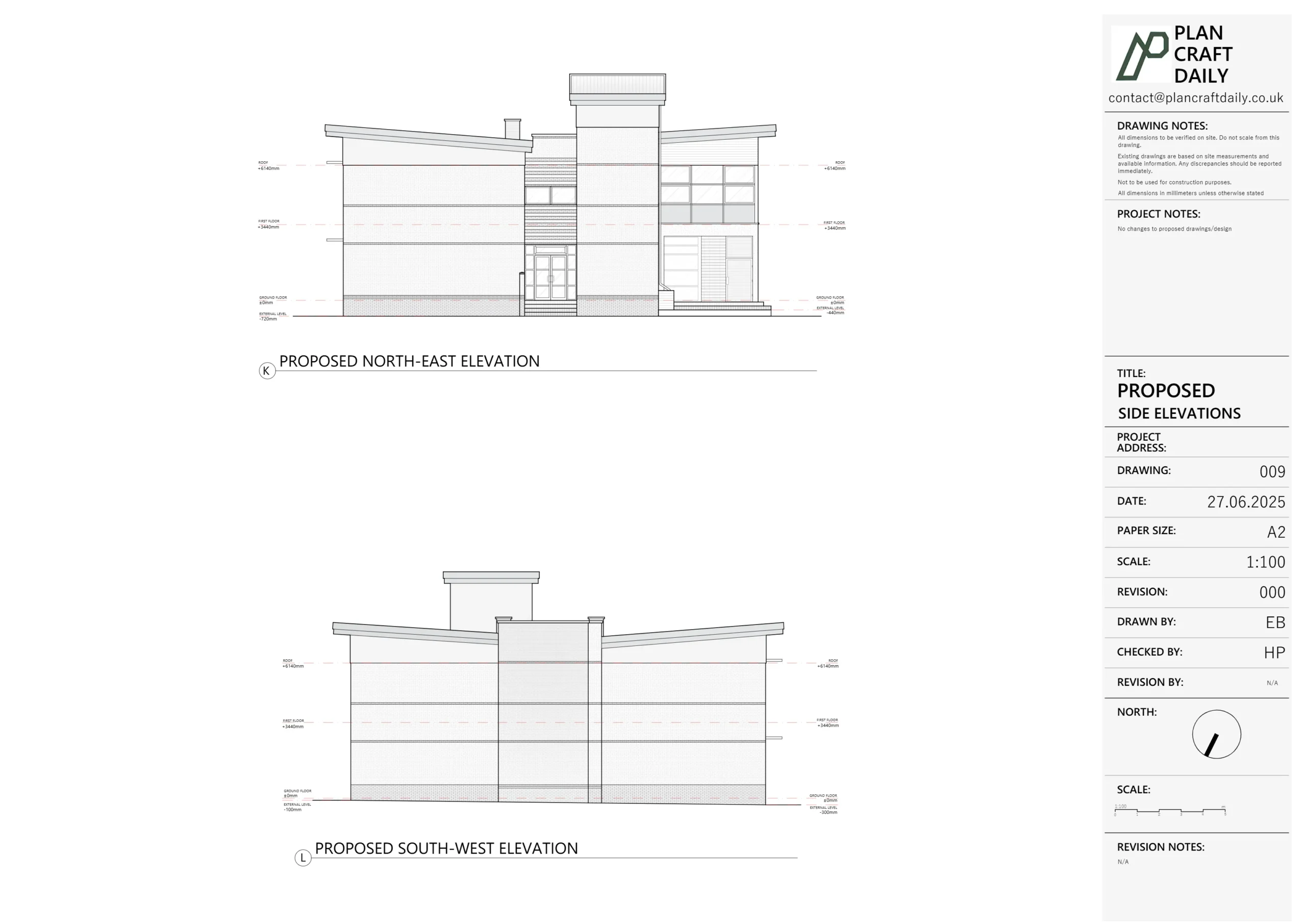
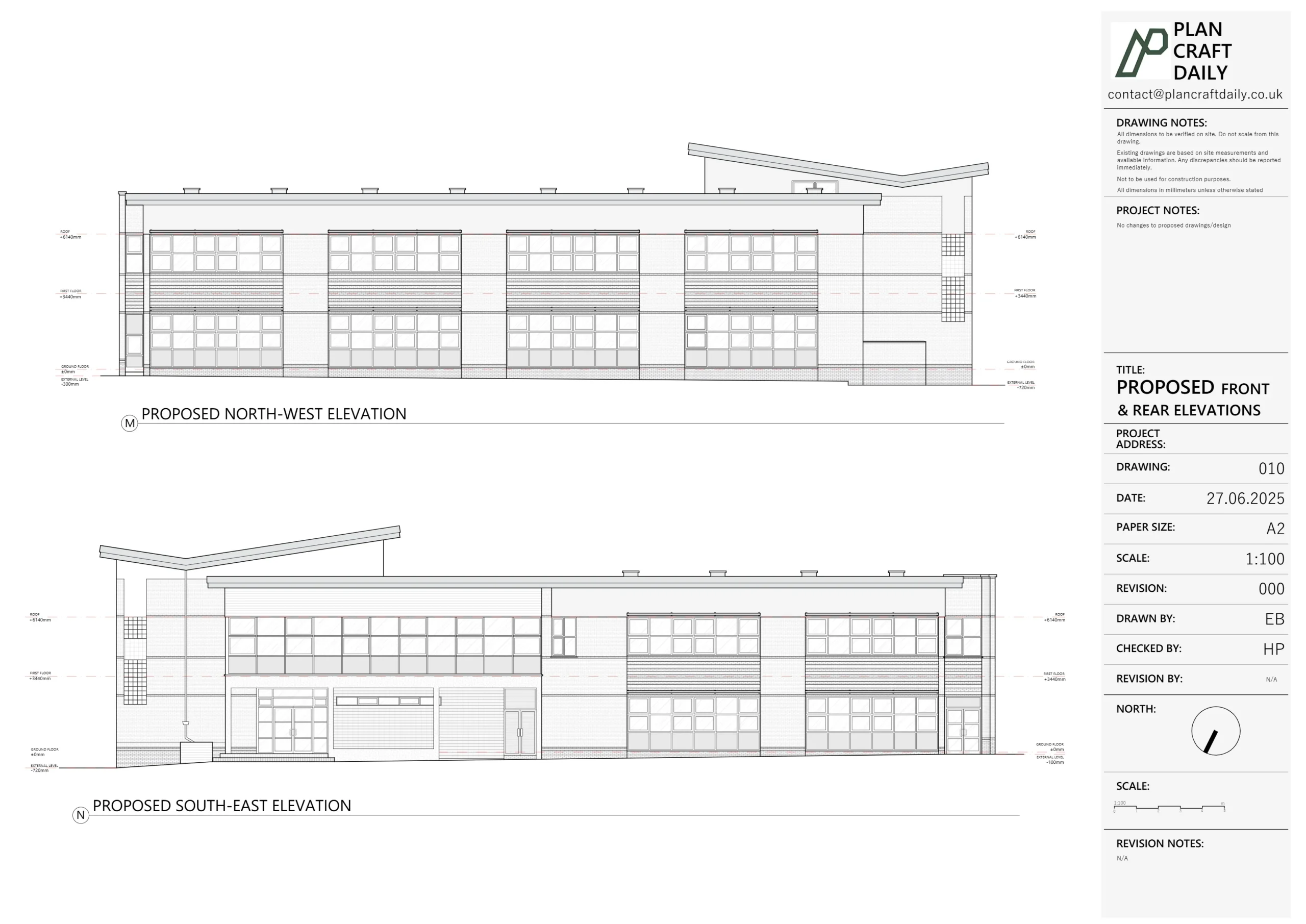
Back in the studio, our CAD team translated the survey data into a full existing drawings pack for 170 Chaplin Road, structured for an architect’s workflow:
- Existing floor plans
- Roof plan
- Elevations tied back to measured levels and window/door positions
- At least one key section through the main structural lines and loft area
The first PDF draft set was issued within the promised 7–10 working days, along with a final invoice for the project and a clear explanation that DWG files, photographs and scans would follow upon settlement.
Managing changes – fast turnaround on markups and constraints on the loft
Kinjal then replied with a scanned markup pack, highlighting:
- Small adjustments and clarifications needed on the plans/elevations
- Specific comments related to the loft area, where the client’s construction sequence meant certain elements were still evolving on site
We moved the card back to Revise and:
- Went through every comment on the scanned markups;
- Updated the drawings to reflect the requested tweaks;
- Added an explicit drawing note explaining a key limitation:
There was no indication of stair, door, or window locations on the first floor at the time of survey, as this part of the loft works was still under construction.
This kind of annotation is important for an architect: it clarifies what is measured fact and what simply isn’t available yet, so they can design and communicate with their client accordingly.
Once updated, we issued a Rev001 draft pack for Kinjal to review. With those revisions accepted and the final payment received, we:
- Confirmed payment with a receipt
- Released the final drawings and related files, and
- Shared the 3D scan link for the property, giving the design team an extra layer of visual context.
Final outcome – a robust “existing” base despite a moving target
By the end of the project, Kinjal and their practice had:
- A fully coordinated existing drawings set for a property in active loft construction
- Plans, elevations and notes that clearly distinguished between measured existing conditions and elements not yet built or visible
- A 3D scan to support internal design decisions, details and communications with the client and contractors
From our side, the project reinforced two principles we now apply consistently to similar jobs:
- When a loft or extension is mid-build, we always flag the limits of what can be measured on the day and document that clearly on the drawings.
- If a regular architect client, like Kinjal’s practice, has a compressed timescale, we’ll do our best to re-sequence surveys—so long as we can still hit realistic drawing turnaround times without compromising quality.
Overall, the Wembley project showed how a well-planned measured survey can still deliver a reliable base drawing set, even when the building itself is a moving target.
Project Details
| Service Type | Measured building survey, existing drawings (incl. loft under construction) |
| Time Taken | 1-2 week |
| Budget | £700–£850 |
| Location | Wembley, North-West London |