James, an architect we regularly support, got in touch with two new sites that needed surveys and existing drawings at roughly the same time:
- One project for a loft conversion with minor internal ground-floor alterations in the KT8 area.
- A second project for a garage conversion in Worcester Park.
For this KT8 loft conversion project, his brief was:
- Full measured survey of the existing house.
- Accurate existing drawings (plans, elevations, and a key section) suitable for designing the loft and some “opening up” at ground-floor level.
- Tidy turnaround times so his design team could keep moving without delays.
- Coordination that recognised he was running multiple live projects simultaneously.
We also agreed to recognise the two-site package by offering a 30% discount on this project, treating it as part of an ongoing programme of work rather than a one-off job.
Planning the work – juggling availability for client, architect, and surveyor
As usual with live family homes, the main early challenge was diary alignment:
- The homeowners had limited daytime windows around school pickup and work schedules.
- James wanted both new sites surveyed in the same general period.
- Our own diary was already tight, with a large commercial survey booked on one of the key days.
We handled this with:
- Clear availability options
We first shared the days where our senior surveyor could realistically cover the KT8 project. When one of James’s preferred days clashed with a major commercial booking, we immediately suggested the following week instead of trying to squeeze it unrealistically. - Agreeing a precise arrival window
After a few emails back and forth with feedback from James’s client, we settled on an arrival around 2:30 pm, with a 10–15 minute tolerance, and confirmed that we’d need about 60–75 minutes to complete the full survey properly. - Invoice to secure the slot
We issued an initial invoice with a clear explanation that payment would secure and activate the survey slot. That keeps everyone aligned: date fixed, expectations set, and the project formally in our delivery pipeline.
Throughout, we kept the tone relaxed and pragmatic – acknowledging that clients are sometimes “slow to respond” and working with that reality rather than against it.
How we carried out the measured survey
On the agreed date, our senior surveyor attended site with:
- A laser distance meter (Disto-style) for quick, reliable internal dimensions.
- 3D scanning equipment to capture the existing structure, levels and geometry in detail.
- A structured photo workflow so our CAD technicians would have full visual context when drawing.
Key steps on site:
- Quick briefing with the homeowner
We reconfirmed the areas critical for design:- The roof and loft structure planned for conversion.
- Existing stair position and headroom.
- The ground-floor areas where new openings or “opening up” works were being considered.
- Control measurements & structure first
We started with primary dimensions – overall footprint, wall thicknesses, floor-to-floor heights, and roof geometry – so the entire building could be set up accurately in CAD. - Room-by-room internal checks
For each room, we captured:- Wall-to-wall dimensions and diagonal checks.
- Door and window widths, heights, cill and head levels.
- Any steps, level changes or bulkheads that would matter when designing a loft or ground-floor alteration.
- External and roof context
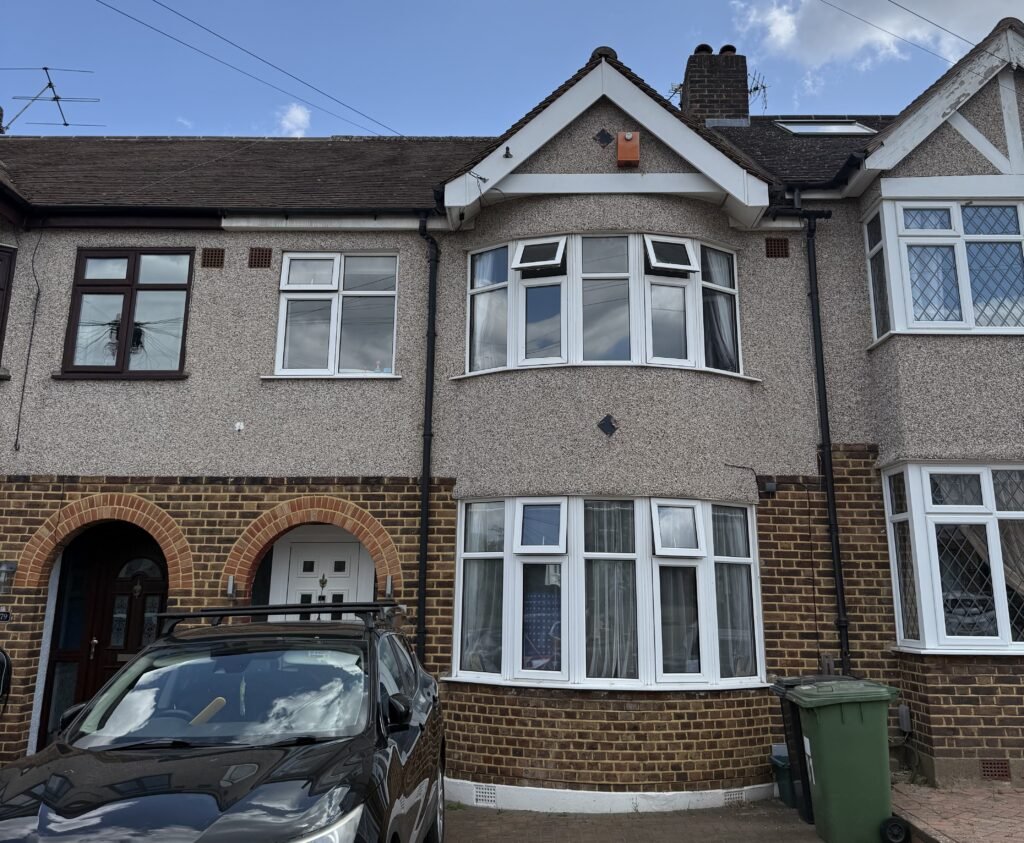
We measured key external features and relationships – front and rear elevations, roof lines, and garden interface – and captured external photographs so the architect’s team could understand how any new dormers or alterations would sit in the street context.
The combination of 3D scan + traditional measurements meant our CAD team had more than enough information to produce accurate, reliable existing drawings.
Turning the survey into drawings
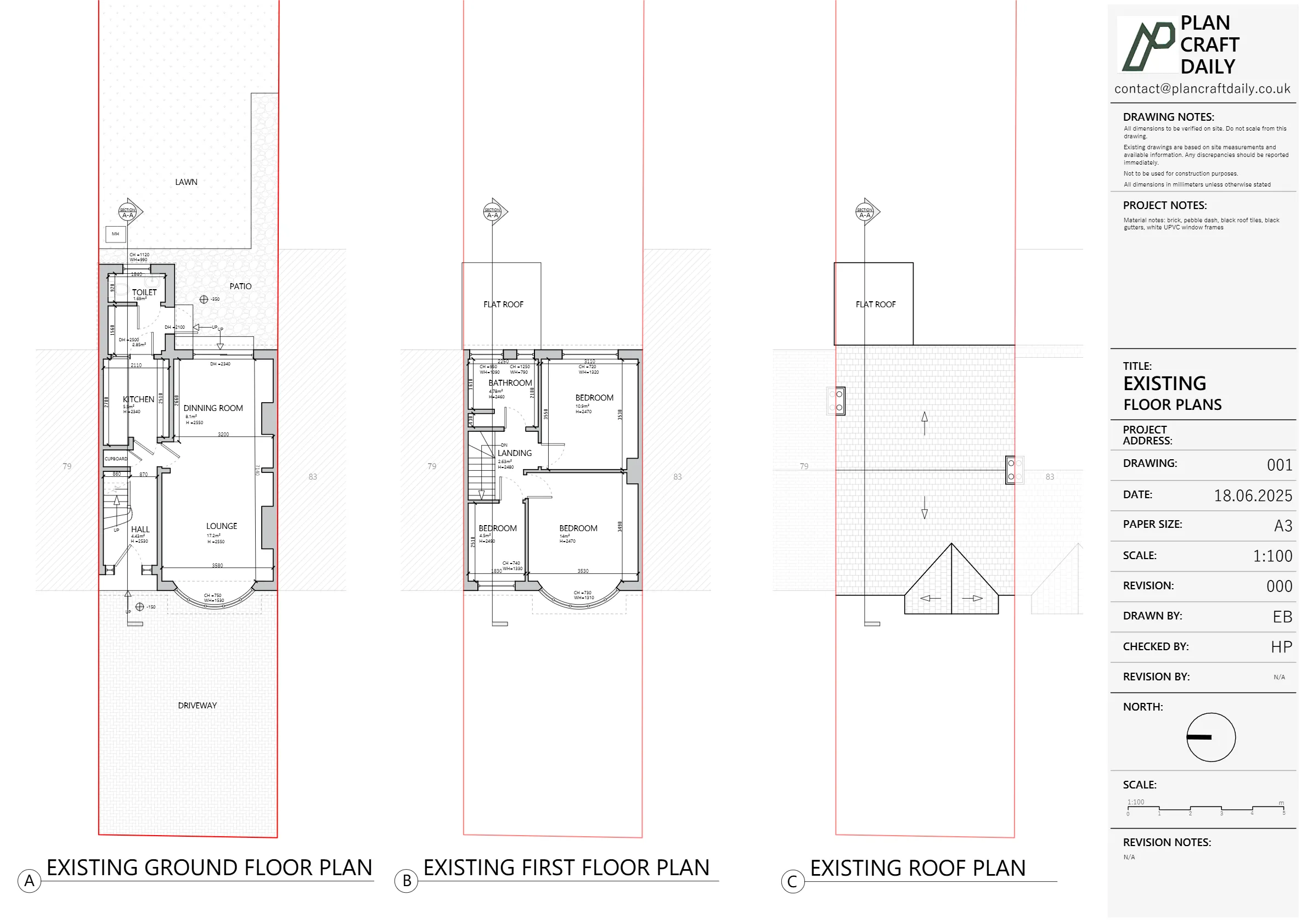
Back in the studio, we converted the raw survey data into a clean existing-drawings package, set up to be immediately usable for planning and design.
We produced:
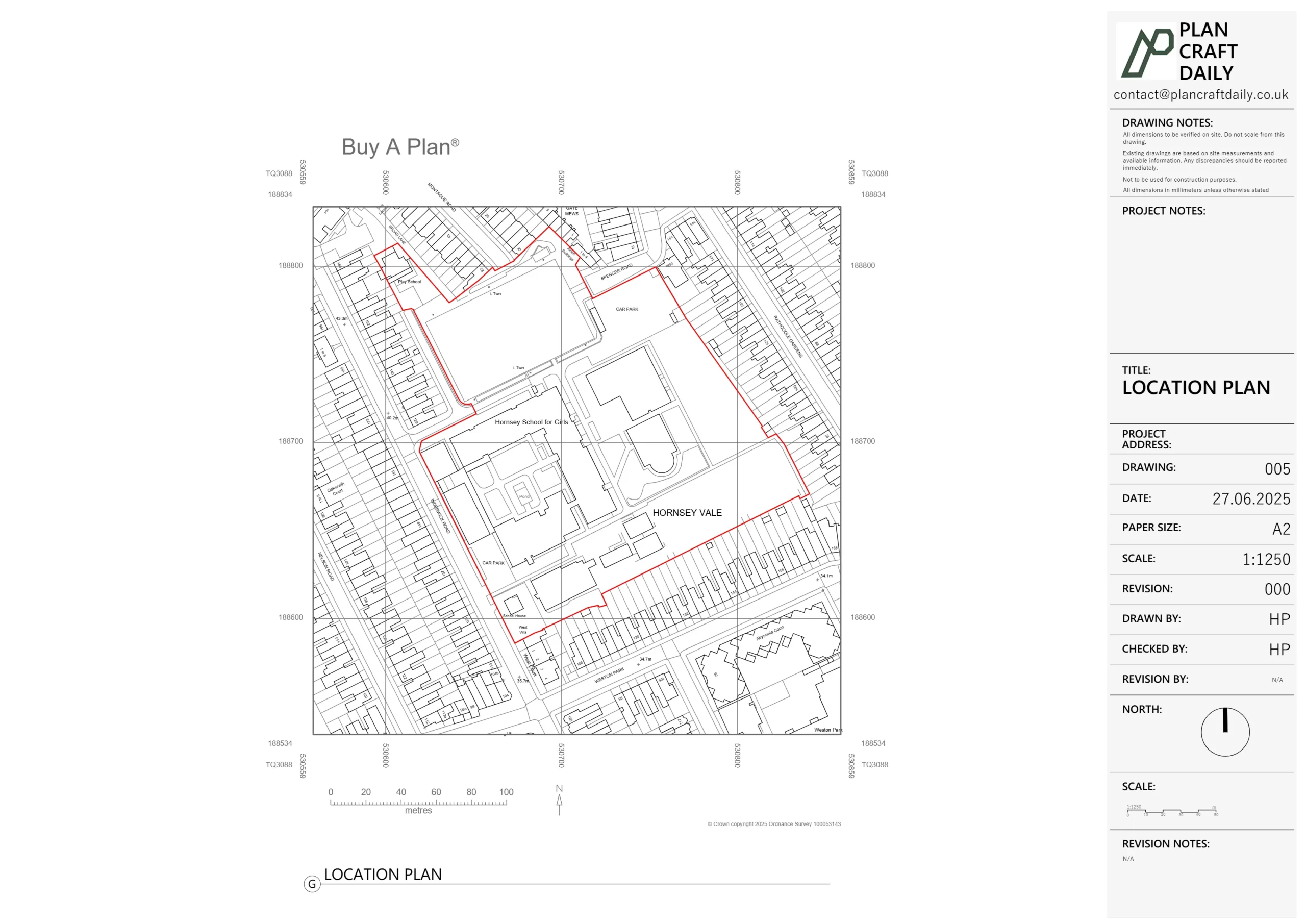
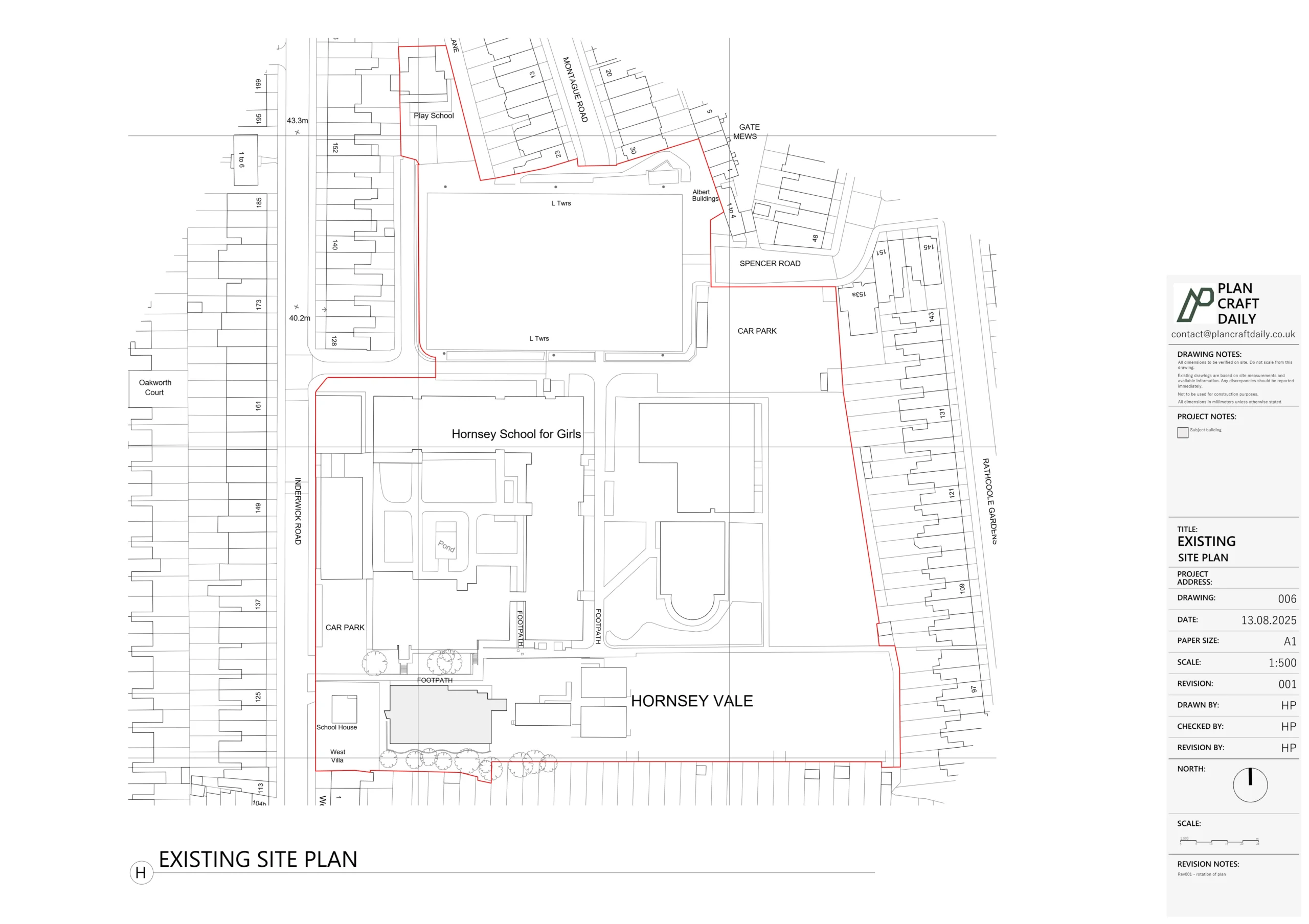
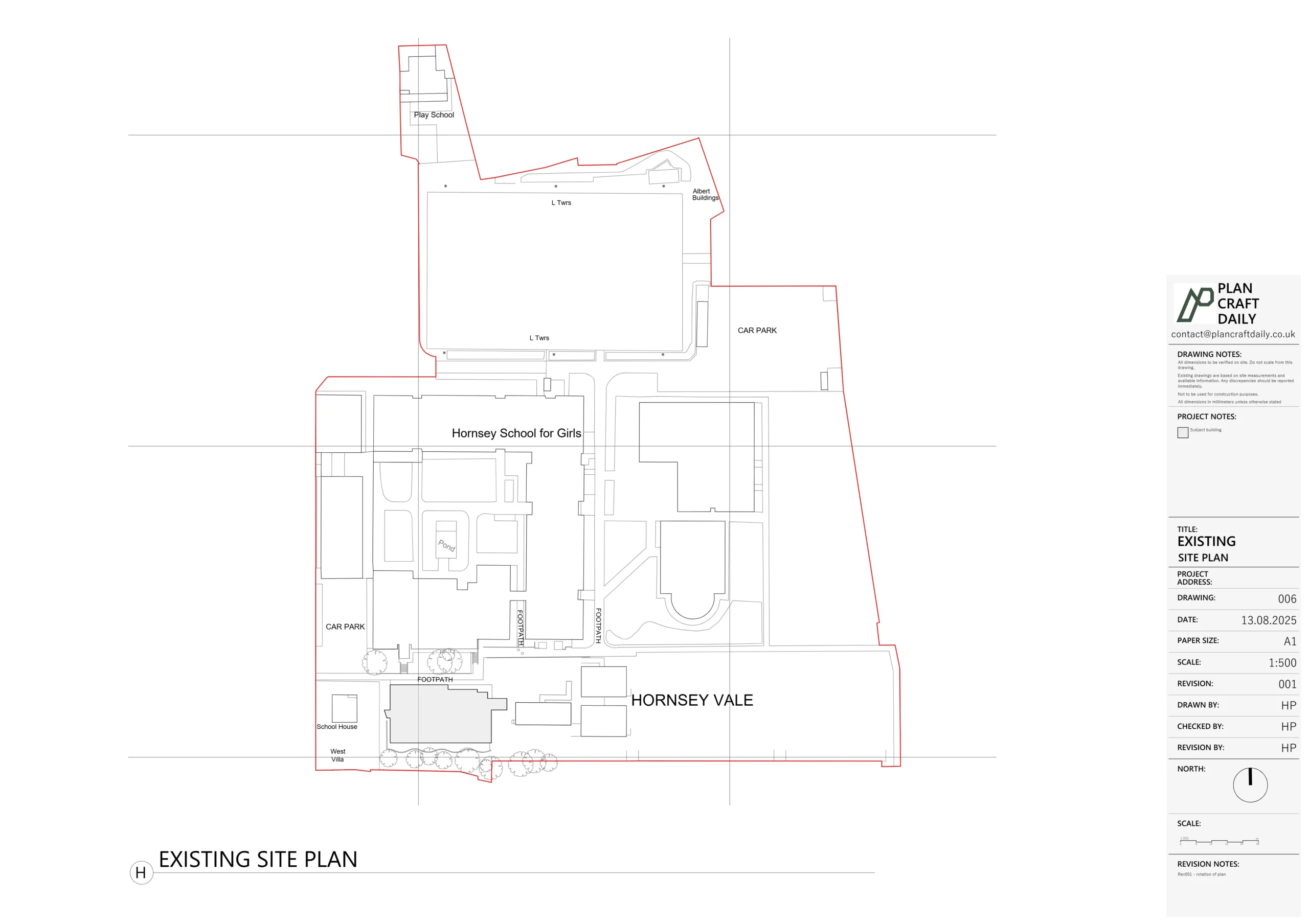
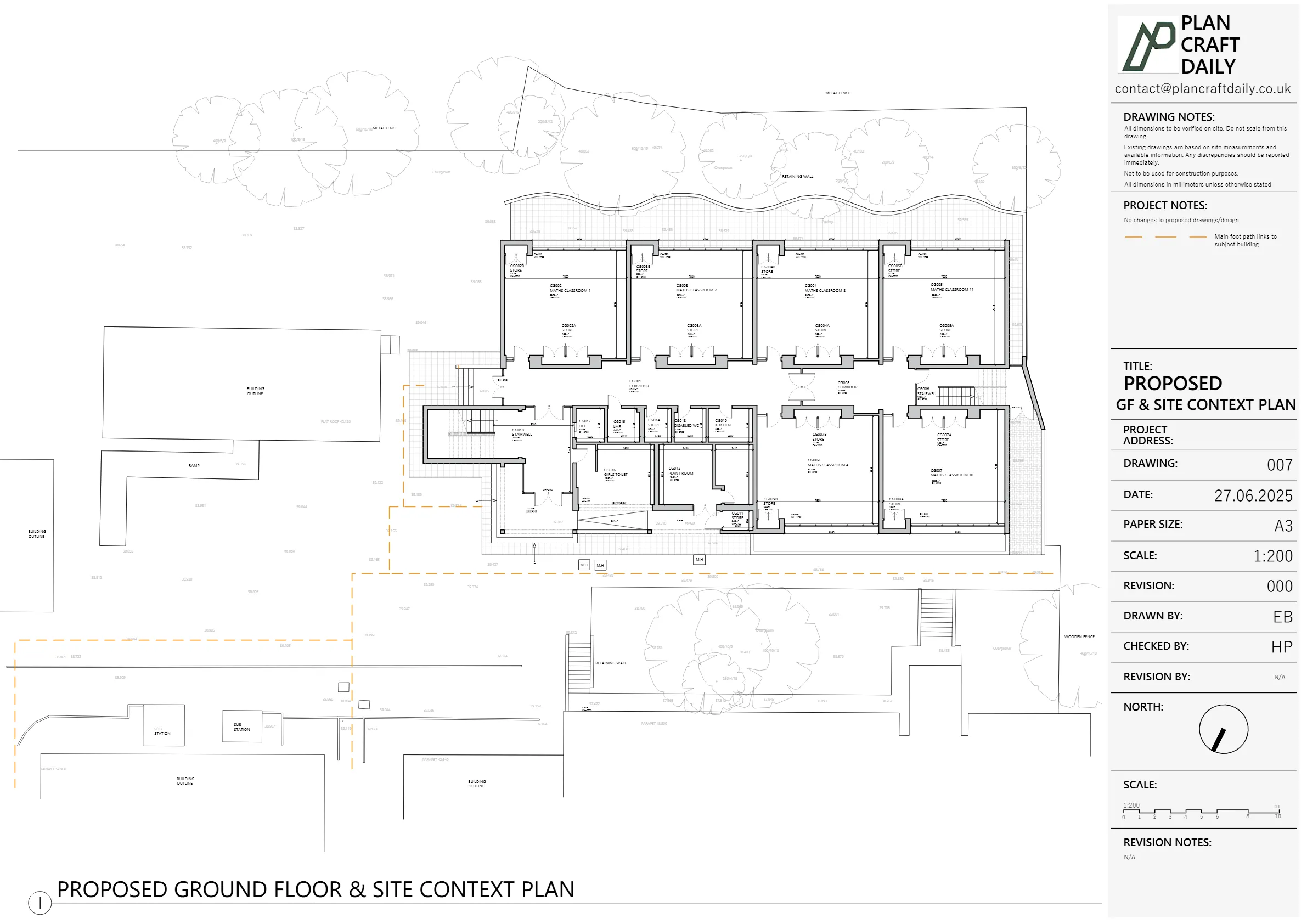
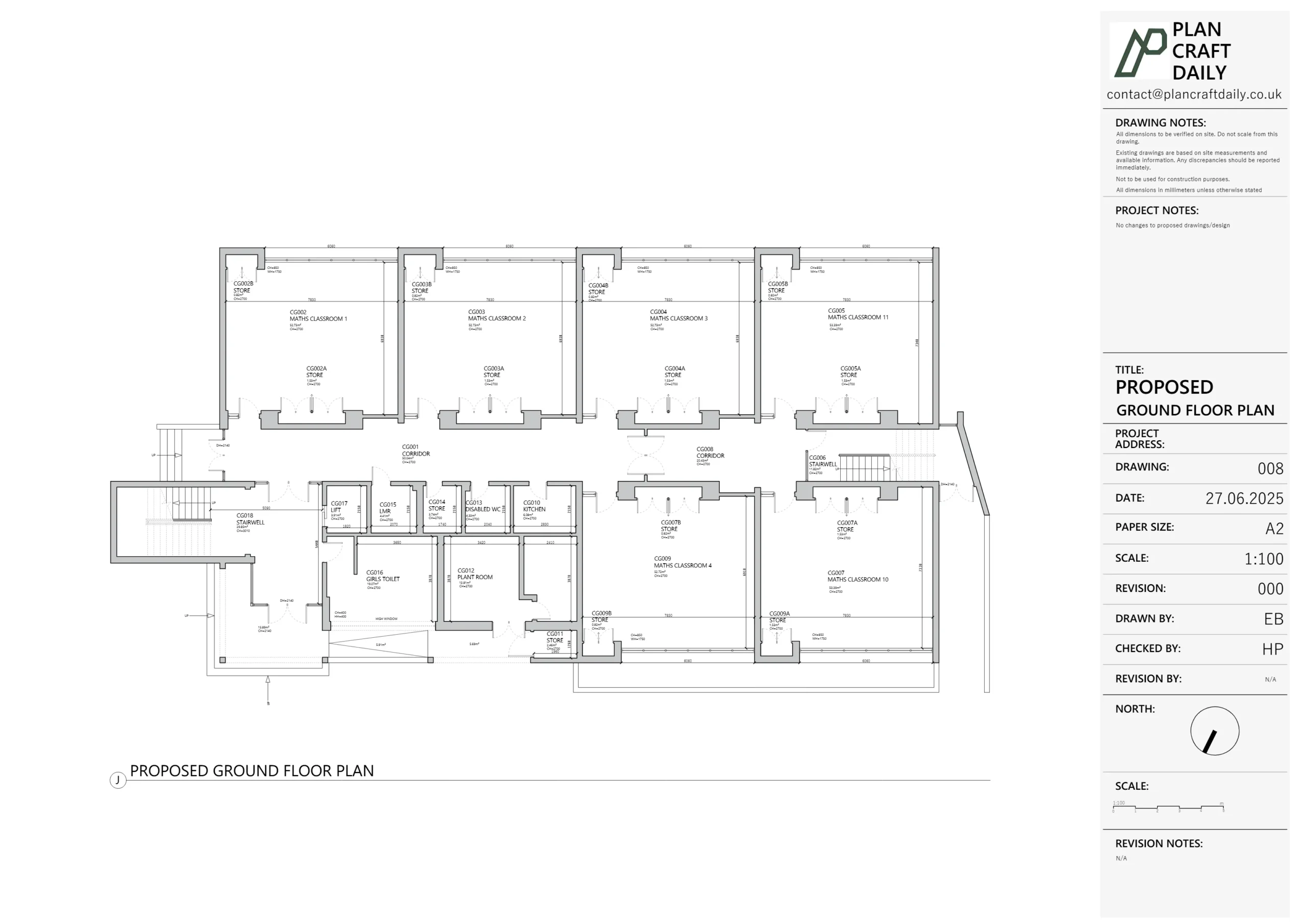
- Existing floor plans (including the roof plan).
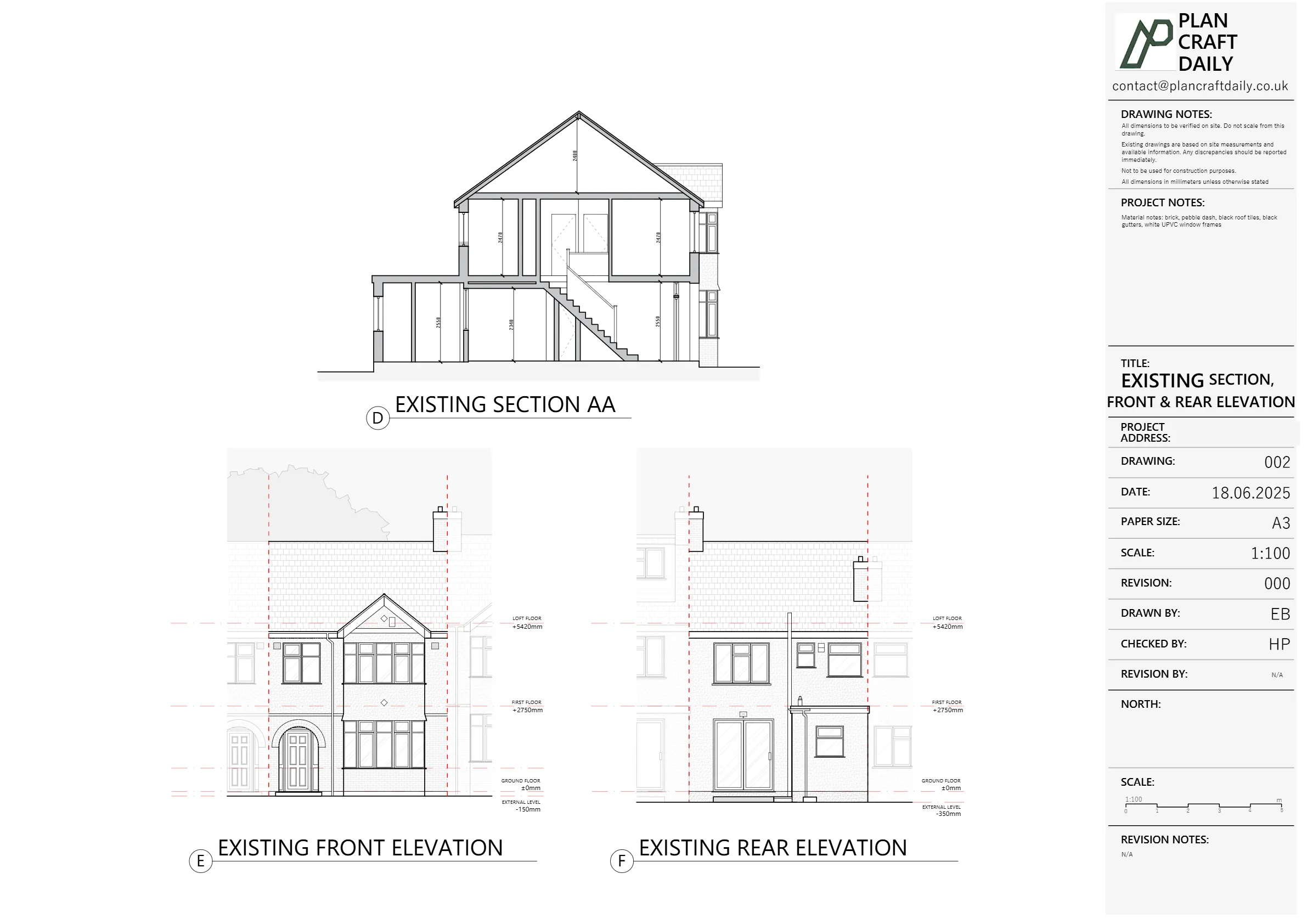
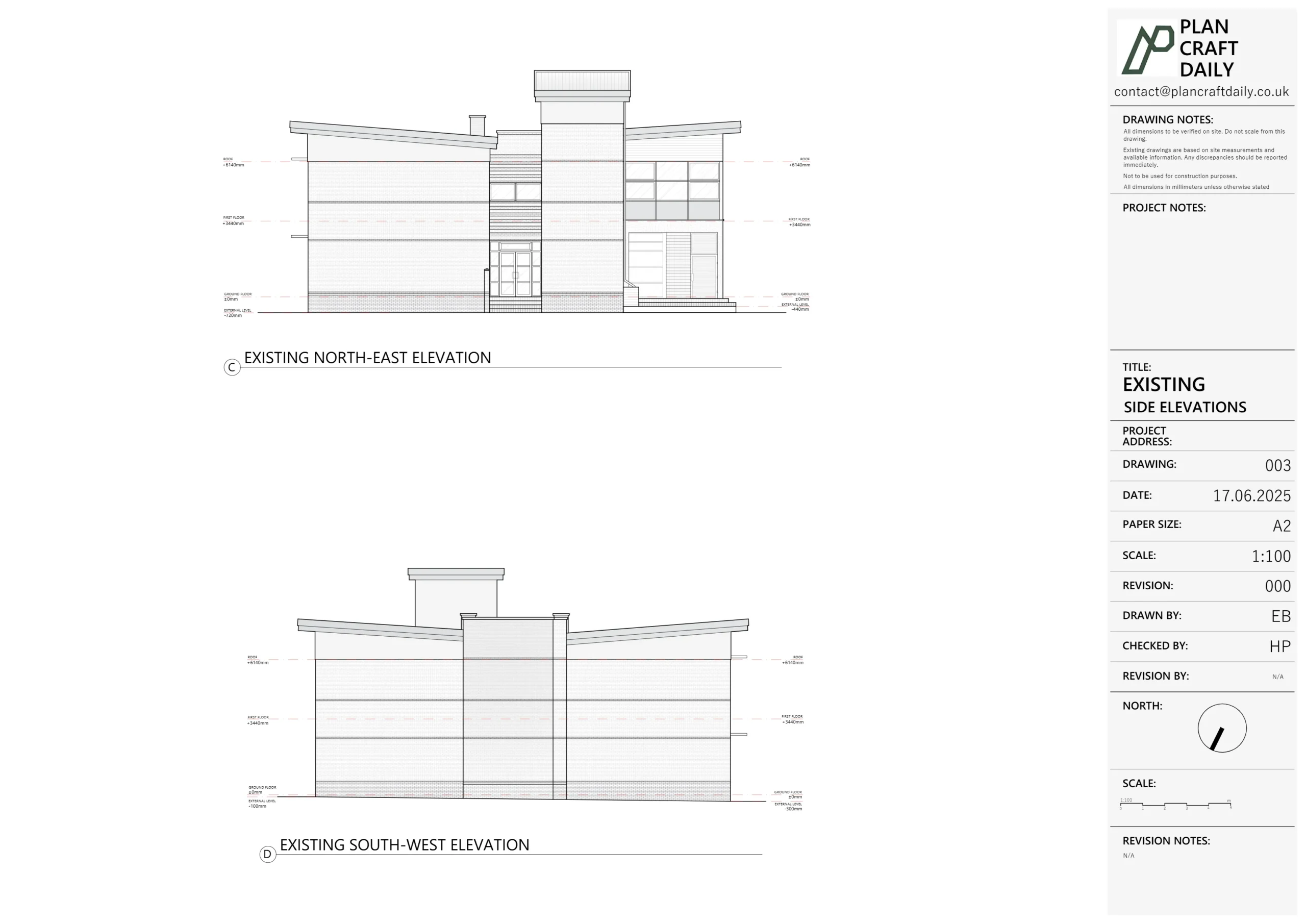
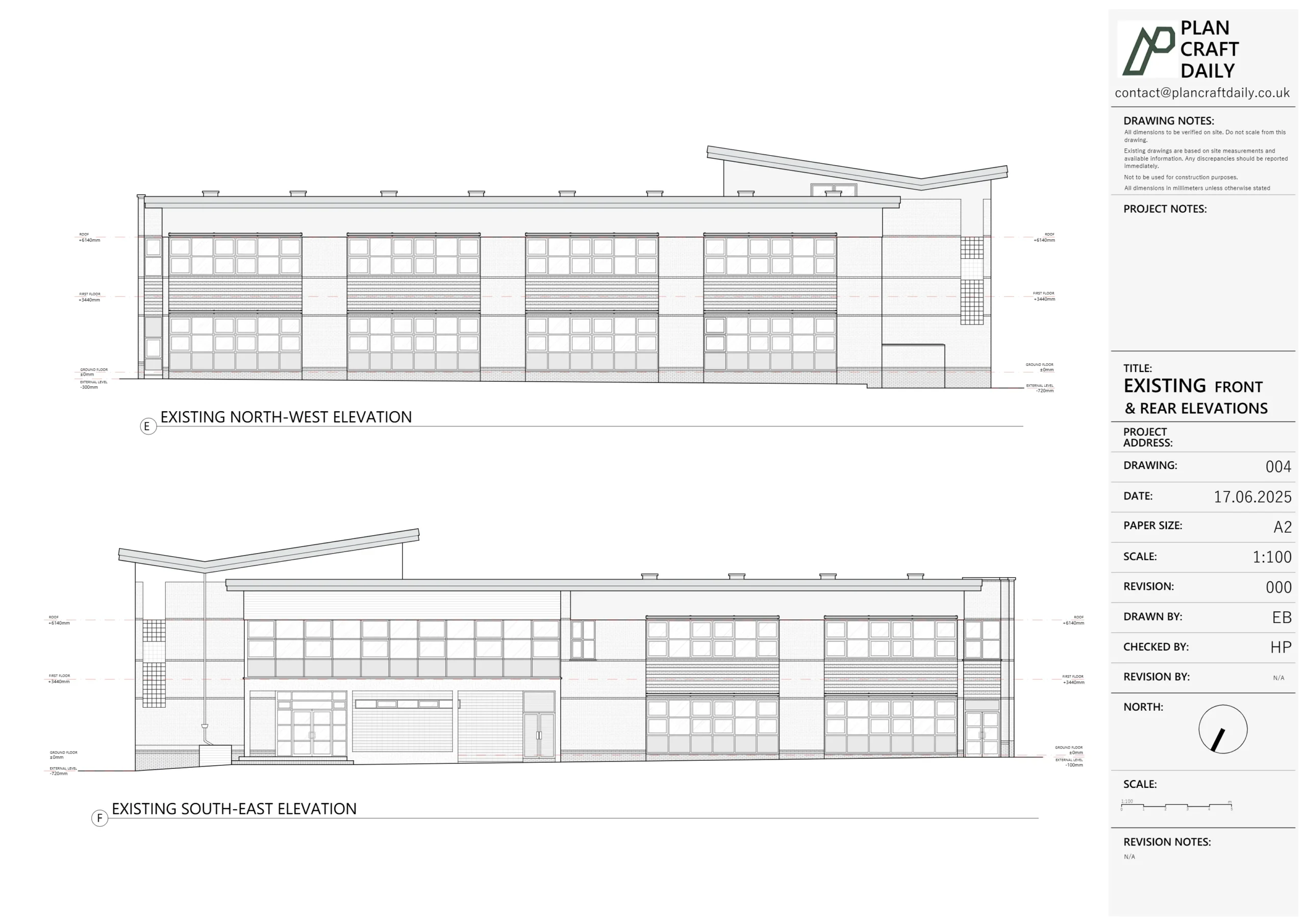
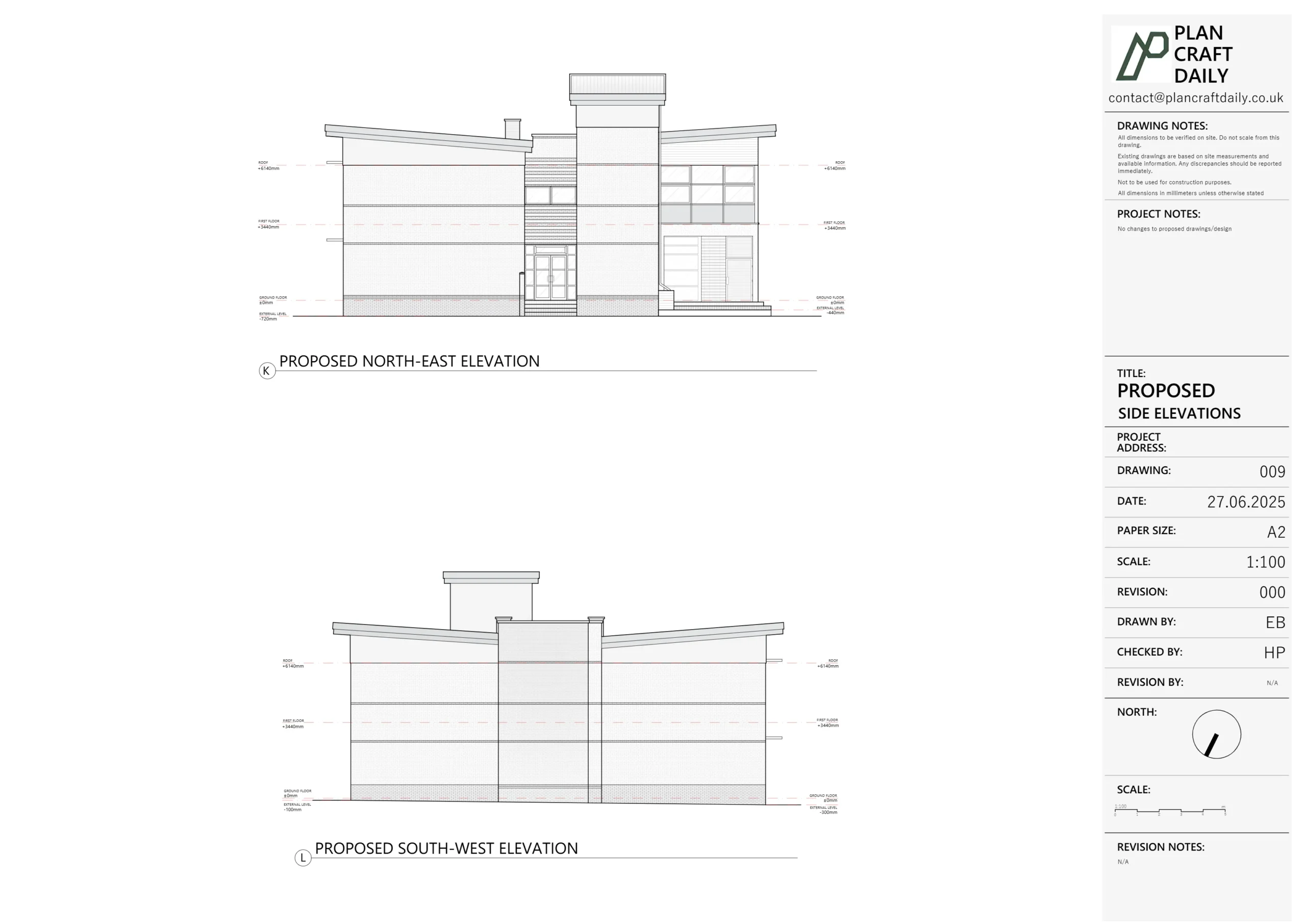
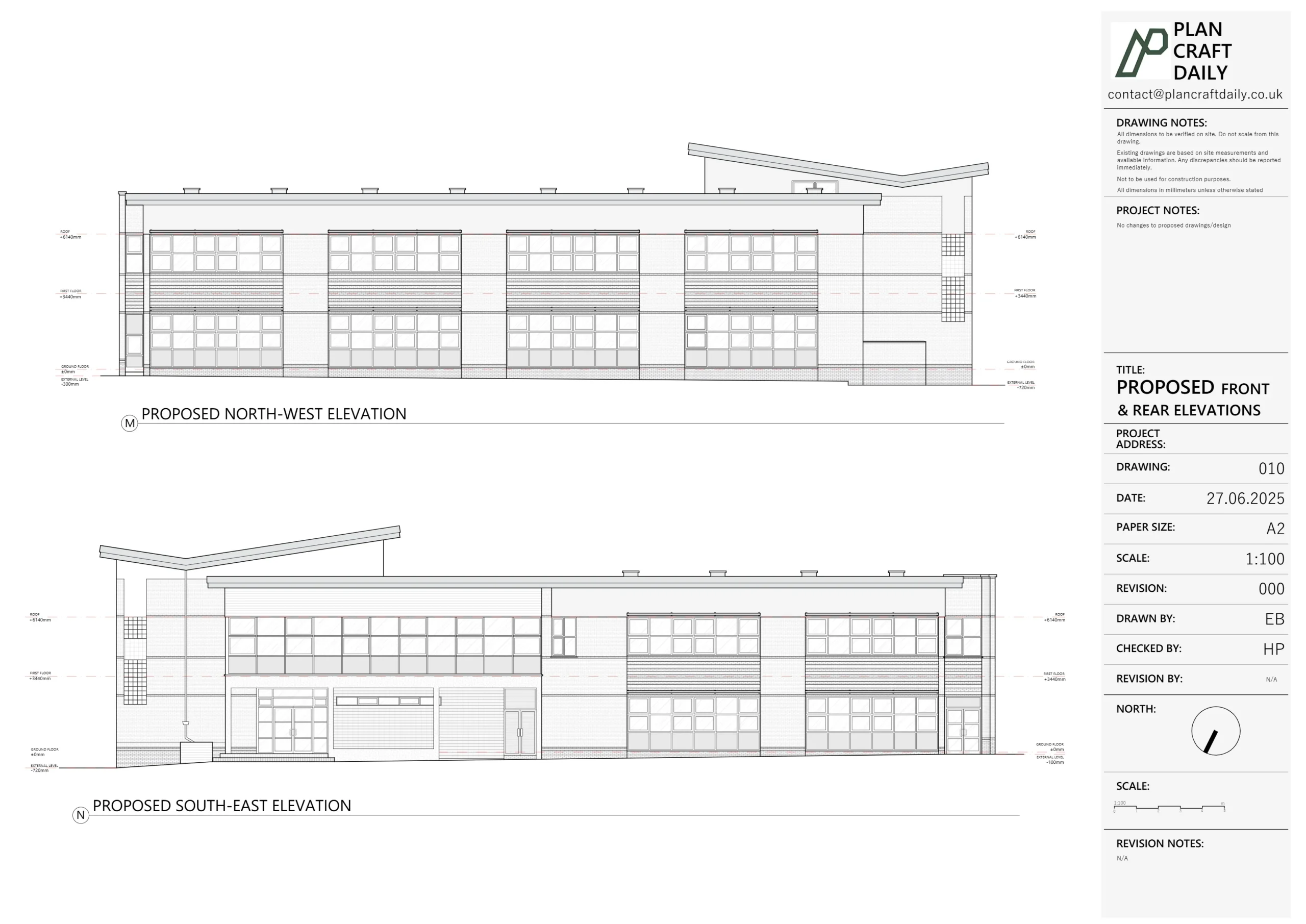
- Front and rear elevations, showing current materials, openings and roof form.
- A key section through the areas relevant to the loft conversion and ground-floor openings.
Our team:
- Used the 3D scan as the backbone, ensuring geometry and levels were consistent.
- Overlaid and cross-checked the scan against hand measurements and control dimensions.
- Applied our standard layering, lineweights and UK planning drawing conventions, so the architect’s team didn’t have to “clean up” files before working on them.
We had previously advised James that drawings would take around 7–8 working days from survey, due to a tight workload. When things stretched slightly longer than ideal, we proactively emailed to apologise for the delay and confirm that we were aiming to update him within that week. His reply confirmed that the end-of-week timeline was acceptable.
Invoicing, payment and final issue
Because of how the project timings unfolded, the initial payment and final payment ended up being handled slightly differently than usual:
- We completed the drawings to draft stage and sent over a draft pack for review.
- At the same time, we attached the final invoice, explaining that the full fee was now due (as the usual initial payment hadn’t come through earlier).
- Once James confirmed that everything looked good and the invoice had been settled, Lubaba issued:
- The final DWG files
- PDF drawing sets
- The photographic package
- A formal payment receipt confirming the project was fully paid and closed
This gave James a clean, traceable email thread: draft, invoice, payment confirmation and final deliverables all linked together.
Final outcome for the architect
By the time we closed the card as Completed, James had:
- A reliable existing 2D model of the property ready for loft and ground-floor design work.
- Consistent CAD standards matching his other projects with us, so his team could simply copy our files into their own templates if needed.
- A clear record of fees, receipts and deliverables for his internal project tracking.
- Confidence that, even when our workload spiked, he would get honest updates and realistic dates rather than silence.
For us, this KT8 loft-conversion project was another example of how we like to support repeat architect clients:
- Fast, clear quoting (especially when there are multiple sites).
- Flexible but realistic scheduling that respects homeowners’ constraints.
- Senior-led surveys combining 3D scanning, accurate measurements and good photography.
- Transparent communication around delays or diary pressure.
- Deliverables that are truly “ready to design on”, not just rough sketches.
If you’re an architect or designer rolling out similar loft conversions and internal alterations around Greater London or Surrey, this is exactly the type of survey-and-drawings package we can put together for you.
Project Details
| Service Type | Measured Survey, Existing Drawings (loft conversion & internal alterations), 3D Scan & Photographic Pack |
| Time Taken | Around 1–2 weeks |
| Budget | £500 – £650 |
| Location | Surrey, Greater London |