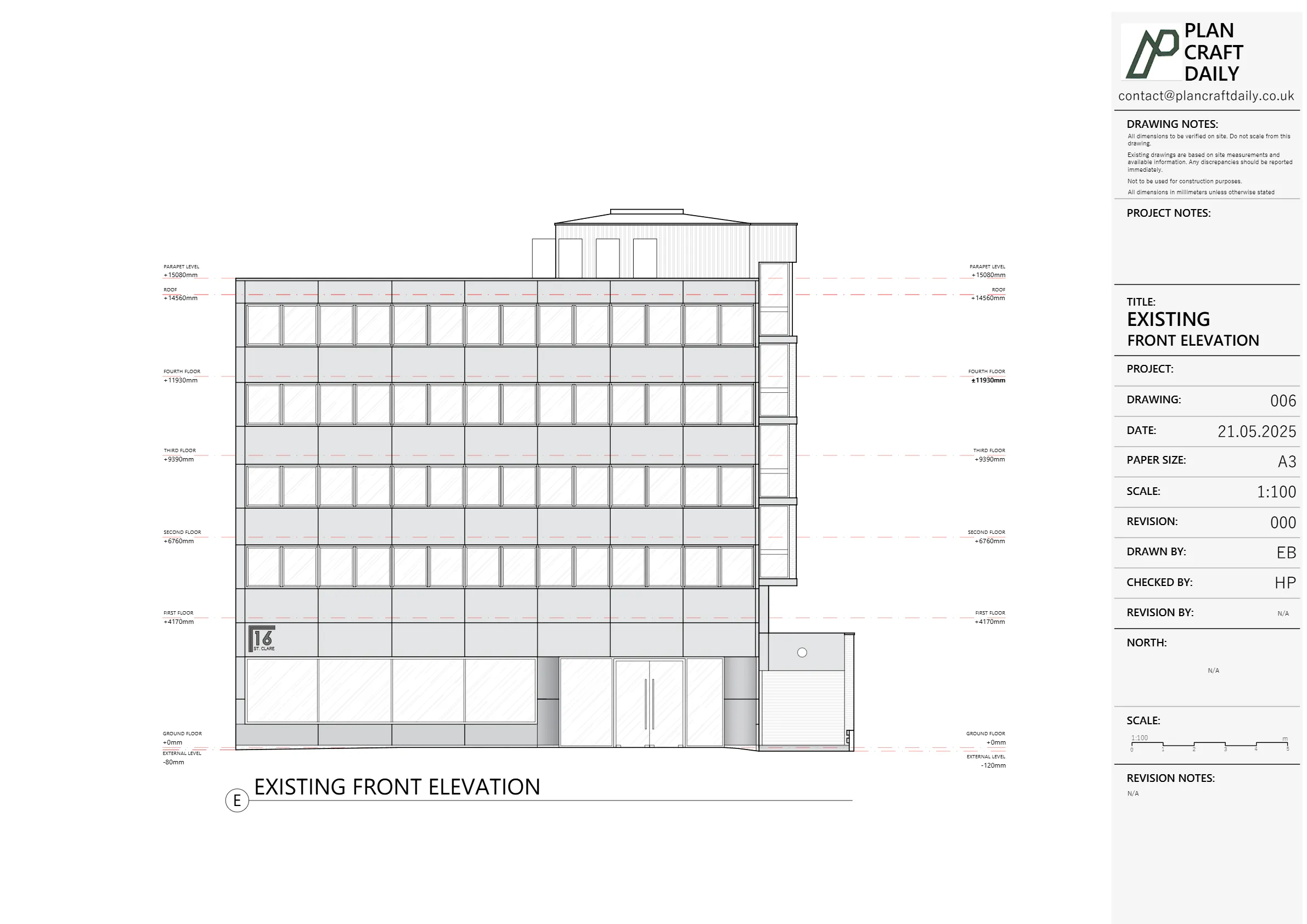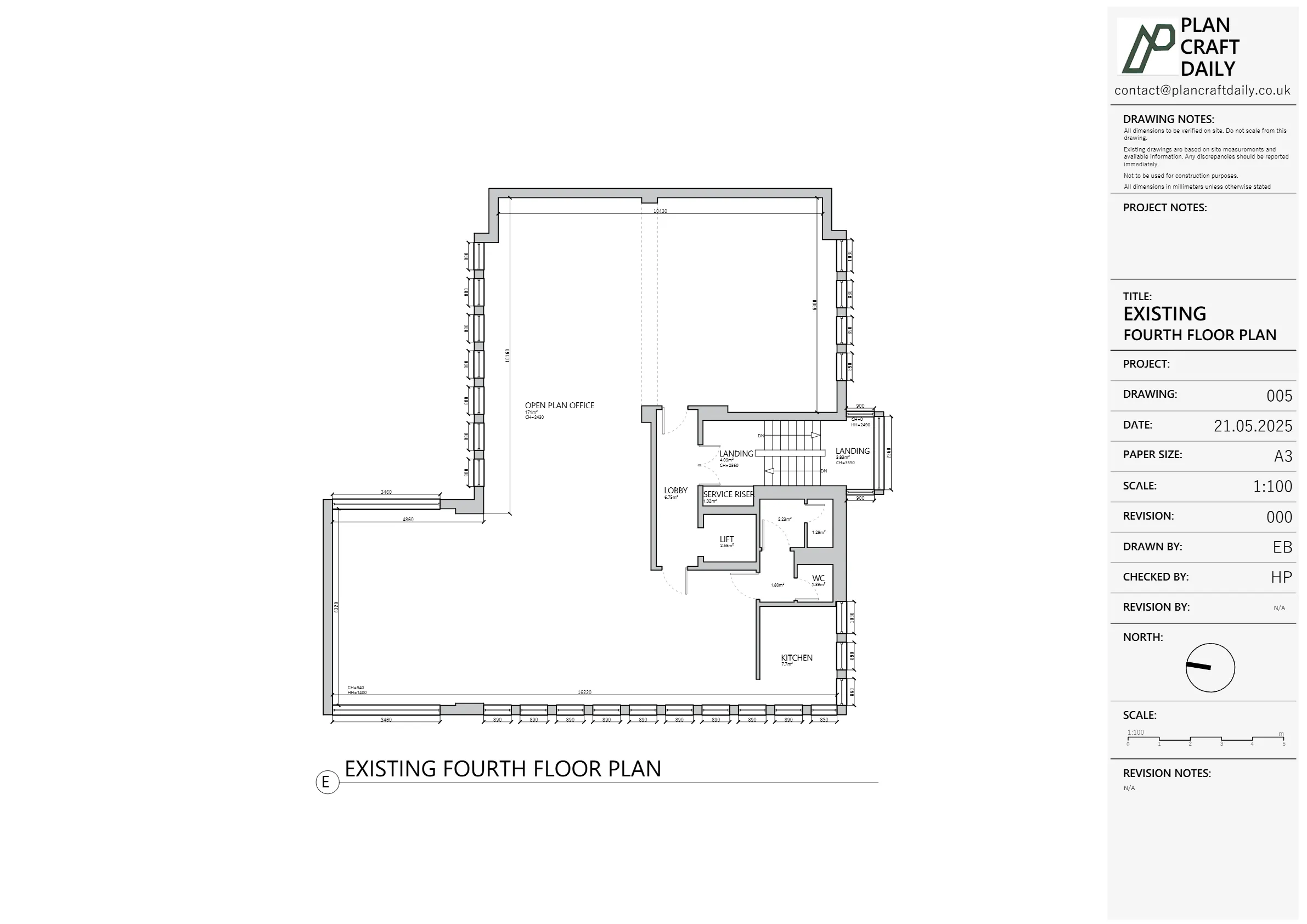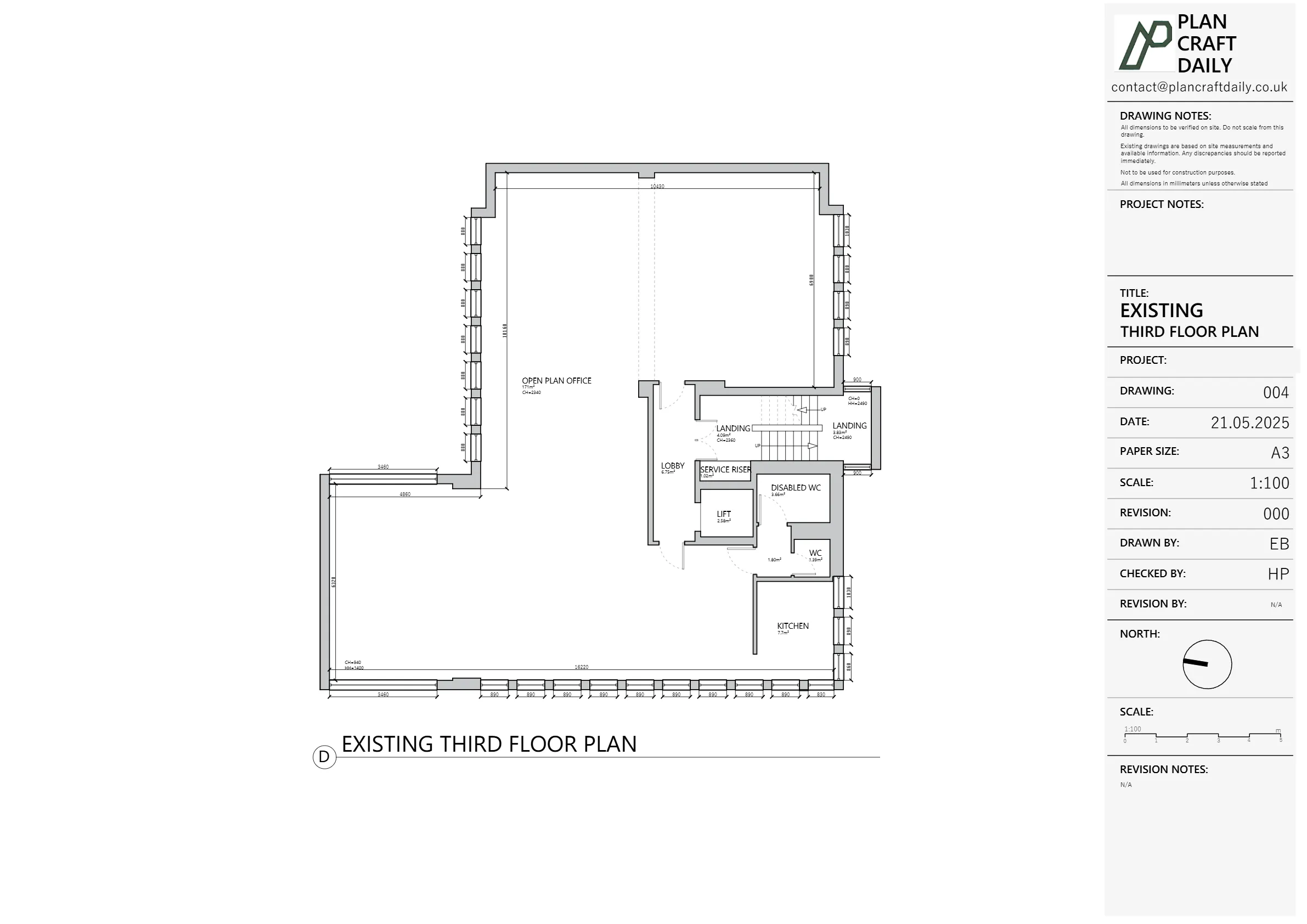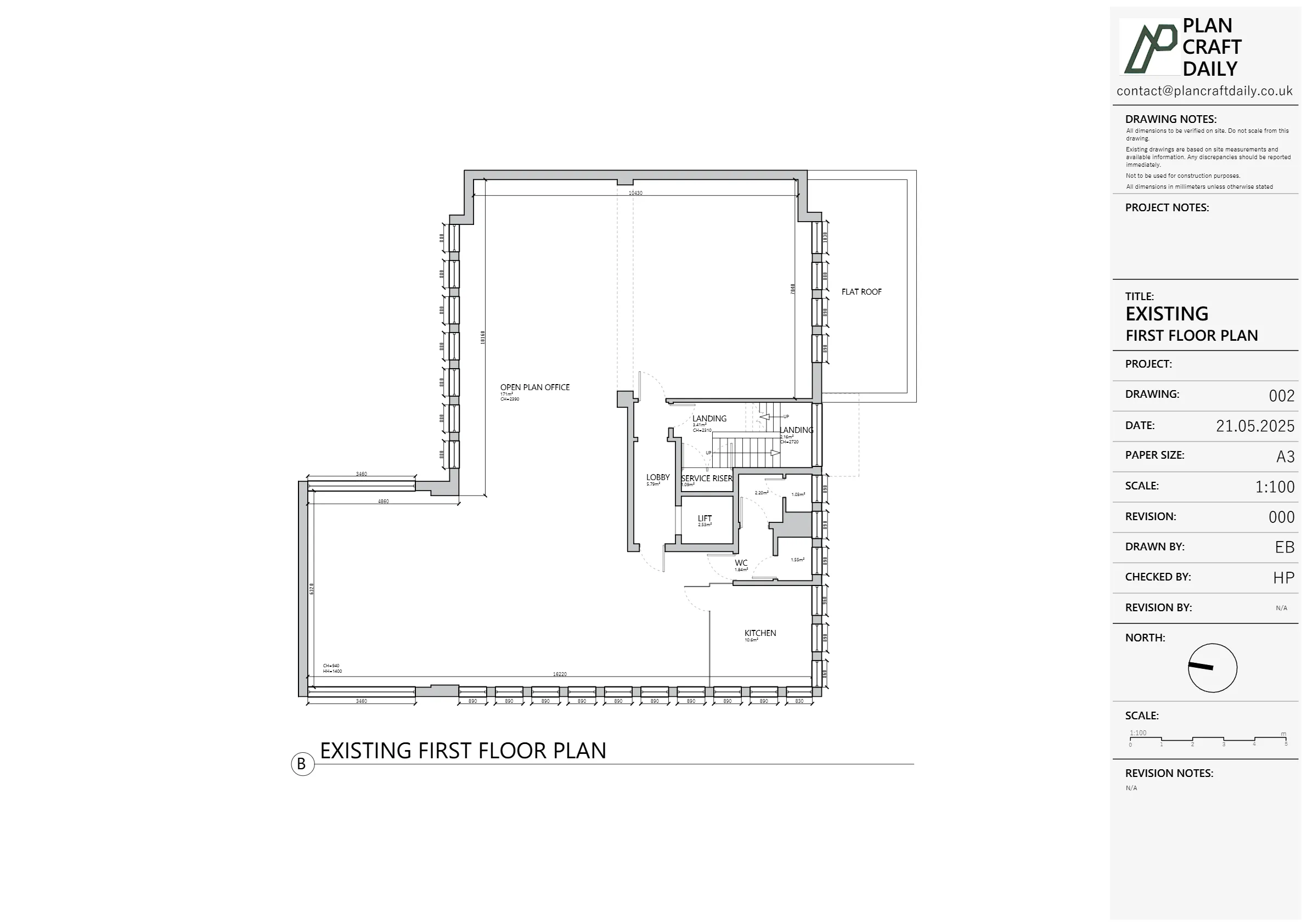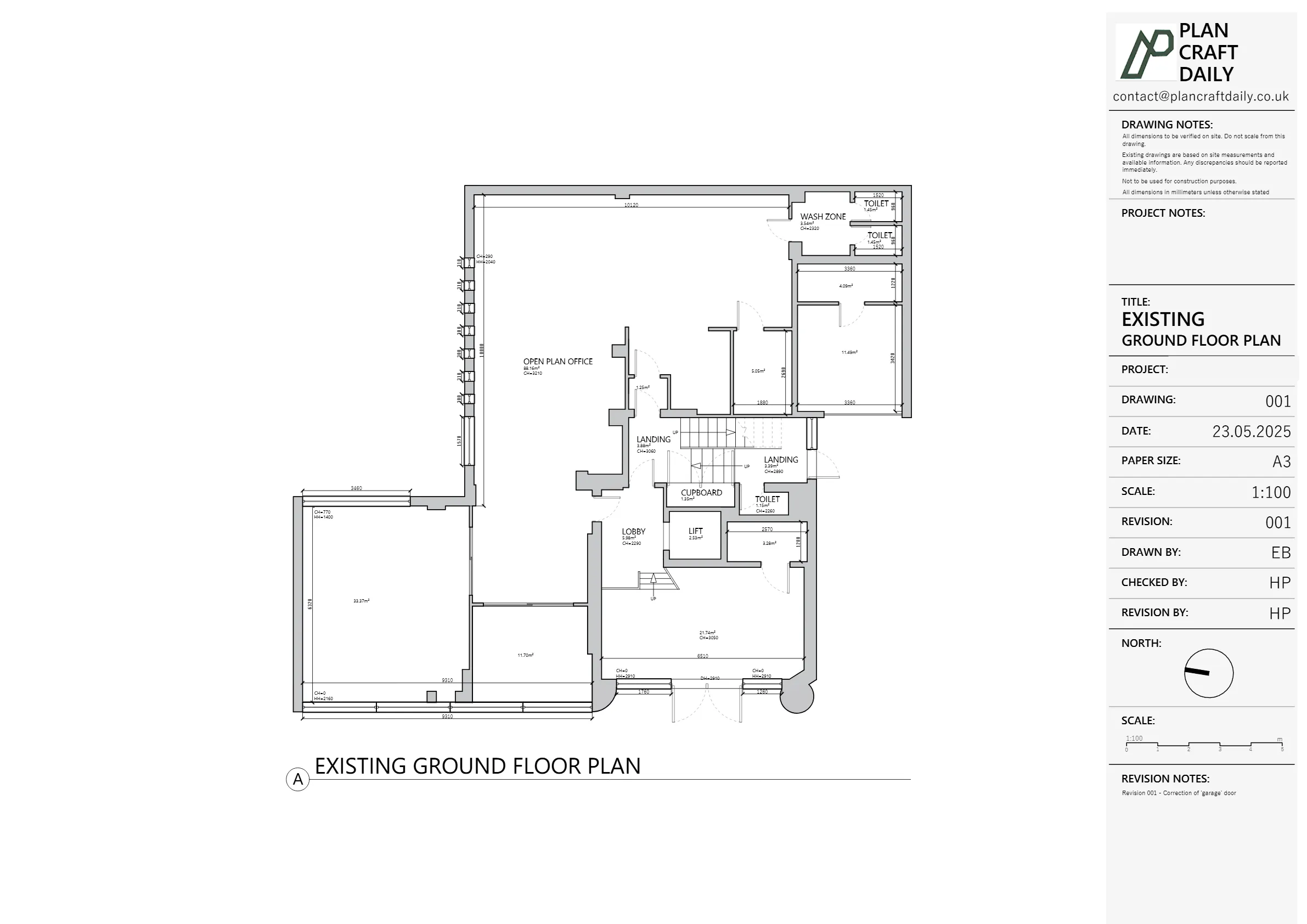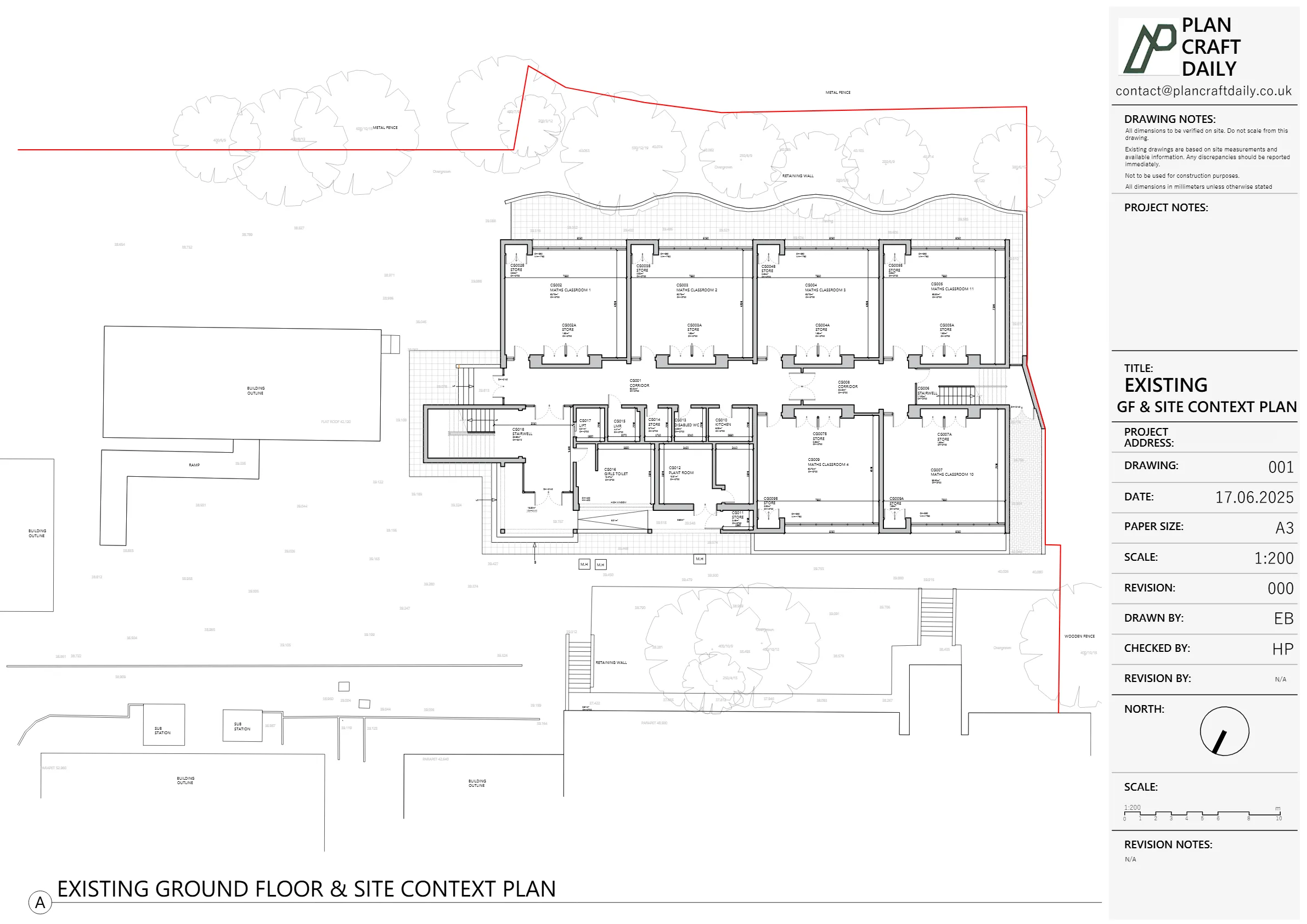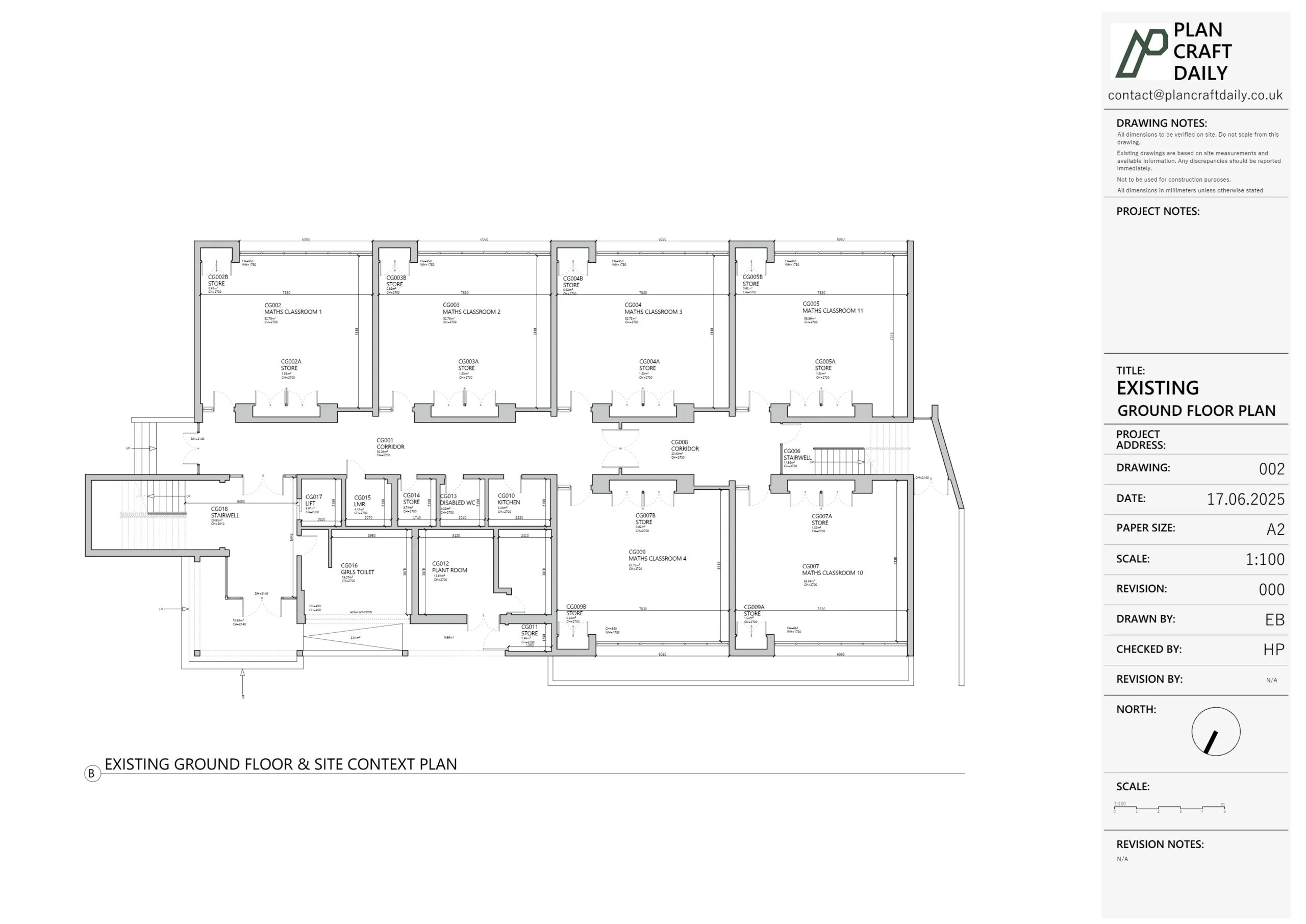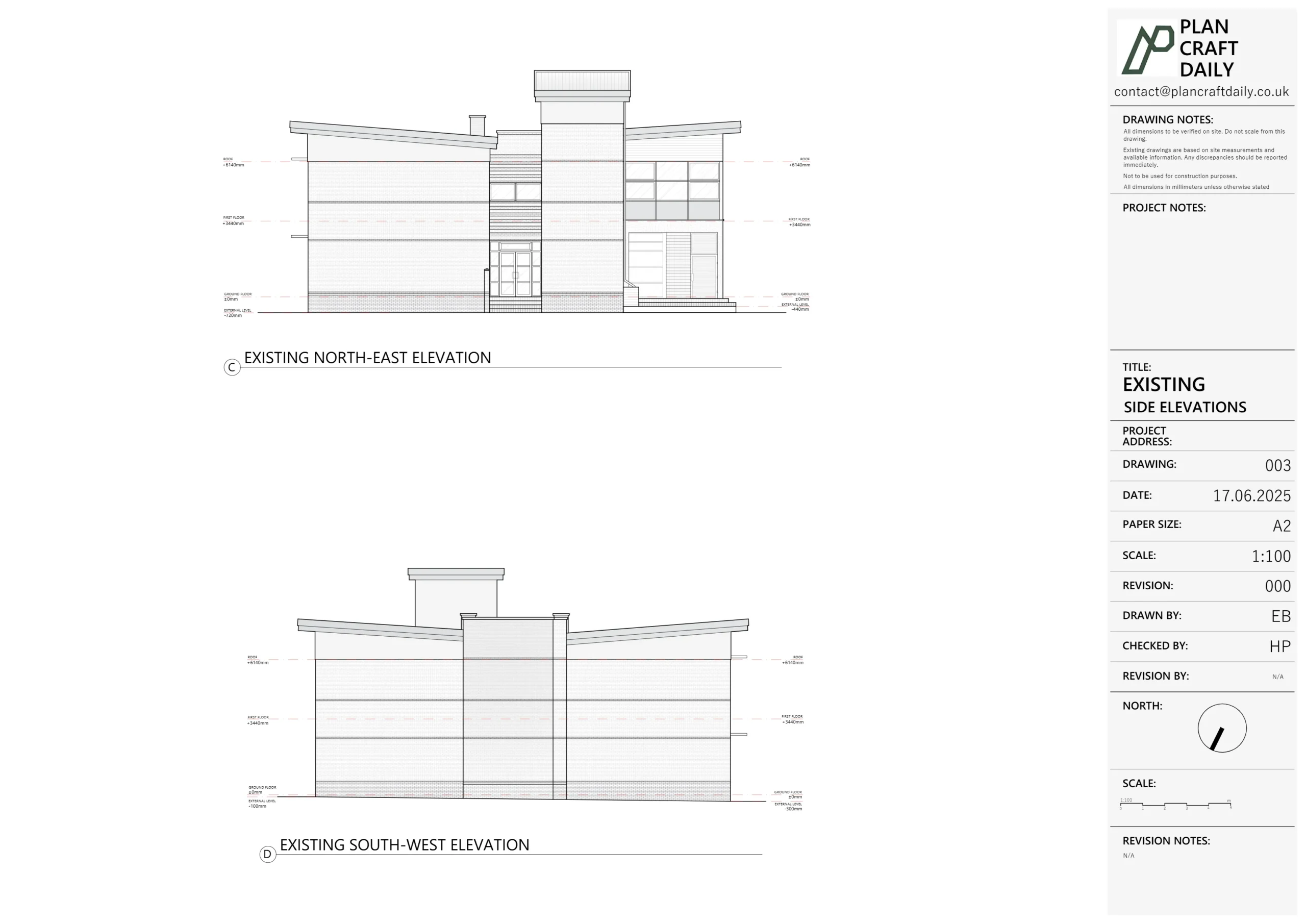
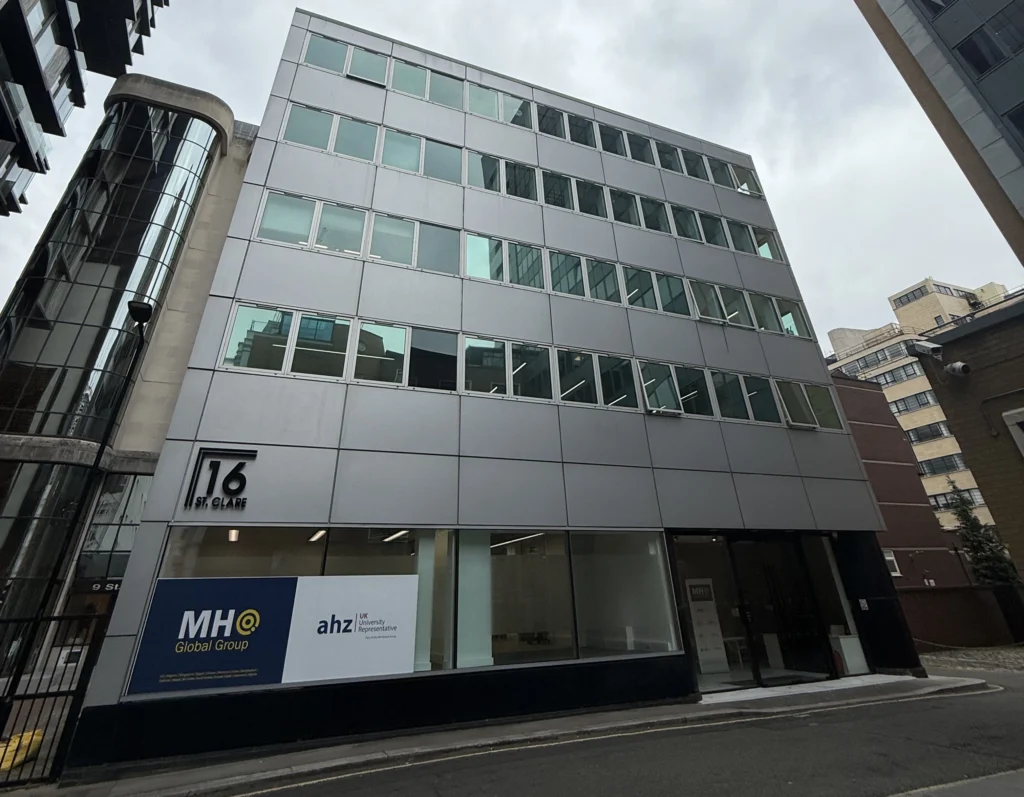
Rob, an architect client we regularly work with, approached us about a five-storey 1980s commercial building in the City of London. His client was planning a refurbishment and strip-out and needed:
- Accurate floor plates for ground, first, second, third and fourth floors
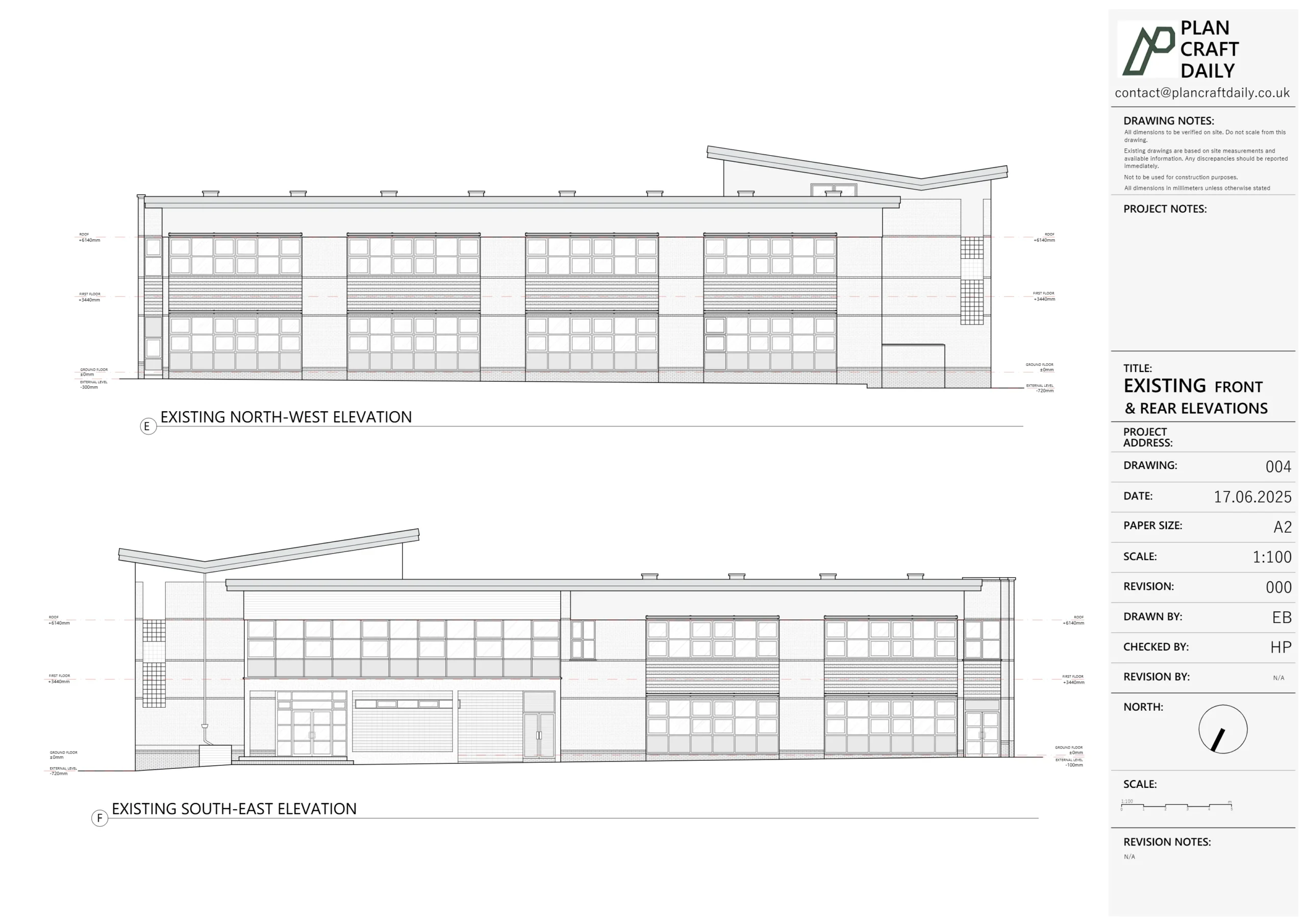
- A measured front elevation
- A drawing set that focused on structural envelope and core, not existing fit-out, because internal partitions were likely to be removed
Rob sent across a marketing brochure and some low-quality “existing” PDFs. They were enough to understand the building’s rough layout, but not reliable enough for detailed design work. He needed a fresh measured survey that simplified the geometry without wasting budget on information they wouldn’t use.
Shaping the scope – basic vs detailed floor plans
Our first proposal gave Rob two clear options:
- Basic floor plans:
- Show core, structural perimeter and window positions
- Omit loose fittings and non-critical internal detail
- Detailed floor plans:
- Include fixed furniture positions and more granular interior information
On top of that we priced:
- Full measured survey & drawings for the whole building (all floors plus roof and basement)
- A front-elevation-only option for a lighter scope
After reviewing our proposal and discussing with his client, Rob came back with a sharper brief:
- Omit roof survey
- Omit basement
- Omit side elevations – front elevation only
- Do not pick up any internal partitions, as the floors would be stripped back
We re-worked the fee accordingly and kept the choice between basic and detailed plans, explaining in plain terms that:
Basic = structural envelope + core
Detailed = envelope + core + fixed furniture & fittings
Given the building was currently empty, access was straightforward, and we could keep costs lean by focusing on the geometry that actually mattered.
Rob confirmed they only needed basic floor plans, sought final sign-off from his client, and then asked us to proceed and issue a deposit invoice.
Scheduling and access – working around a simple, empty building
Once the client approved our revised fees, we:
- Issued the deposit invoice, explaining that payment would secure the survey slot.
- Proposed a Thursday afternoon visit, with arrival between 2:30 pm and 3:00 pm.
- Shared our senior surveyor’s details (Mustafa) so Rob’s colleague Allison could meet him on site.
Rob confirmed:
- The building was vacant, so access would be easy.
- Allison would be on site at 2:30 pm and act as key point of contact.
After Lloyds’ online banking glitch resolved on their side, the deposit came through; we issued a payment receipt and locked in the survey date.
How we carried out the commercial survey
On the agreed Thursday, our senior surveyor attended Clare Street with a focus on speed, clarity and reliable geometry rather than over-detailing.
On site, he:
- Used a laser disto (plus tape checks) to capture:
- Overall dimensions of each floor plate
- Core positions (lifts, stairs, WCs)
- Window openings and spacing to the façade
- Structural columns and any obvious permanent features
- Treated the existing partitions as temporary and only recorded what was needed to understand the structural shell and core.
- Captured a measured front elevation, tying window heights and floor levels back to the internal survey.
- Supplemented measurements with a 3D scanner for internal reference, helping with QA back at the office.
Because the building was empty, we didn’t need to navigate around tenants or business operations, which made data capture efficient and reduced time on site.
Managing floor-by-floor sensitivities
We always give clients a short debrief after a larger or more complex survey. In this case, there was one nuance to flag:
On a follow-up commercial project for the same client group, we encountered staff using facilities on one of the floors, which limited how much we could reasonably survey in the WCs while maintaining privacy. That experience informed how we approached Clare Street and similar office jobs:
- We prioritise respectful, non-intrusive surveying when spaces are in use.
- Where a lower floor matches a fully measurable upper floor, we note this and mirror the layout with clear annotation, instead of intruding.
While Clare Street itself was vacant, this pattern is important for any future refurbishments the client undertakes in occupied buildings.
Turning measurements into usable drawings
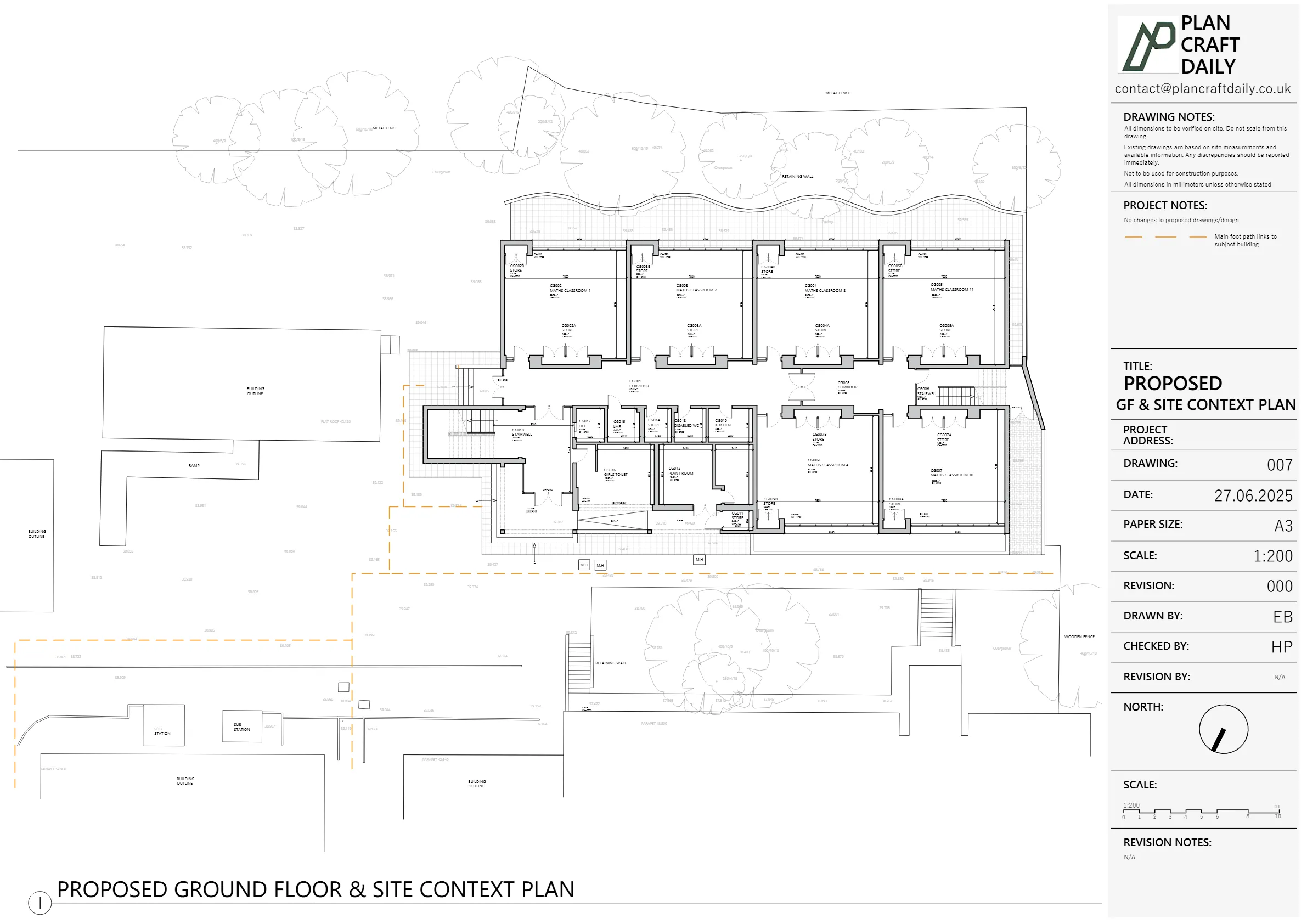
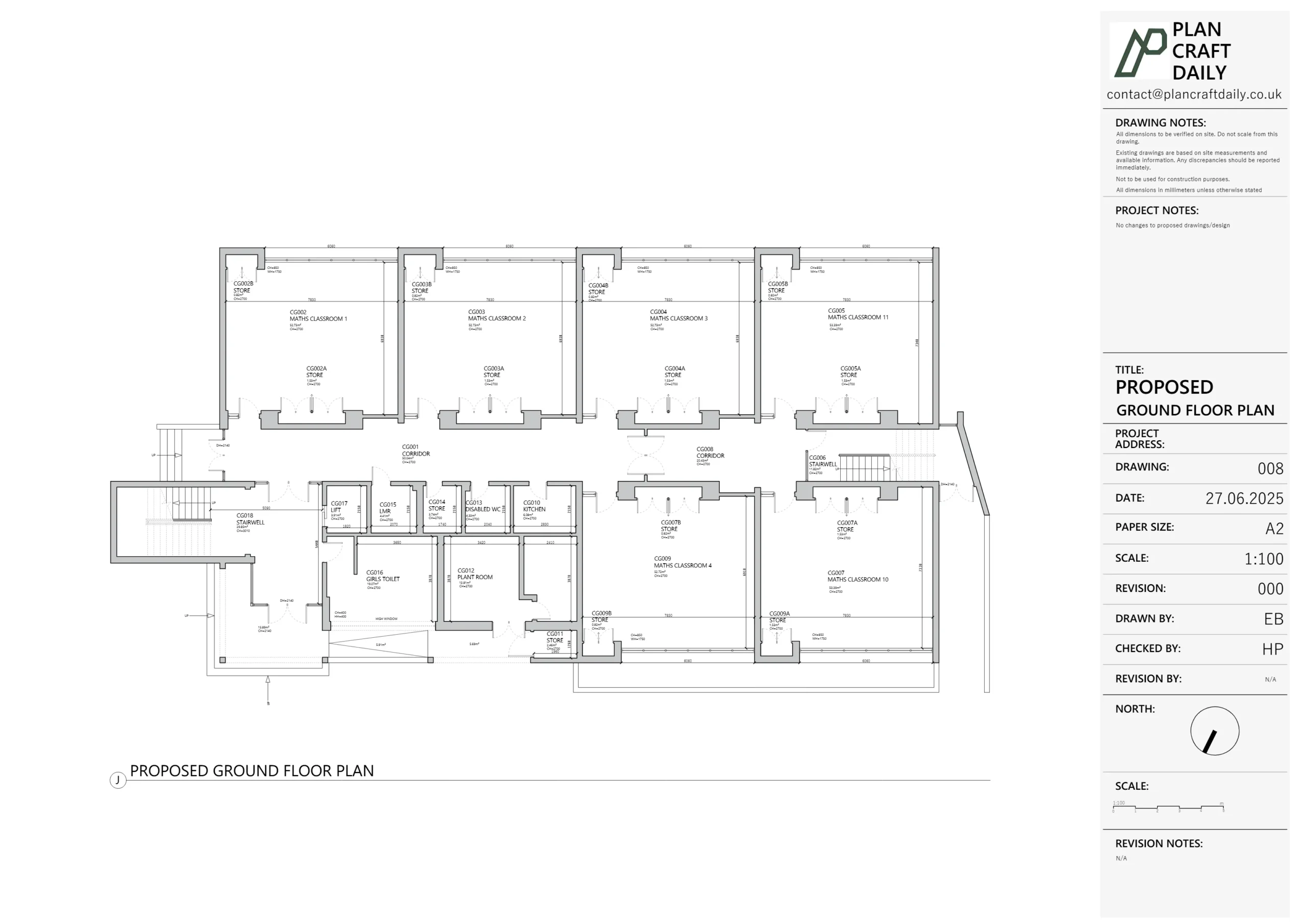
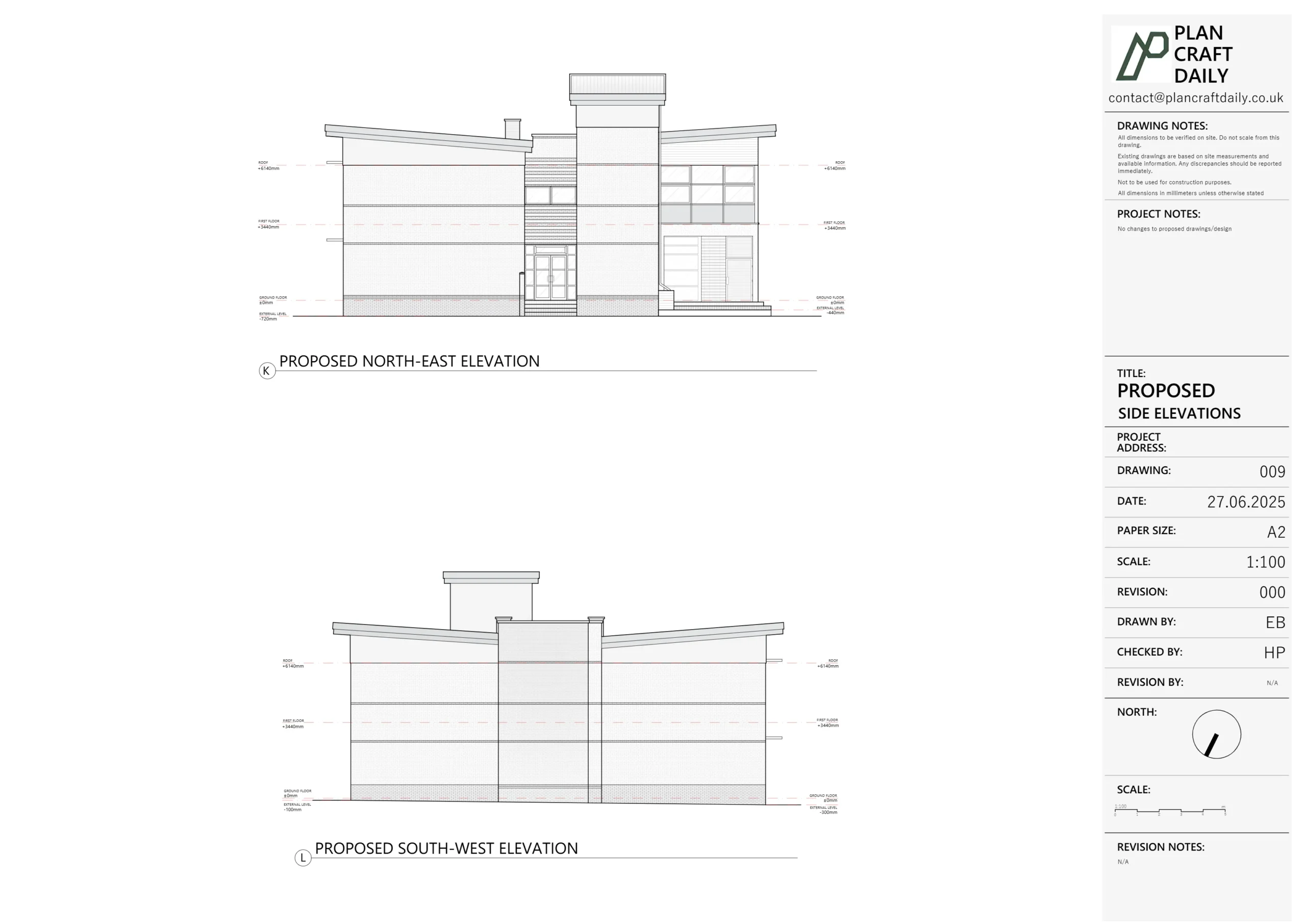
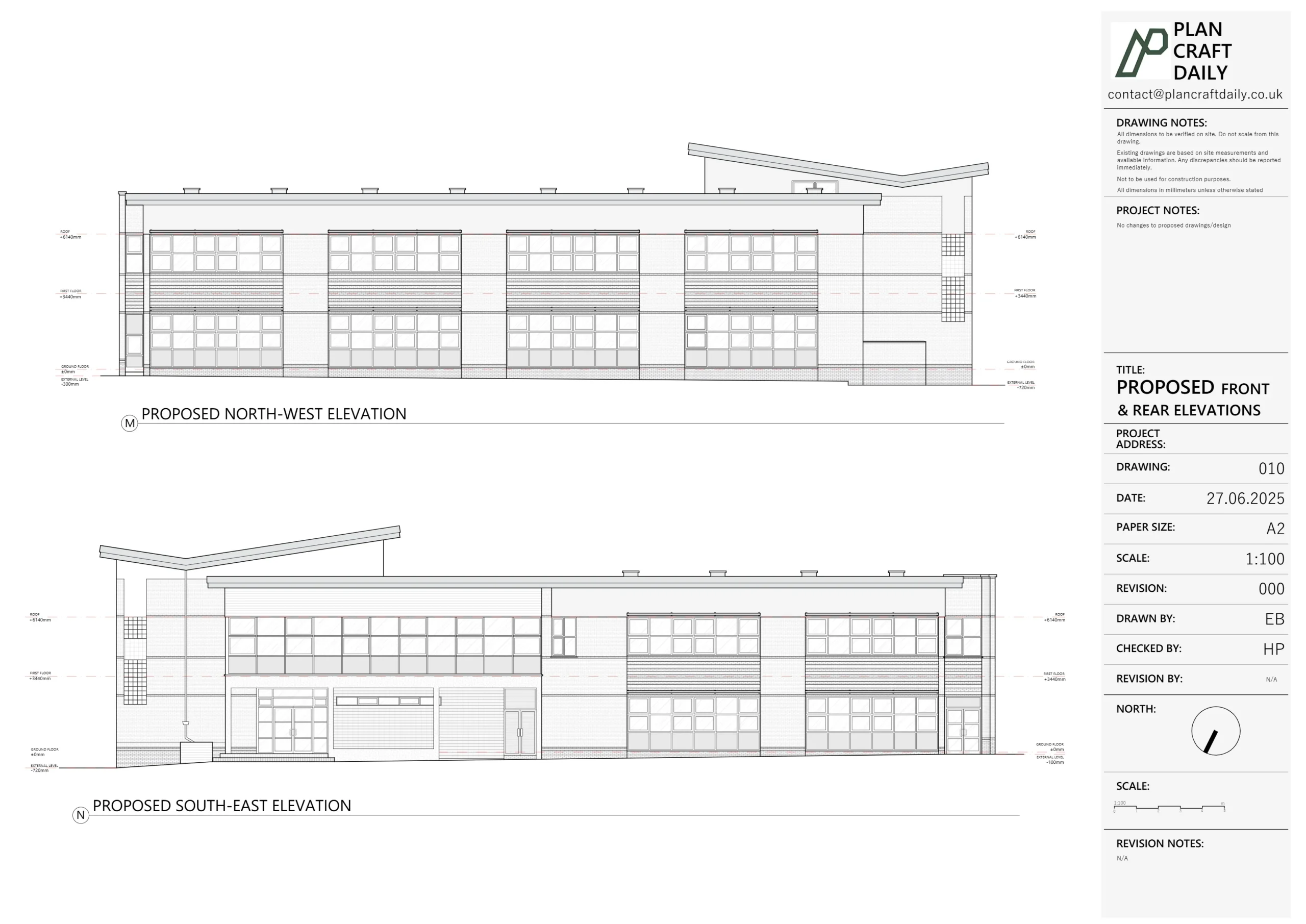
Back in the studio, our CAD team translated the raw survey into a clean, strip-out-ready drawing set:
- Five basic floor plans (ground to fourth) showing:
- Structural perimeter and core
- Column positions, lift/stair cores and WC blocks (in outline)
- Window positions and openings along each façade
- A front elevation tied back to the internal levels, with:
- Storey heights clearly indicated
- Window head/sill levels coordinated with the floor plans
Because we had a clear brief to avoid partitions, the drawings were:
- Easy for the design team to overlay with new layouts
- Free of legacy clutter that so often comes from “as-existing” office surveys
Once internal QA was complete, we issued:
- DWG files for Rob’s design team
- PDF plots for quick review and coordination with the client
Final outcome
For Rob’s City of London office refurbishment, we delivered:
- A targeted, budget-appropriate measured survey – just the front elevation and basic floor plates they actually needed
- A clear explanation of the difference between basic and detailed plans, so they could choose scope intelligently
- Fast turnaround from go-ahead to completed drawings, thanks to:
- A clear brief
- An empty building
- Our senior surveyor leading the job
For the client team, the benefits were:
- Reliable, strip-out-friendly CAD floor plates they could design over immediately
- A front elevation accurate enough for planning and façade design work
- Confidence that they weren’t paying for unnecessary detail.
For us, this project underlined how important it is, especially on commercial work, to:
Keep the survey focused on what the design team will genuinely use.
Spend time refining scope at the quotation stage
Be transparent about what each drawing level includes
Project Details
| Service Type | Commercial measured survey – basic office floor plans & front elevation |
| Time Taken | Around 1–2 weeks |
| Location | Clare Street, City of London |