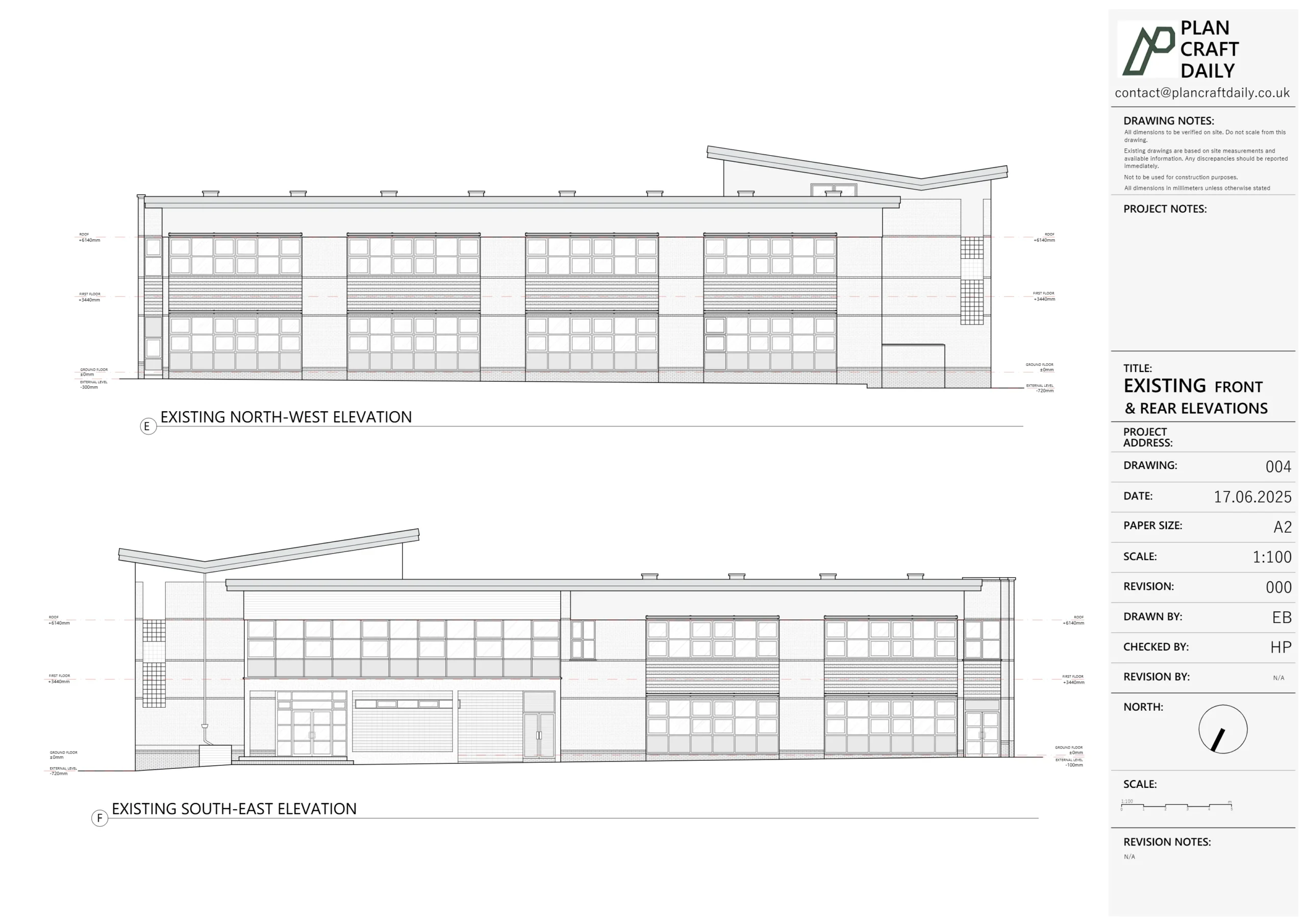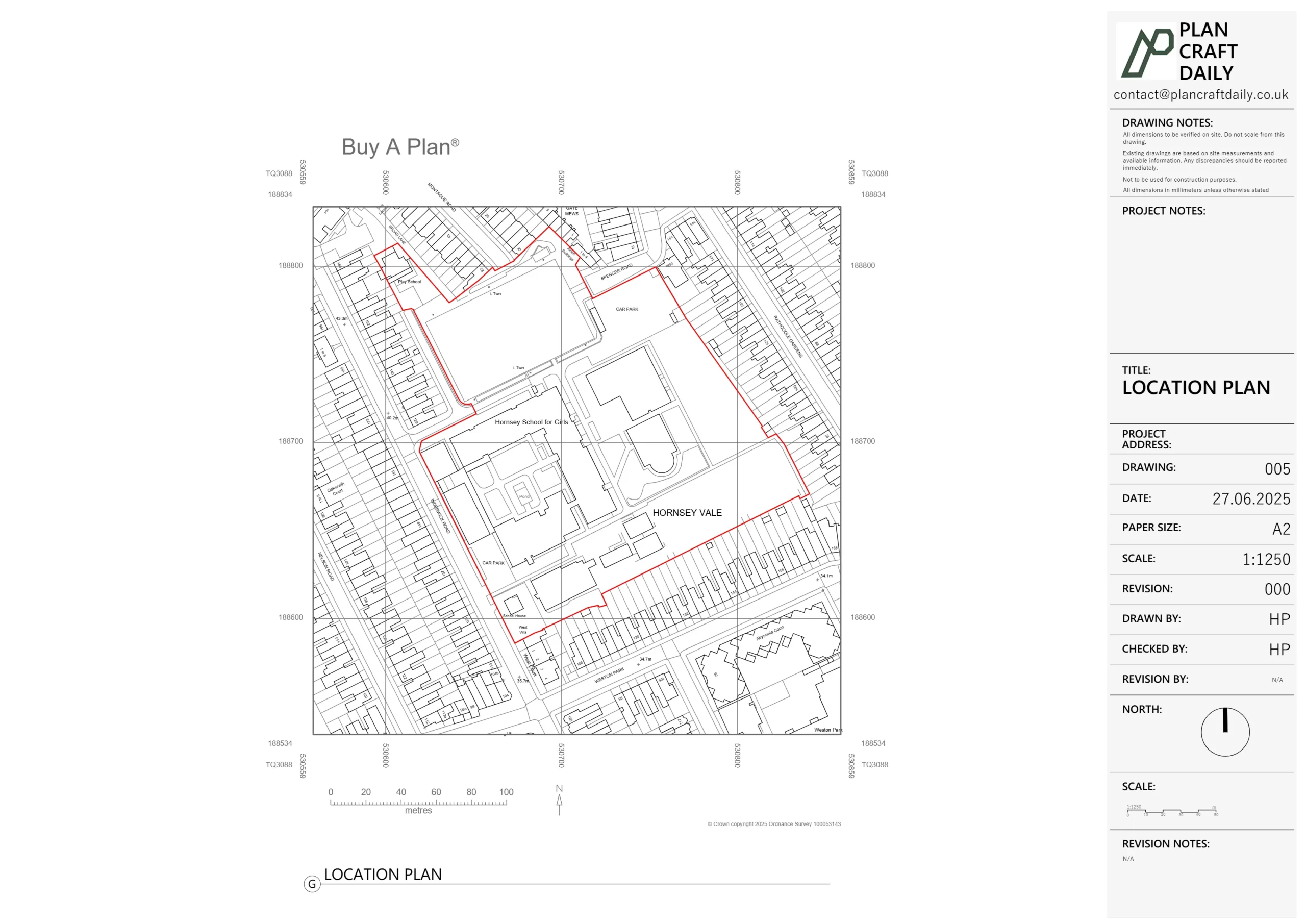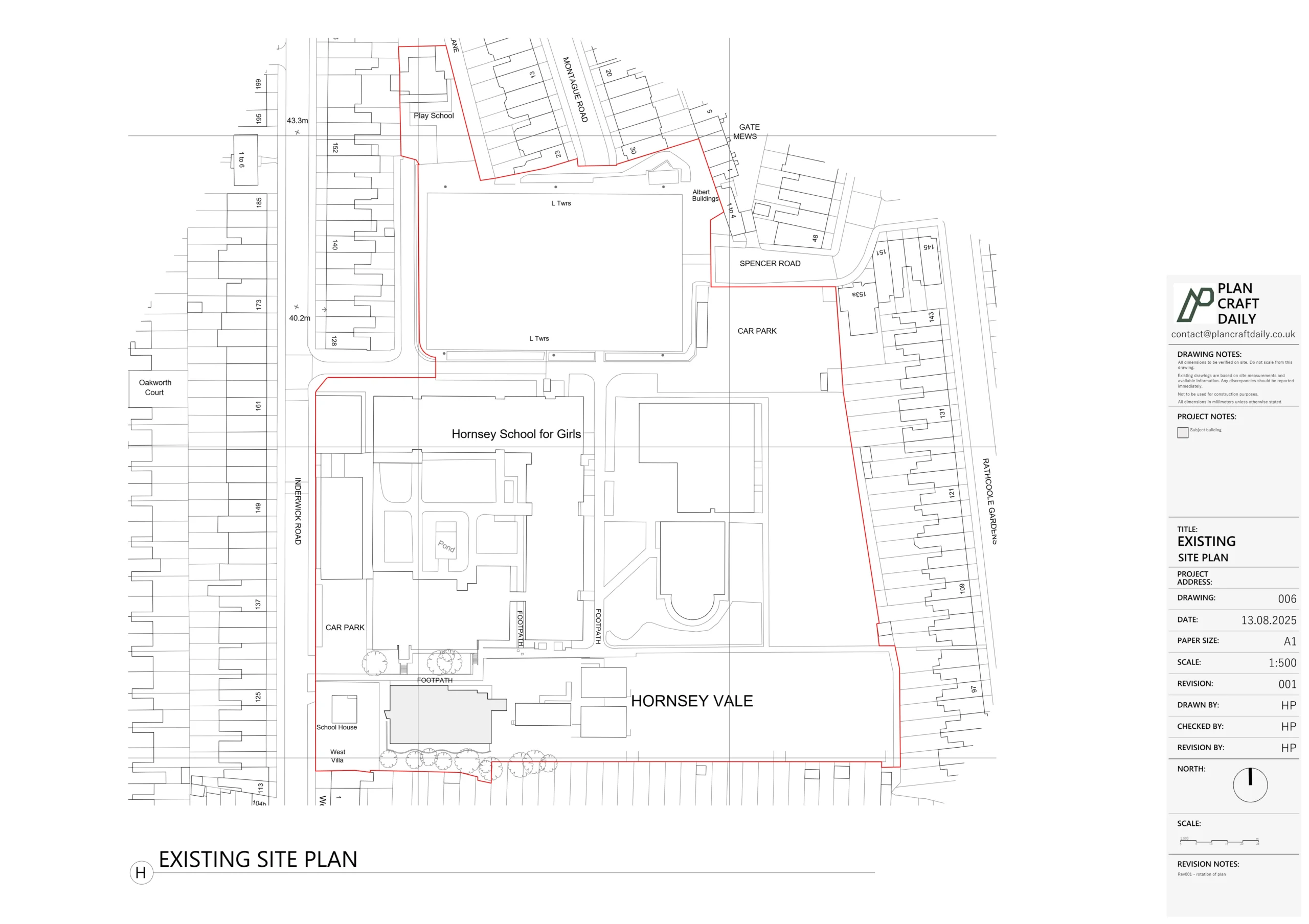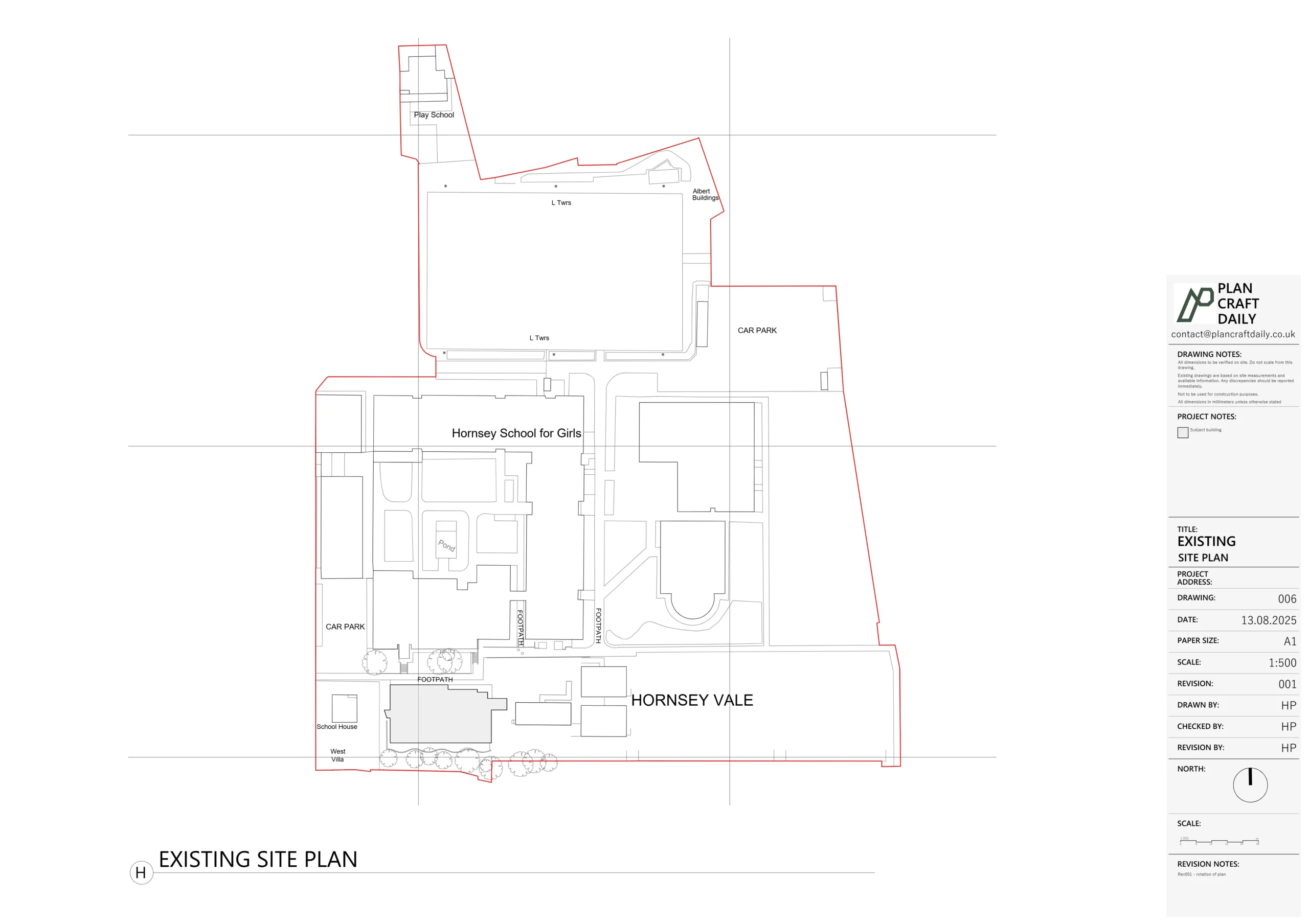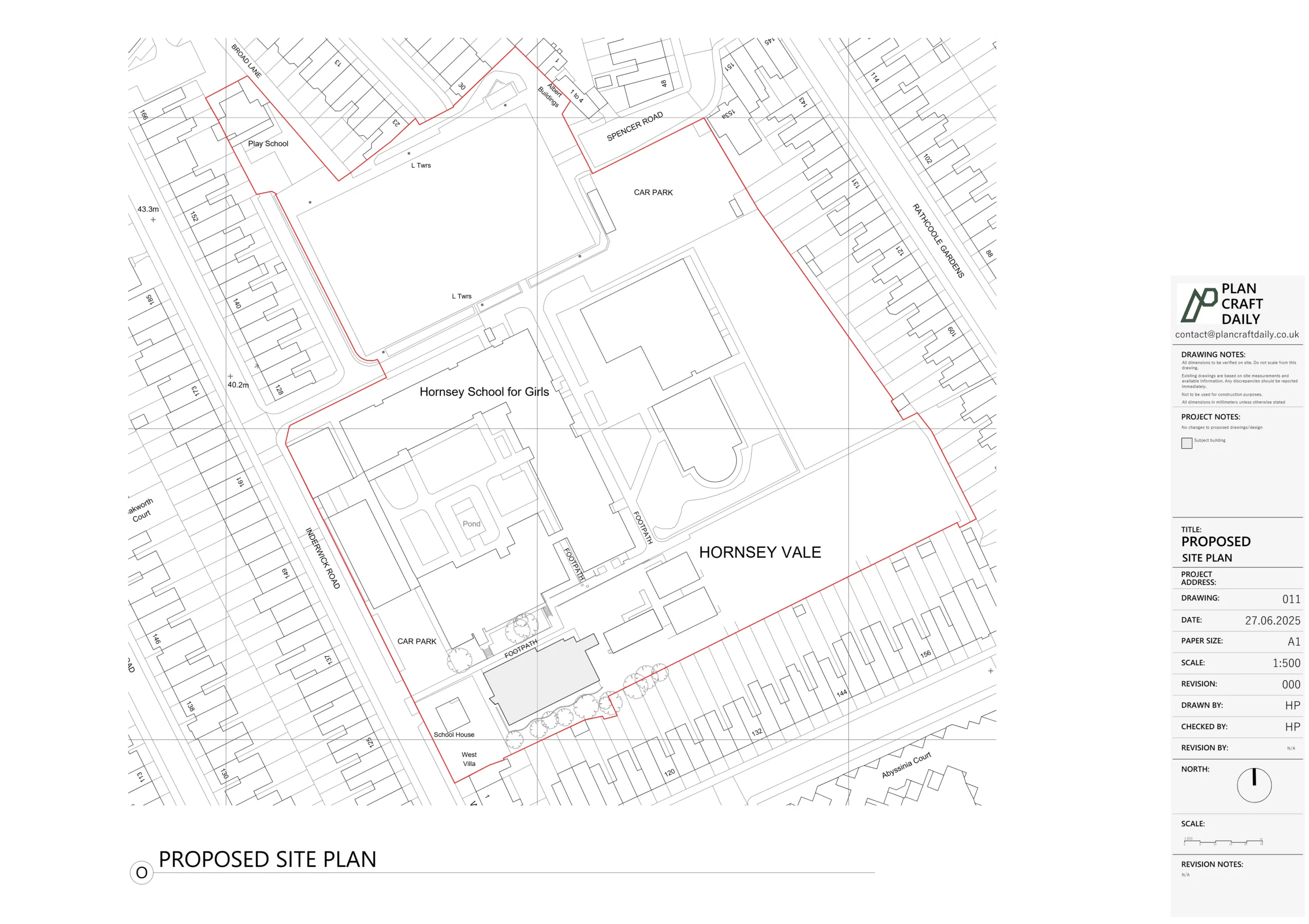
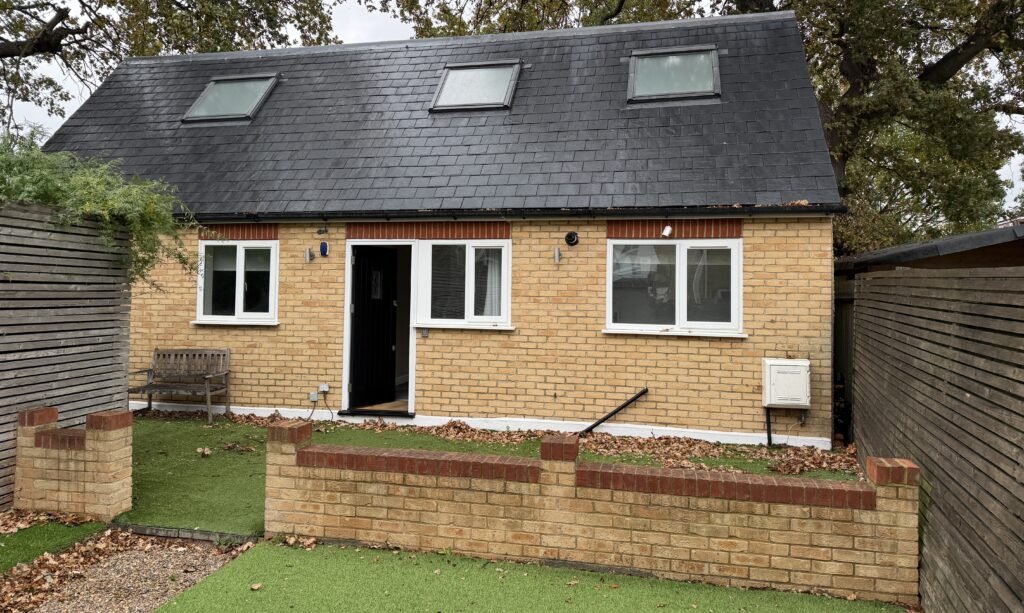
Rob, an architect client we’ve worked with on several London schemes, approached us for a very focused piece of work on a small residential property in south-east London.
His brief was deliberately minimal:
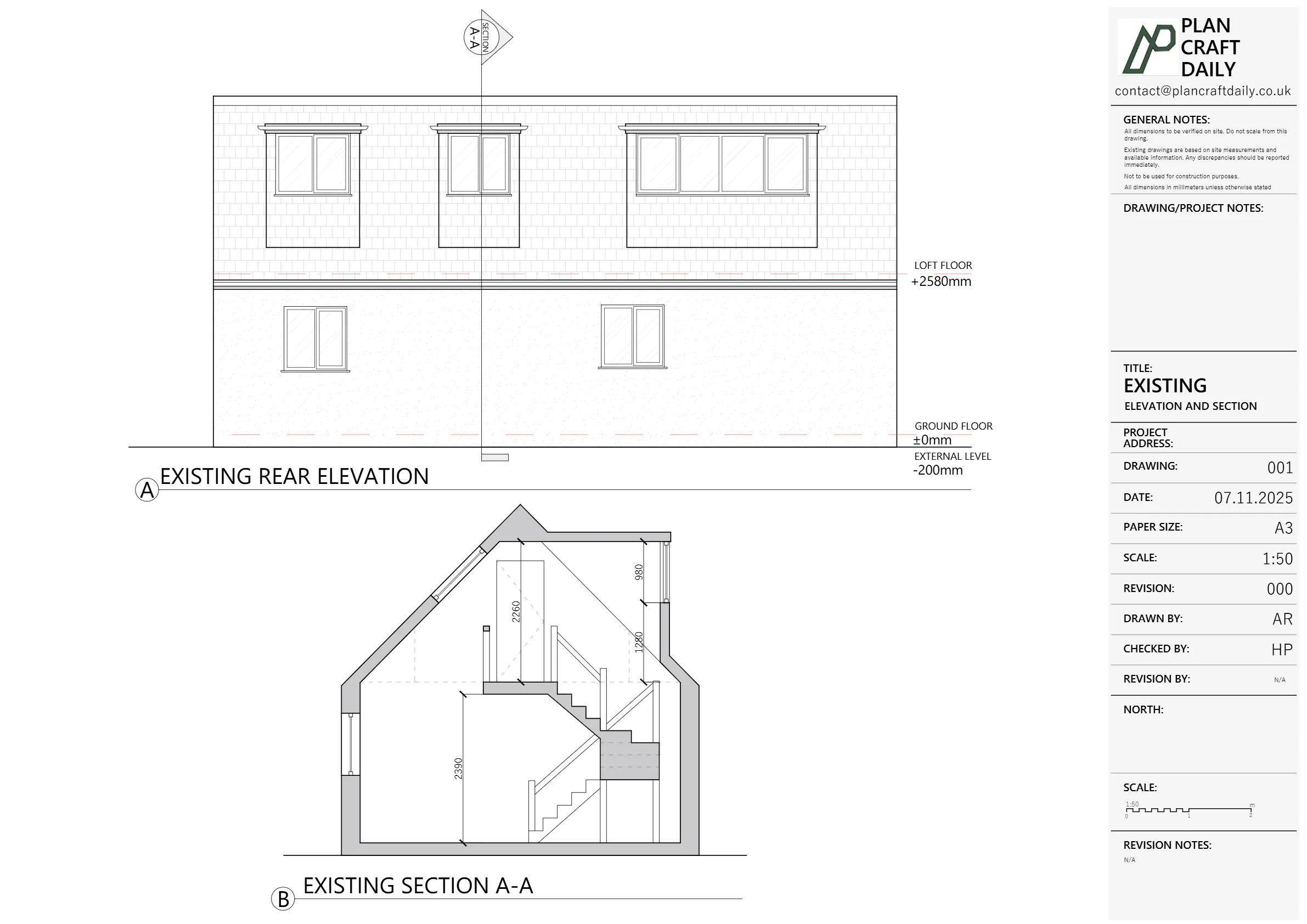
- Measure and draw the existing rear elevation, including all window positions.
- Produce a full-height cross section, front to back through the building.
- Initially, also a measured first-floor plan, later removed from the formal deliverables to keep the client’s costs down.
The property was vacant, which made access straightforward. The goal was to give Rob just enough accurate geometry to progress a specific design and planning question, without commissioning a full whole-house survey.
However, from our point of view, there was one non-negotiable: to draw a reliable section, we still needed to measure the first-floor geometry properly, even if it wasn’t going to be issued as a separate drawing.
Agreeing a scope that stays accurate and cost-sensitive
There was quite a bit of back-and-forth on scope and fee:
- Initial quote – rear elevation, first-floor plan and a full-height section.
- Rob confirmed the client only needed rear elevation + first-floor + section, and asked us to re-look at the fee.
- We issued a revised quotation with a 10% discount, on the basis that it was a compact job – and politely asked for a review in return once everything was delivered.
- The client then queried whether we could omit the first-floor survey work altogether and just provide:
- measured rear elevation, and
- cross section.
We explained that, in practice, we still have to measure the full first-floor to generate a trustworthy section – otherwise we’d be guessing at heights, floor build-ups and structural relationships. So:
- We kept the survey scope the same (full first-floor measured),
- But confirmed that only the rear elevation and section would be issued as the final drawings, keeping the deliverables tightly aligned with what the client actually needed.
This allowed us to protect the technical integrity of the drawings while respecting the client’s budget and brief.
How we carried out the survey
Once Rob confirmed the revised fee, we:
- Issued the deposit invoice.
- Agreed a survey date for Friday 31st October, with an arrival window between 10:00 and 10:30 am.
- Received confirmation that Rob would collect keys and meet our surveyor on site, as the property was unoccupied.
On the day, our surveyor Ali undertook a compact but detailed survey focused on three things:
1. Rear elevation capture
Using a laser disto and tape, Ali:
- Picked up the full width and height of the rear façade.
- Located window and door positions, including sill and head heights.
- Recorded changes in wall plane (e.g. any rear projections, steps or offsets).
- Took reference photos from multiple angles to support CAD drafting and visual checks later.
2. First-floor geometry for the section
Even though the client didn’t require a first-floor plan drawing, the section depended on accurate internal heights and relationships. So Ali:
- Measured room widths and depths on the first floor.
- Captured floor-to-ceiling heights and any level changes.
- Logged stair positions and floor transitions, so the section line could be placed in a way that told the full structural story.
- Noted approximate floor build-up by comparing internal heights with external measurements, giving us enough information to infer slab/joist zones in the section.
3. Overall building height and section line
For the full-height cross section, we needed a continuous chain of measurements:
- Ground level to underside of ground-floor ceiling.
- Ground to first-floor level; first-floor to ceiling.
- Ceiling to underside of roof structure and ridge.
Where needed, Ali cross-checked readings with relative level readings and his external elevation measurements, ensuring the section would match the rear elevation and not drift out of alignment.
Turning the survey into elevation & section drawings
Back in the office, our CAD team translated the survey data into:
- Existing rear elevation
- All rear openings, with consistent head/sill levels.
- Any visible changes in material or projection.
- Contextual elements that supported Rob’s design thinking (e.g., alignment with neighbouring features where relevant).
- Full-height cross section
- Ground floor, first floor and roof shown in one coherent cut-through, front to back.
- Floor-to-ceiling heights, floor thicknesses inferred from level differences, and roof pitch drawn accurately.
- Enough internal detail (stair, headroom, key structural lines) for Rob’s team to use it straight away for design and structural coordination.
Everything was issued first as a draft PDF (001_Existing_Elevation&Section.pdf) for Rob to review. Once he confirmed he was happy and the final invoice was settled, we released the:
- Final DWG files,
- Clean PDFs, and
- Site photographs, so his team could reference the real-world context alongside the linework.
Managing communication, access and payment
A few practical points mattered on this job:
- Access: Because the property was empty, access was straightforward; Rob took responsibility for keys and meeting Ali on site, which removed a typical friction point with tenants.
- Payment timing: There was a small delay while Rob’s colleague (who held the company card reader) became available, but we were flexible as long as we had a clear assurance that the deposit would be paid.
- Scope changes: Over several emails, the scope shifted twice. Each time, we responded with:
- A clear written summary of what was included.
- A revised quotation where appropriate.
- An explanation of why certain measurements (like the full first floor) were still required to maintain accuracy.
This ensured no surprises at the end of the project – everyone knew exactly what was being delivered and why.
Final outcome
For this small but technically sensitive project on Heather Road, we delivered:
- Precisely measured rear elevation and full-height section tailored to a tightly defined brief.
- A compact, cost-efficient survey that still captured all the geometry needed for reliable design work.
- Fast turnaround from survey to final DWG – around a week and a bit – so Rob could keep his client’s project moving.
- A smooth experience for a repeat architect client, with transparent communication on scope, fee, and technical decisions.
The homeowner received exactly what they needed for their planning and design stage; Rob got clean, trustworthy CAD files without the overhead of a full-house survey – and we strengthened an ongoing working relationship built on accuracy, responsiveness and mutual trust.
Project Details
| Service Type | Targeted measured survey – rear elevation & full-height section (incl. first-floor checks) |
| Time Taken | 1–1.5 weeks |
| Budget | £300–£450 |
| Location | South-east London |