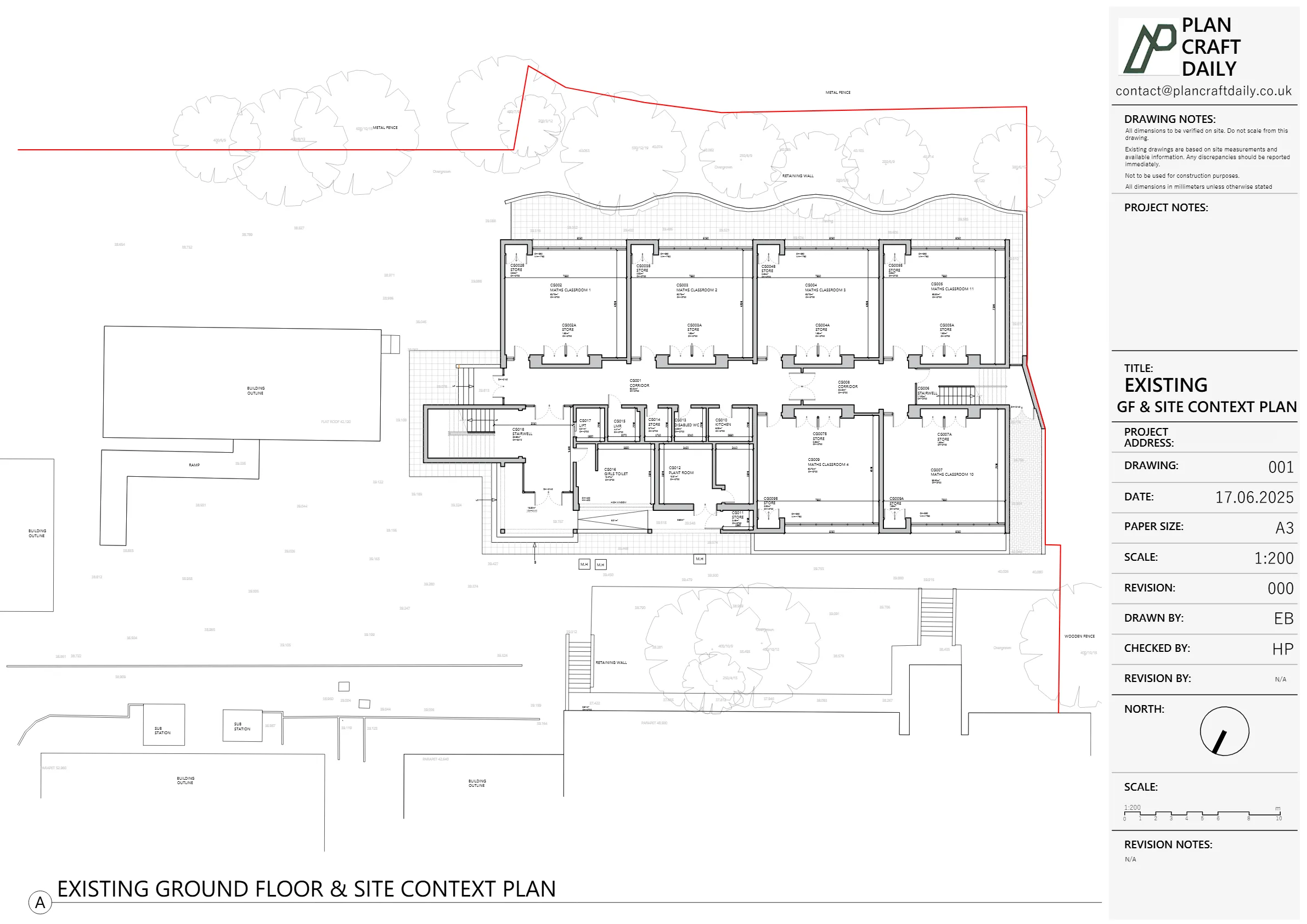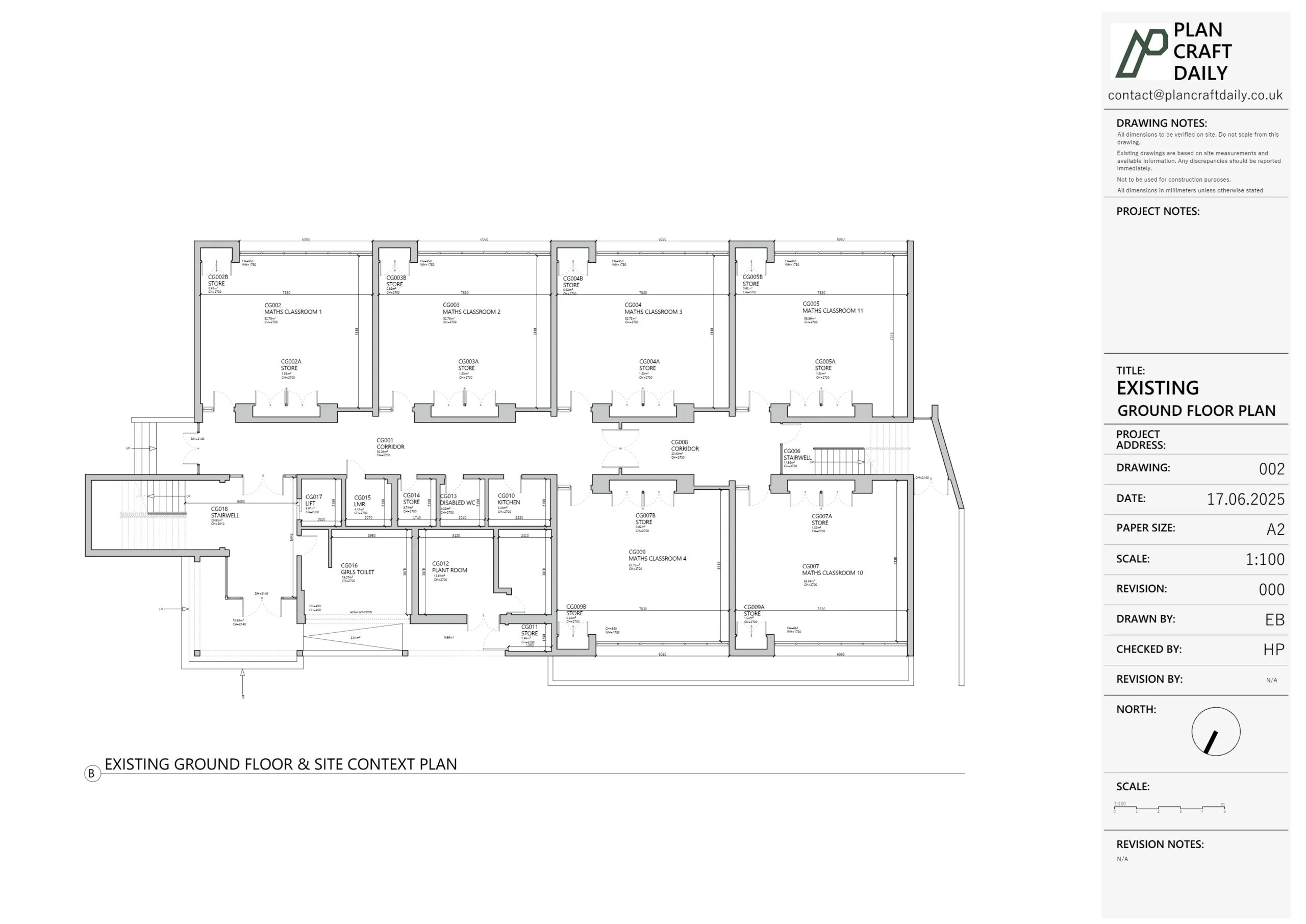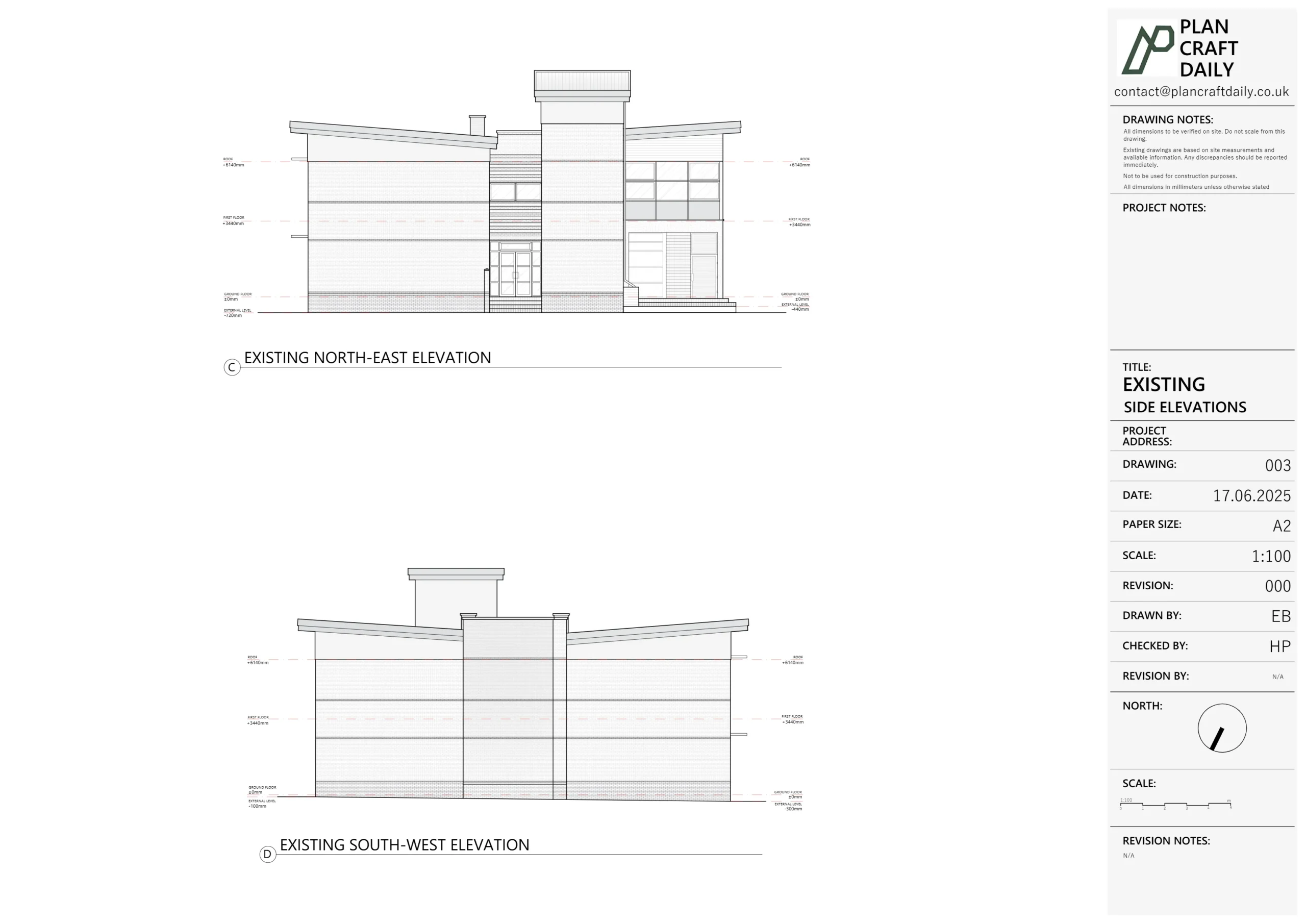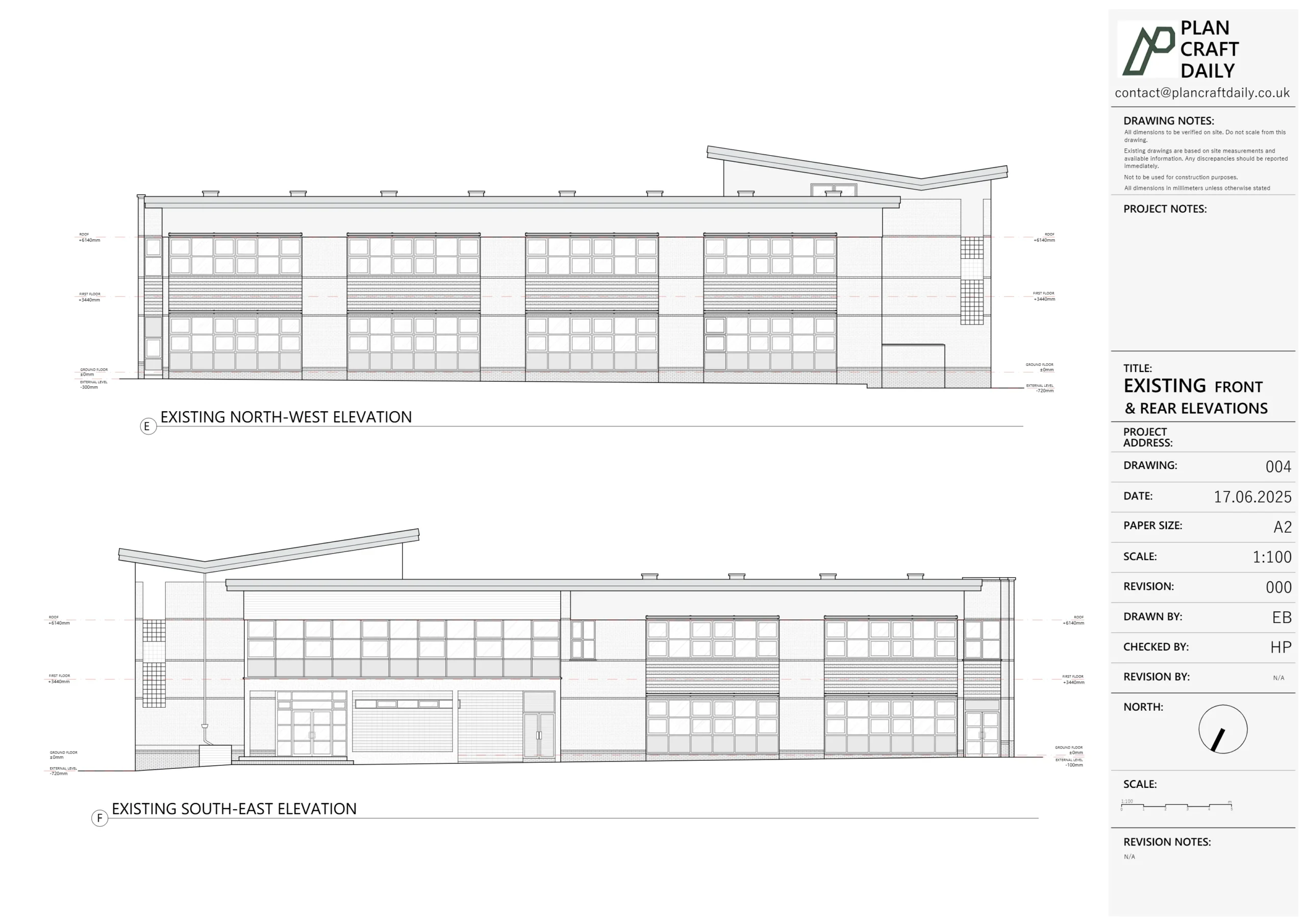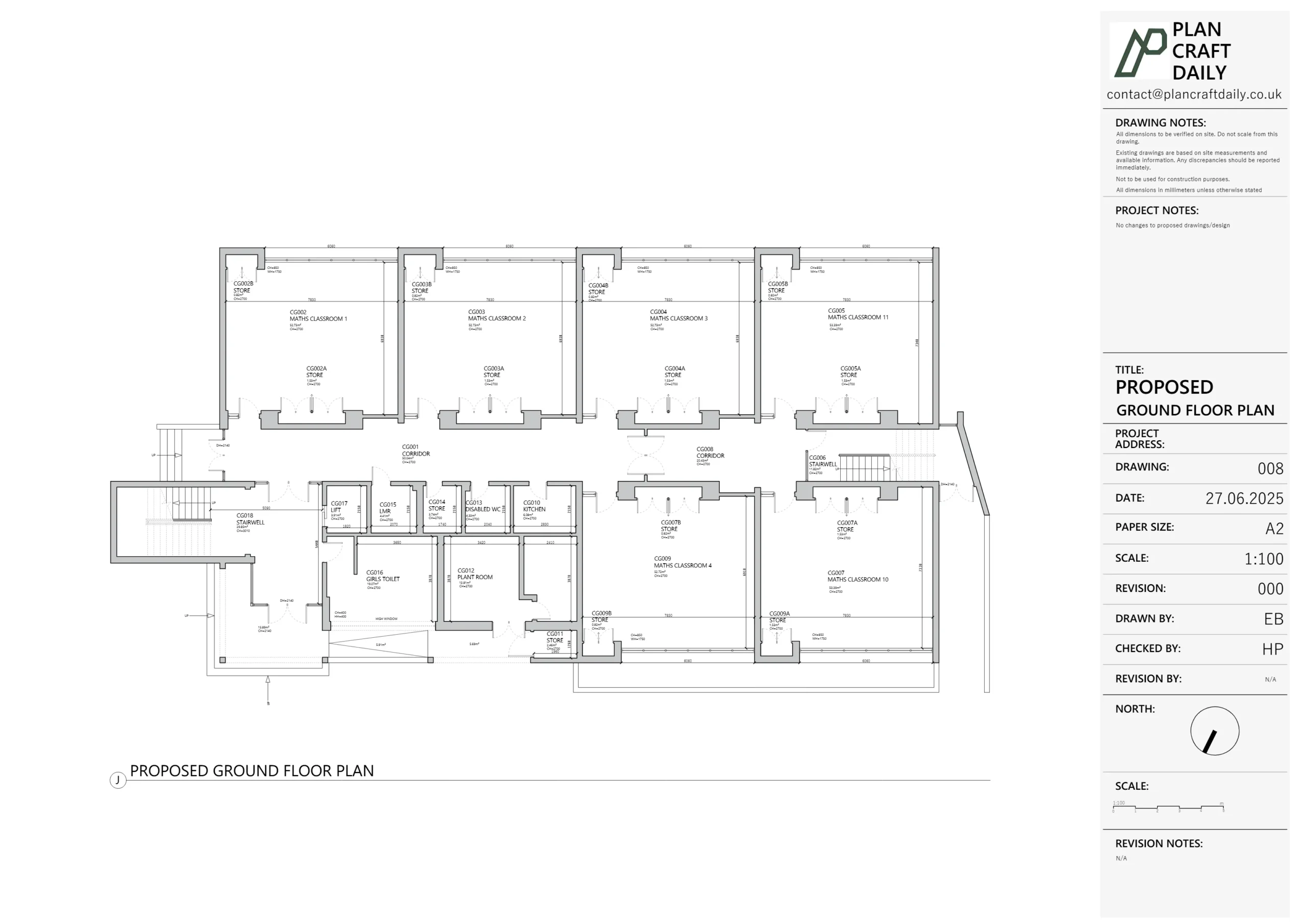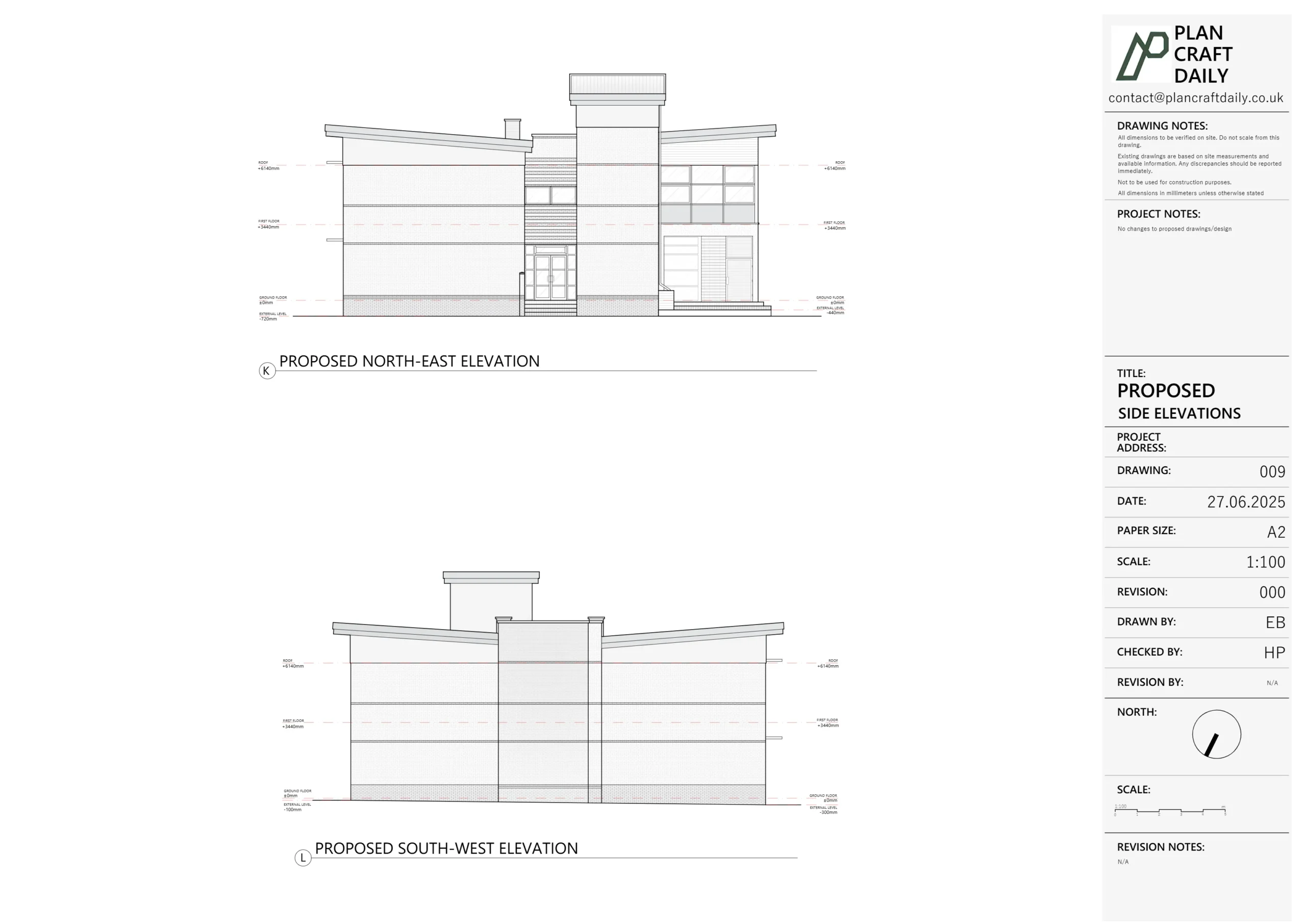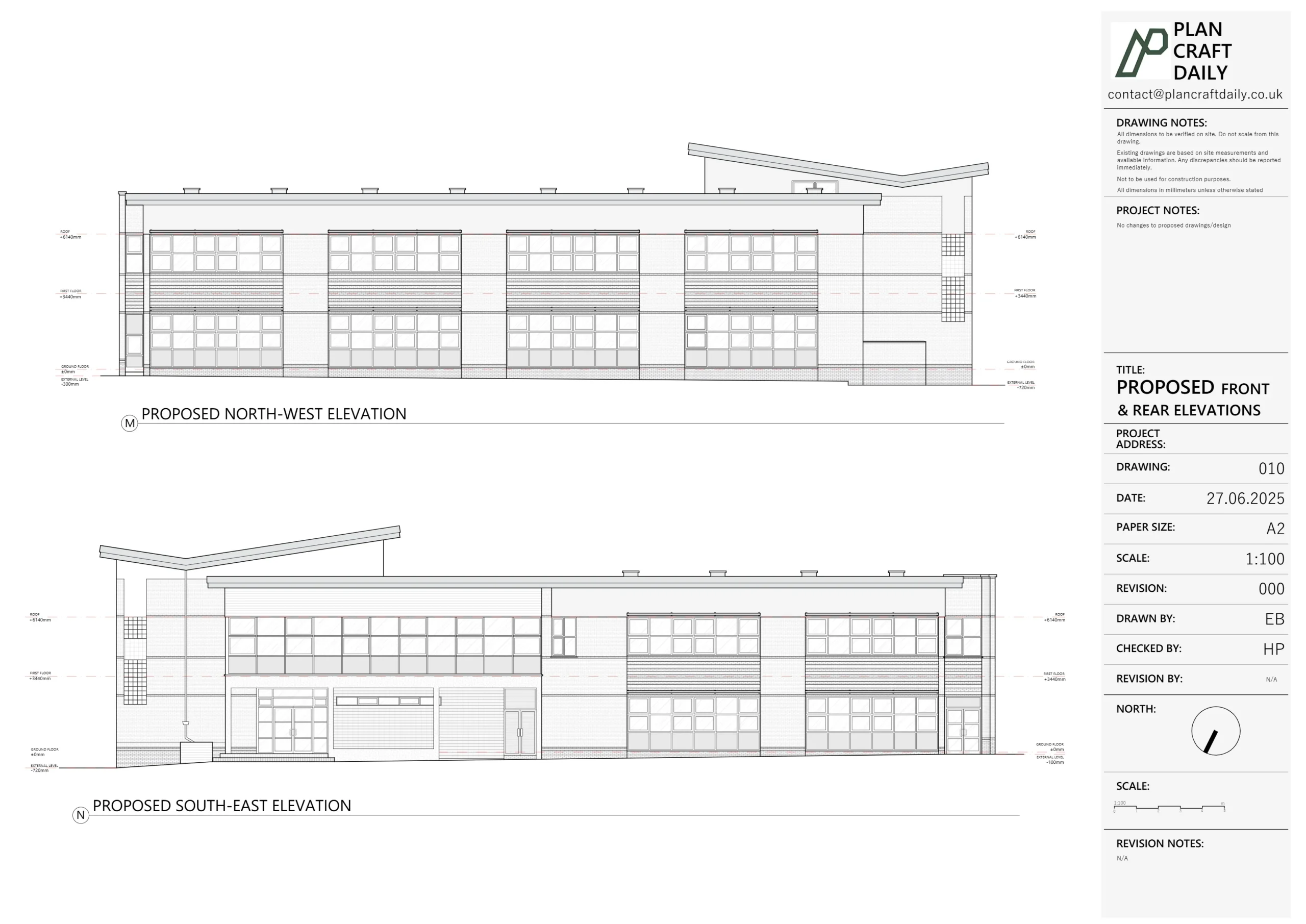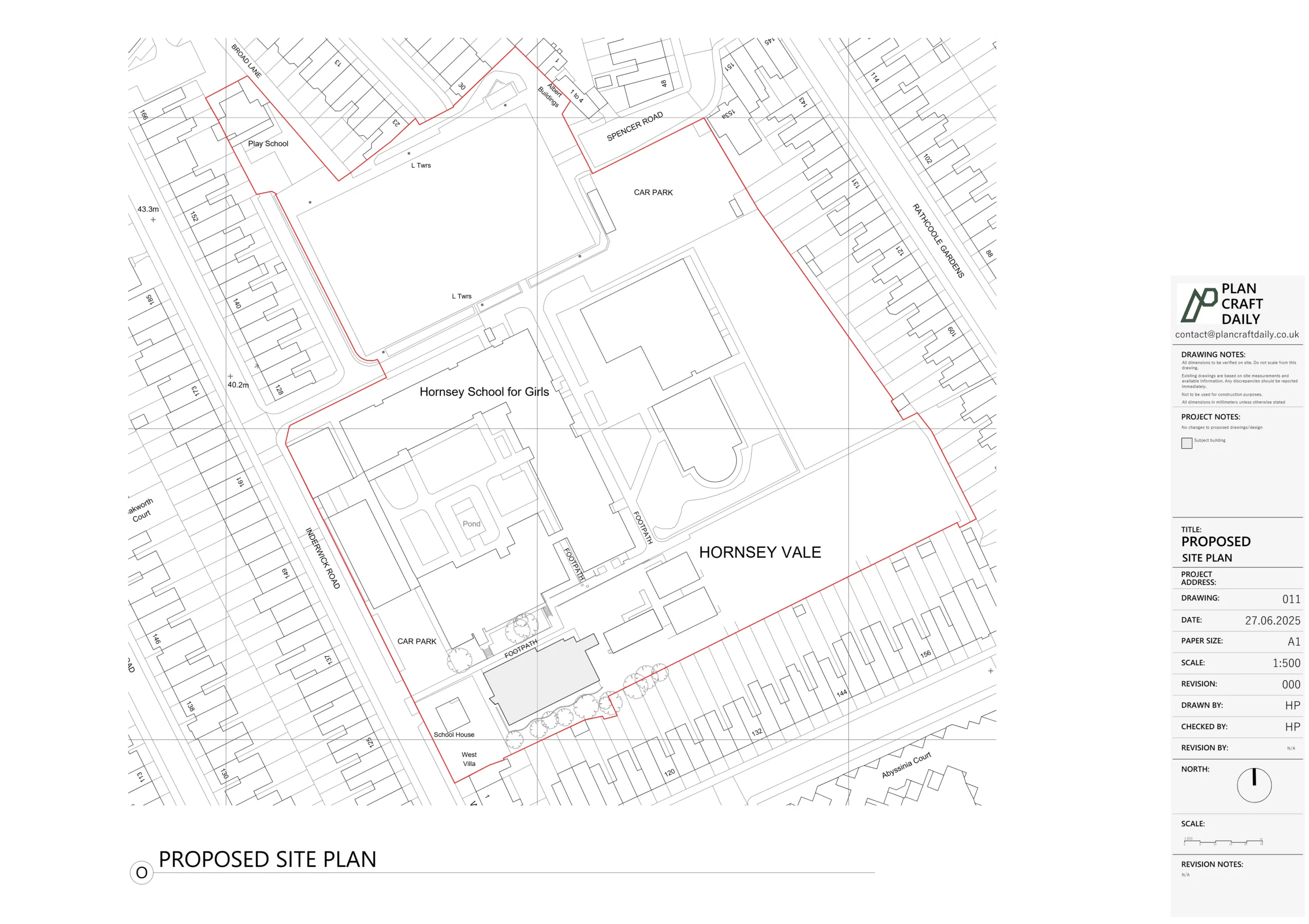
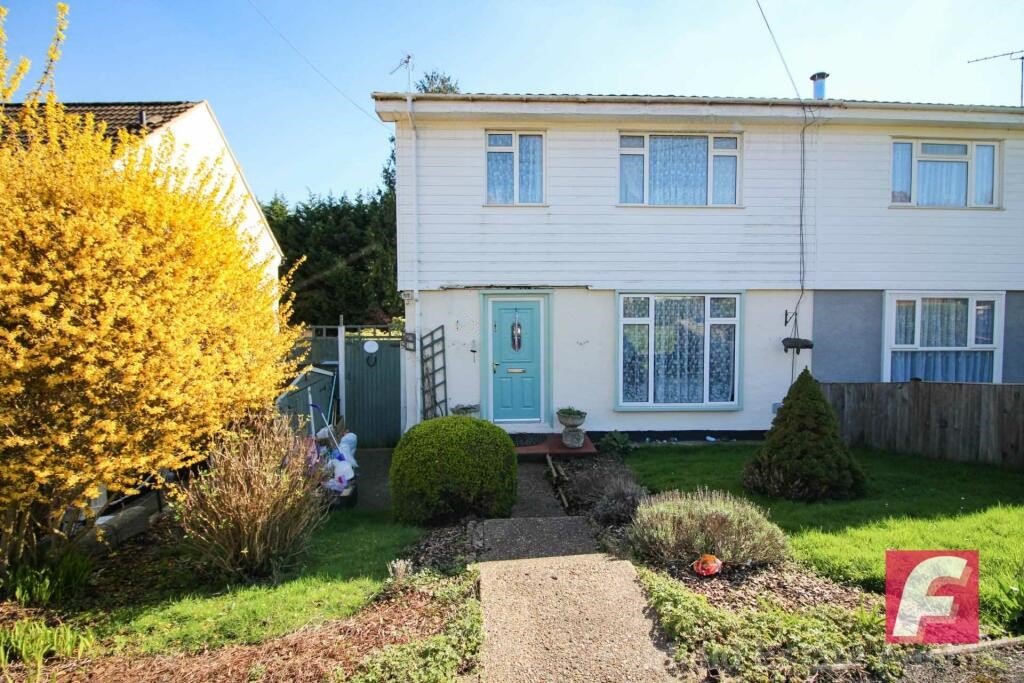
Andy asked us to prepare proposed drawings for a garden room at the rear of his property. He sent a Natalie, an architectural designer we’d already worked with on this property, came back to us for a follow-on phase. We had previously carried out the measured survey and existing drawings for her client’s home; this time, her client Isaac wanted a clear set of proposed drawings for:
- A one-storey rear extension
- A one-storey side extension
- A new front porch with windows on both sides
Natalie needed:
- A planning-ready proposed drawing pack
- Two rounds of revisions included
- A quick turnaround so she could keep Isaac updated
We:
- Quoted for the proposed drawings including two revision rounds.
- Agreed to a fee after Natalie asked if we could reduce the fee and drop the separate proposal sketch.
- Confirmed a 50% upfront and 50% on completion payment structure, so Isaac could pay a deposit and the remaining on sign-off.
- Asked Natalie to send all proposal notes (and an optional hand sketch) so we could accurately follow the brief and keep any revisions within the two included rounds.
Once the fee and scope were agreed and the deposit arranged, we set an internal due date of 3–5 working days for the first draft.
How we carried out the “survey” for this phase
Because we had already surveyed the house and produced existing drawings on an earlier project, there was no need for a fresh measured survey. Instead, this phase was built on:
- Our existing CAD base for the property (ground and first floor plans, roof plan, sections and elevations).
- Natalie’s detailed proposal notes describing exactly what Isaac wanted:
- Front porch: windows on both sides, pitched roof sloping down to the existing roof, approx. 2.5 m wide x 1.1 m deep, with a double or 1.5-wide door and glazing for extra light.
- Side extension: keeping a 900 mm gap to the neighbour’s boundary fence, small WC with a 400 x 600 mm side window, no toilet under the stairs, cloakroom at the front of the staircase, boiler room to the rear, entrance to the boiler room from the side, sloped roof.
- Rear extension: 2 m deep, full width, 3 m sliding patio door, keeping the kitchen in its current position, converting the existing garden door to a window, an additional side window (TBC), two rooflights (one above the kitchen, one above the dining area), brick and render to match existing with a flat cold roof.
Those notes, combined with our existing survey model, gave us all the information we needed to design the proposed layout and massing accurately without another site visit.
Turning the survey and notes into proposed drawings
Back in the office, our CAD team:
- Opened the existing AutoCAD model of the property and duplicated the relevant views to create proposed layers rather than starting from scratch.
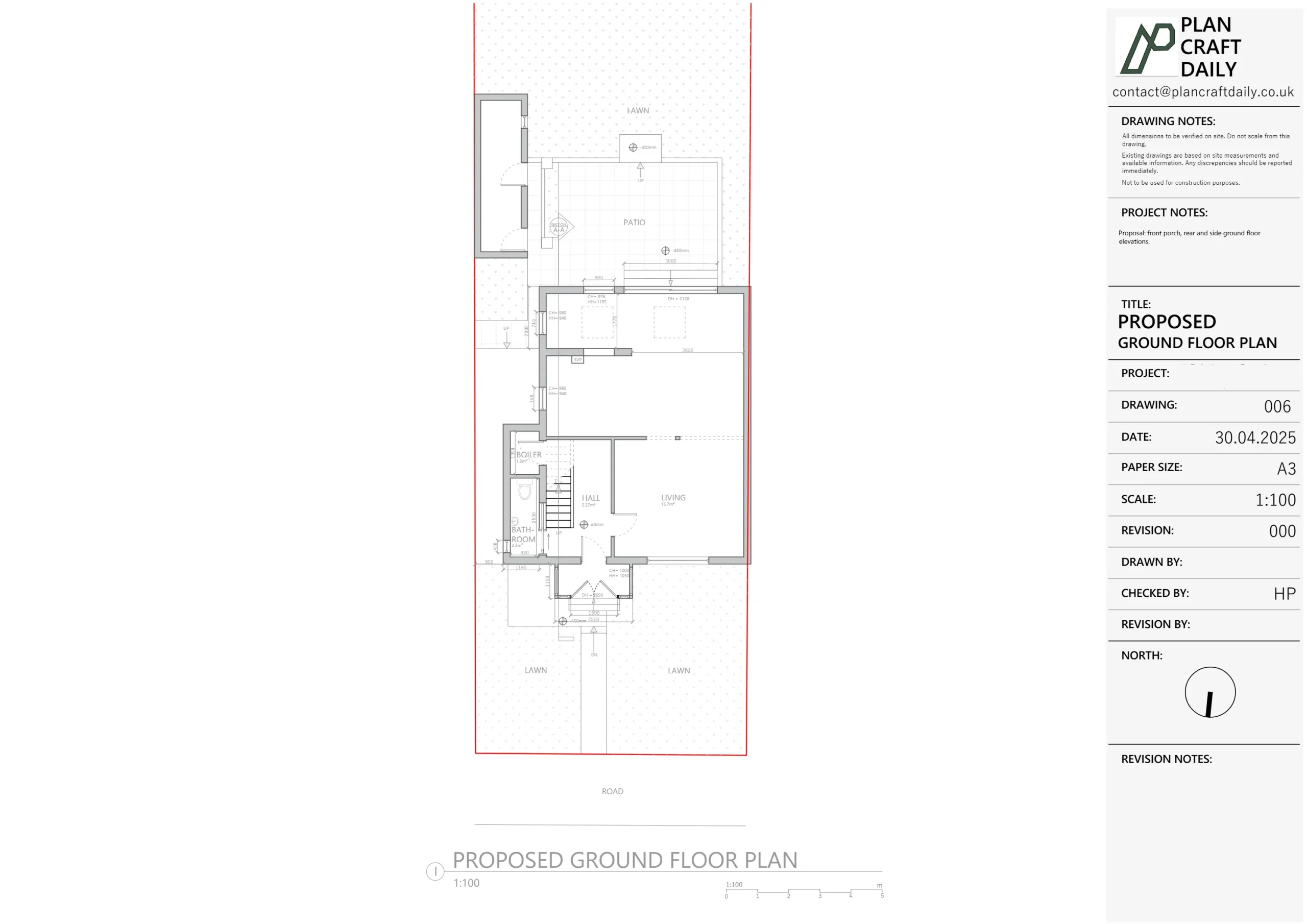
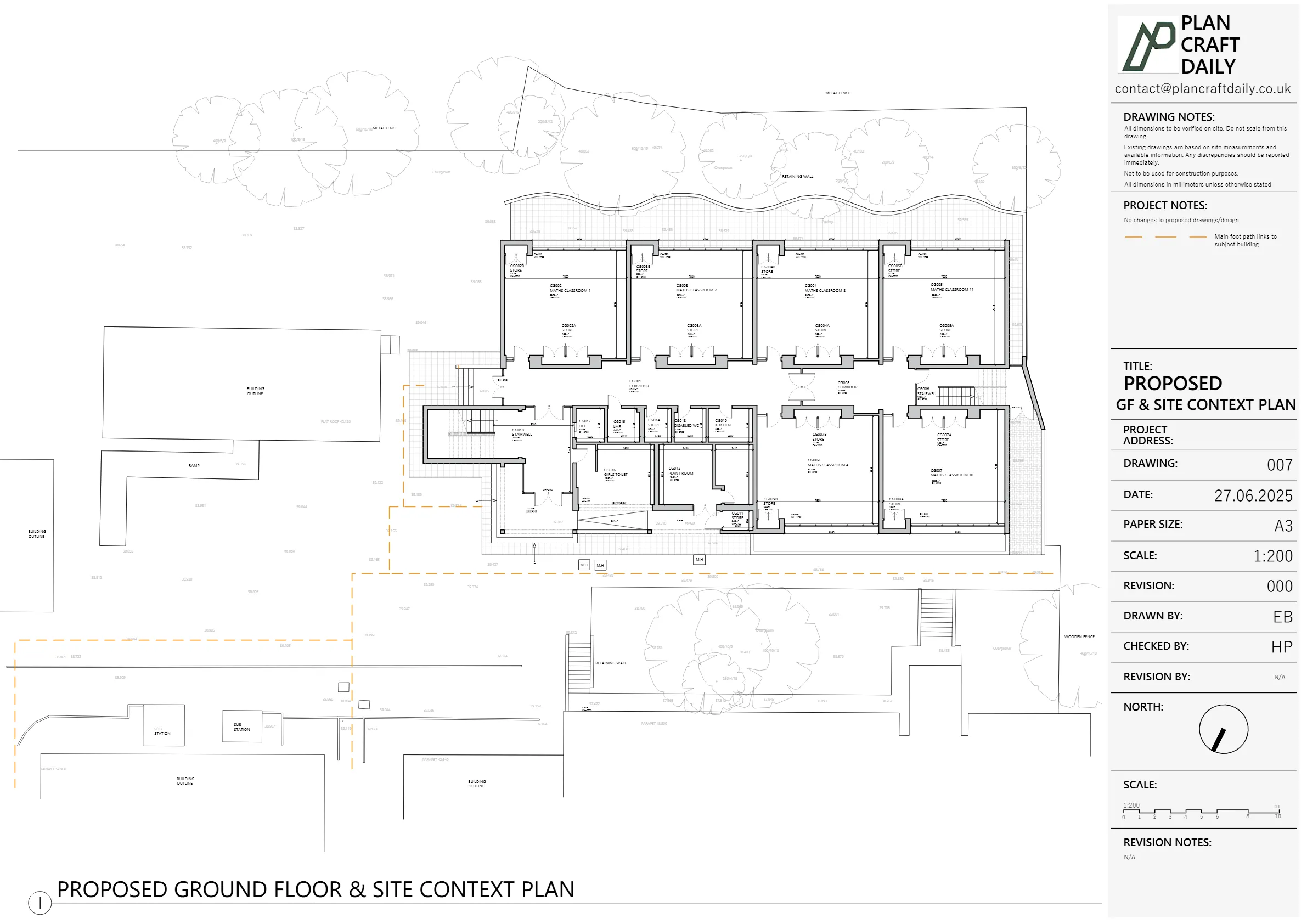
- Updated the ground floor plan to show:
- The new front porch footprint, doors and glazing to both sides.
- The side extension with WC, boiler room and cloakroom arranged to match Natalie’s notes (including the pocket door and clear 900 mm side gap).
- The rear extension projecting 2 m into the garden, with the 3 m sliding door and revised window positions.
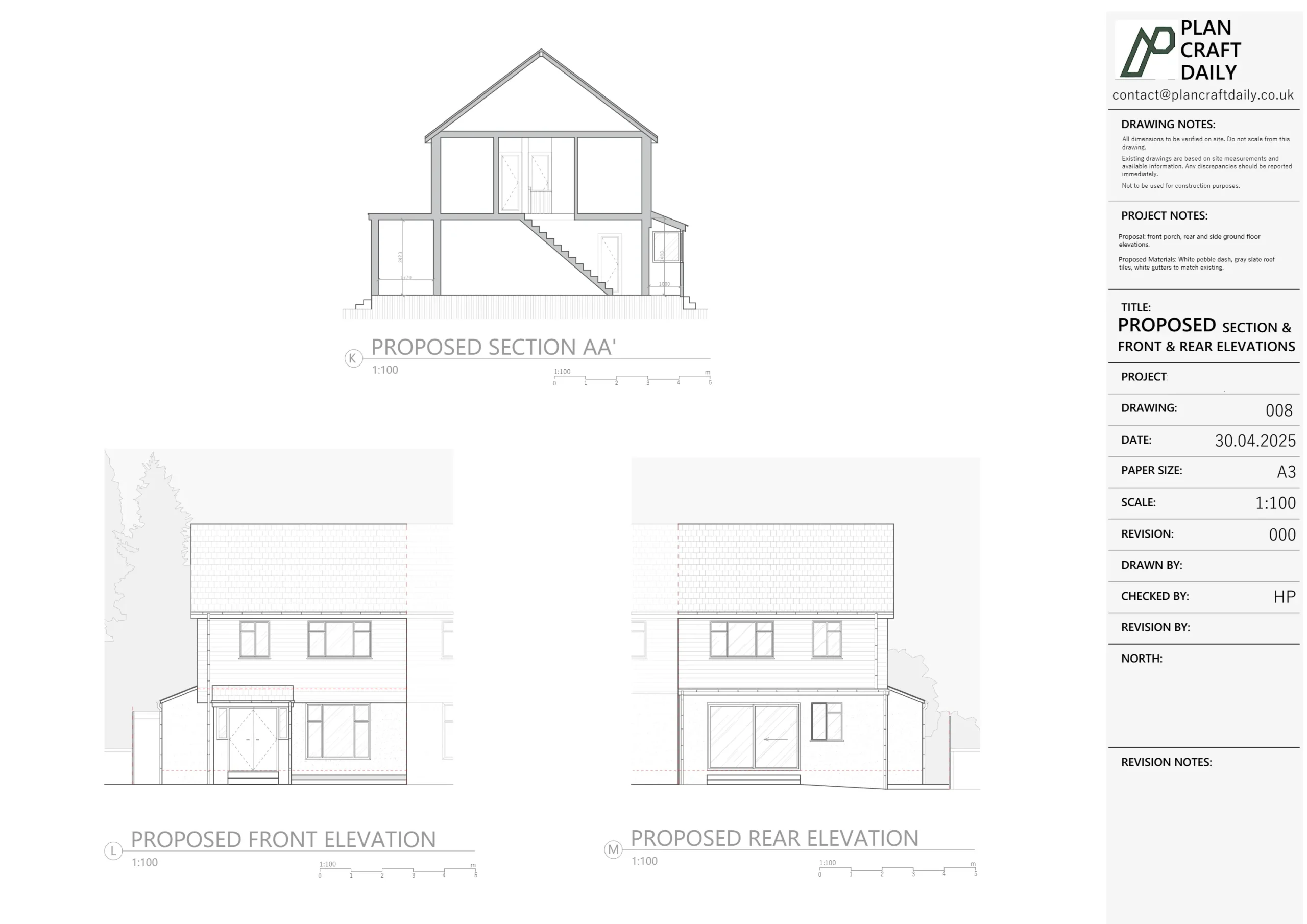
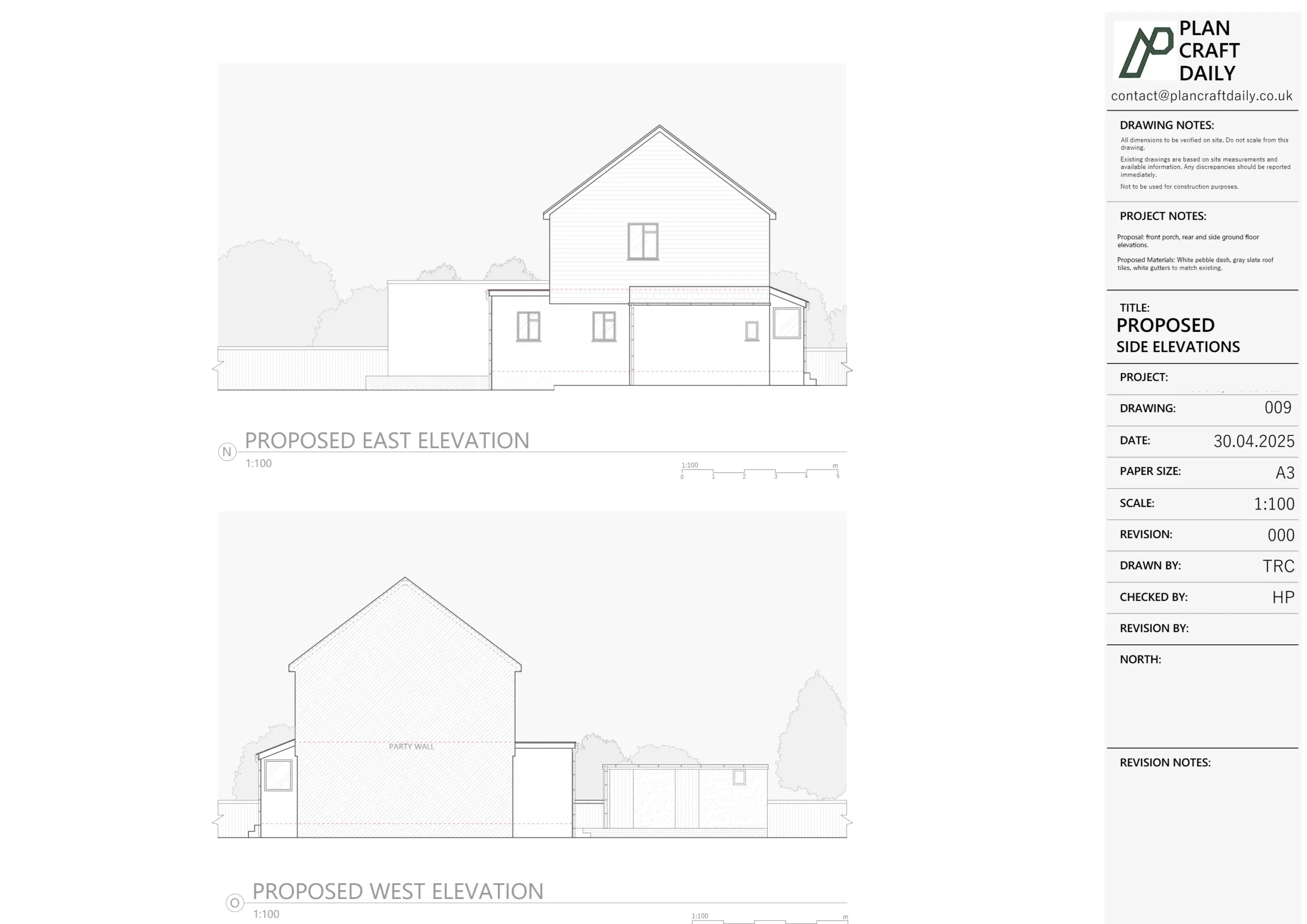
- Adapted the elevations to match the new proposal:
- Front elevation updated with the new porch, glazing configuration and pitched roof.
- Side elevation showing the WC window, boiler room access and extended wall line.
- Rear elevation showing the new extension width, sliding doors and centralised window where the old garden door had been.
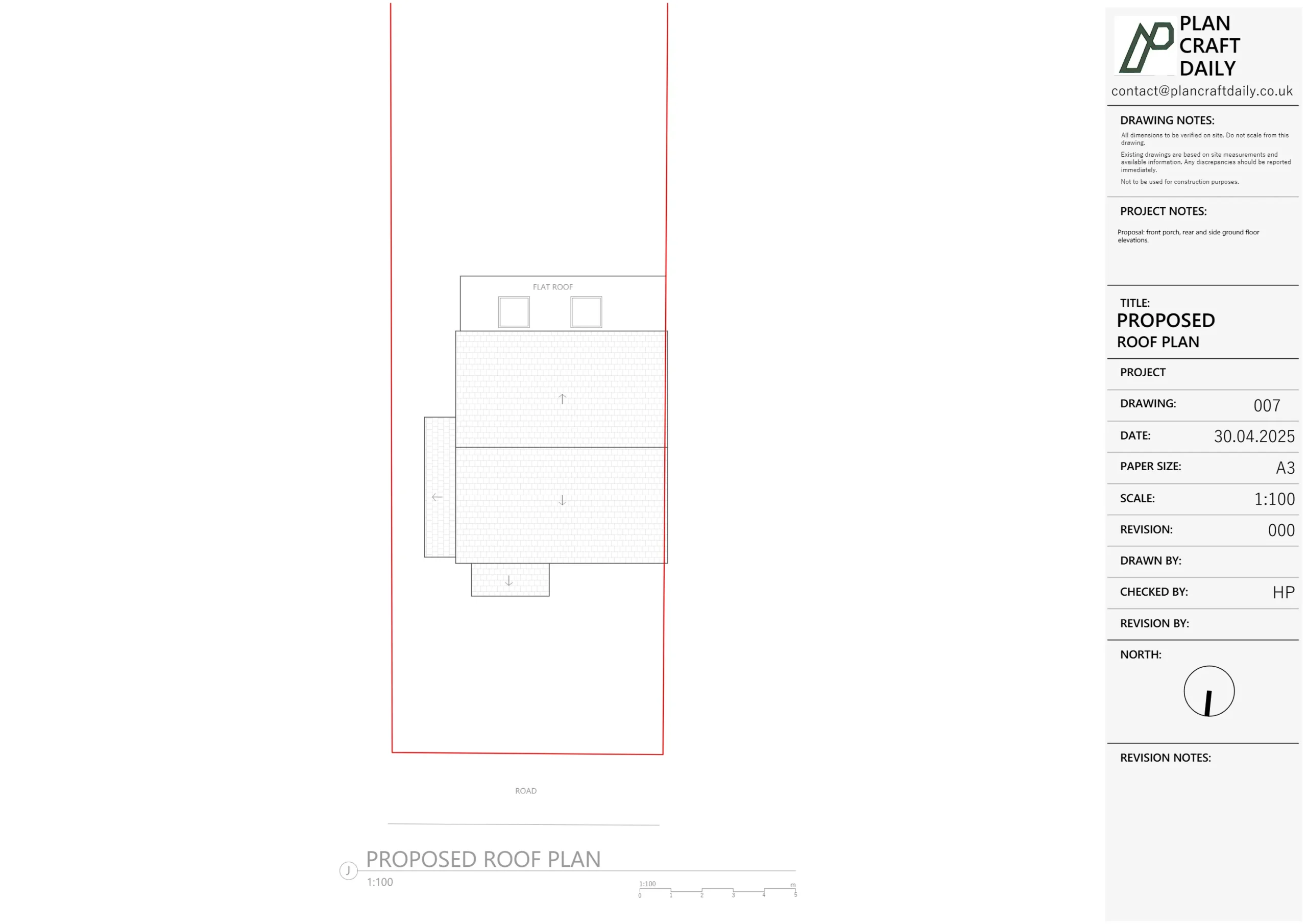
- Reflected the roof changes:
- Flat cold roof over the rear extension.
- Sloped roof over the side extension.
- Rooflights added above the kitchen and dining areas.
Before sending anything to the client, we moved the job into an internal quality assurance (QA) phase to:
- Check dimensions and extension depths against the brief.
- Ensure windows, doors and roof forms were consistent across plans and elevations.
- Confirm that the proposals respected the required boundary offsets.
Once QA was underway, we emailed Natalie to let her know we were almost finished and that the drawings would be sent as a draft proposed pack for review.
We then:
- Exported a draft PDF set of the proposed drawings and sent them as a zipped pack (…Proposed_PDFs_Draft.zip).
- Clearly explained that these were drafts, produced to her notes, and that we were happy to make changes within the two included revision rounds.
Managing changes and expectations
Through the project, we kept the communication simple and transparent so Natalie could keep Isaac informed:
- Fee & scope:
- We first set out the fee for proposed drawings plus two revisions.
- When Natalie requested a fee without a proposal sketch, we confirmed this was acceptable and restated the importance of full written proposal notes.
- Payment structure & timing:
- Agreed 50% upfront and 50% on completion to make it easier for Isaac.
- Issued an invoice as soon as the scope was confirmed and asked Natalie to let us know when the payment was made.
- After payment, we confirmed receipt and gave a 3–5 working day timeframe for the draft drawings.
- Drafts, QA and revisions:
- Informed Natalie when we were entering the internal QA phase so she knew drawings were nearly ready.
- Sent the draft proposed PDFs with a clear note that:
- We had followed her proposal instructions as closely as possible.
- She had two rounds of revisions included at no extra cost.
- Any misunderstandings or extra requests could be picked up in those revisions.
- Final issue and balance:
- When Natalie replied that “all looks good” and asked for the final versions (rather than just drafts), we:
- Sent the final invoice, confirming that on settlement we would release the final drawings, including CAD and PDF formats.
- Once Isaac paid the remaining balance, Natalie let us know, and we:
- Confirmed receipt of payment and attached the receipt.
- Sent the final drawings and related files in one go so she had everything needed.
- When Natalie replied that “all looks good” and asked for the final versions (rather than just drafts), we:
At each stage we kept the emails concise, inviting questions and making it clear what the next step was (review drafts, confirm payment, receive finals, etc.).
Final outcome
By the end of the project, Natalie and Isaac had:
- Final proposed ground floor plans showing:
- The new front porch with glazing on both sides.
- The side extension with WC, boiler room and cloakroom laid out as requested.
- The rear extension with a 3 m sliding patio door and revised window positions.
- Updated proposed elevations for front, side and rear, clearly showing the new massing, openings and roof forms.
- Coordinated roof information, including:
- Flat cold roof over the rear extension.
- Sloped roof over the side extension.
- Rooflight positions above the kitchen and dining spaces.
- A planning-ready PDF pack plus editable CAD files, issued only after internal QA and once the final balance was settled.
- A clear record of scope, fee, payment stages and revision allowance, so there was no confusion later in the planning or construction process.
Because we built the proposed drawings directly on our original survey model and worked from detailed proposal notes, Natalie didn’t need to redraw or re-survey anything. She could move straight into planning discussions with Isaac and, if needed, pass our clean CAD files on to other consultants in the project team.
Project Details
| Service Type | Proposed Drawings for single-storey rear & side extension and new front porch |
| Time Taken | Around 2 weeks from brief to final proposed pack (plus client review time) |
| Location | Watford |