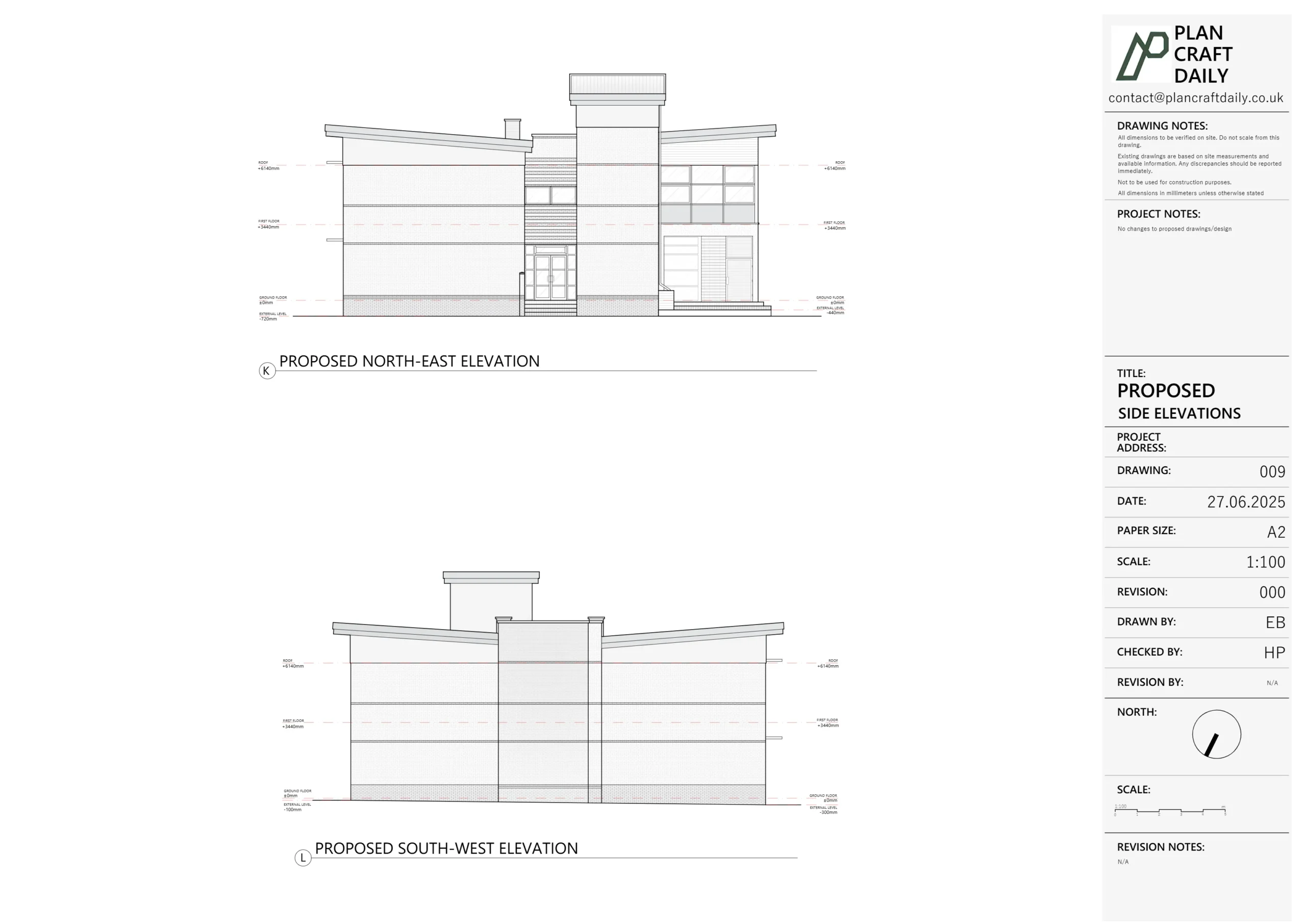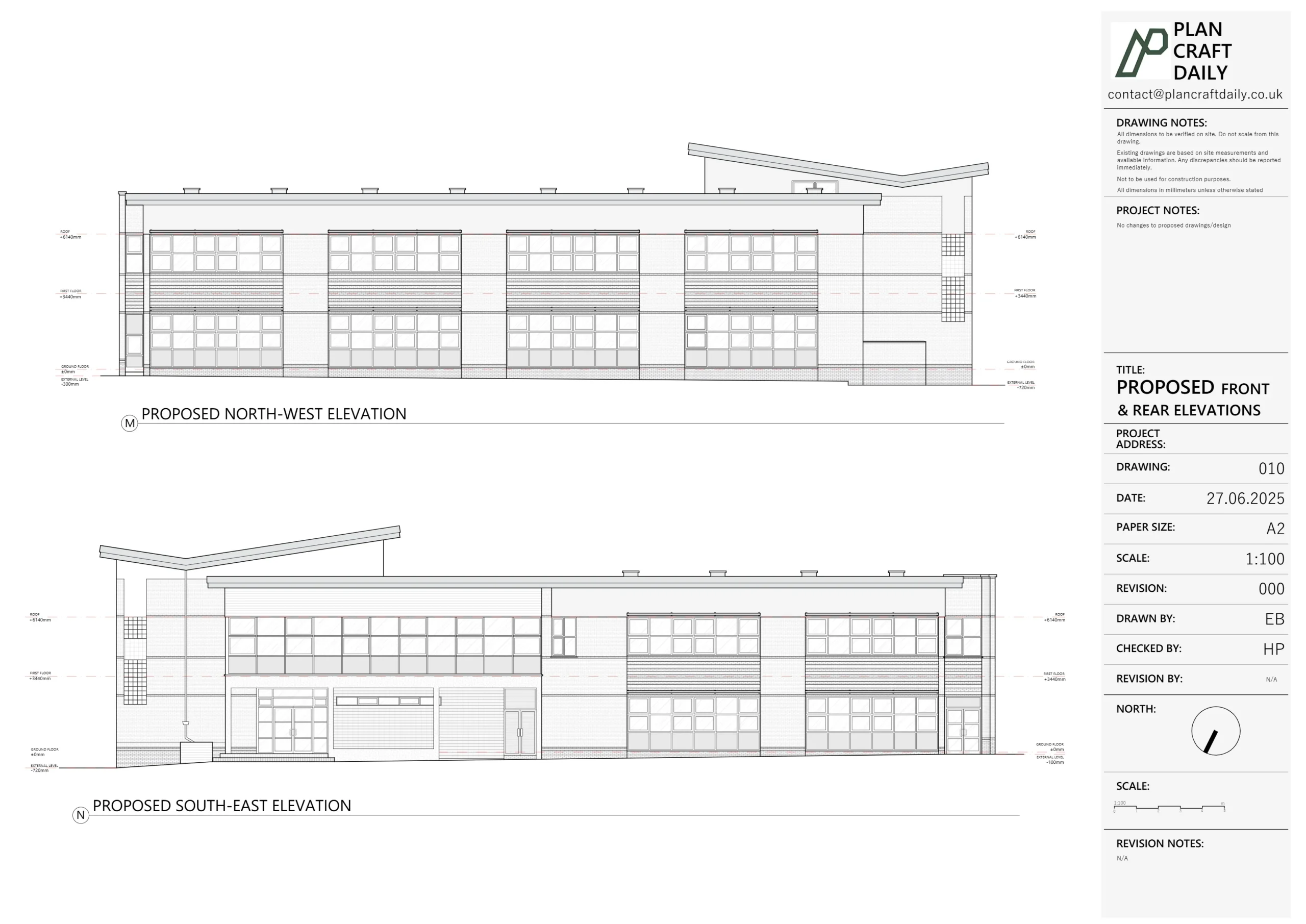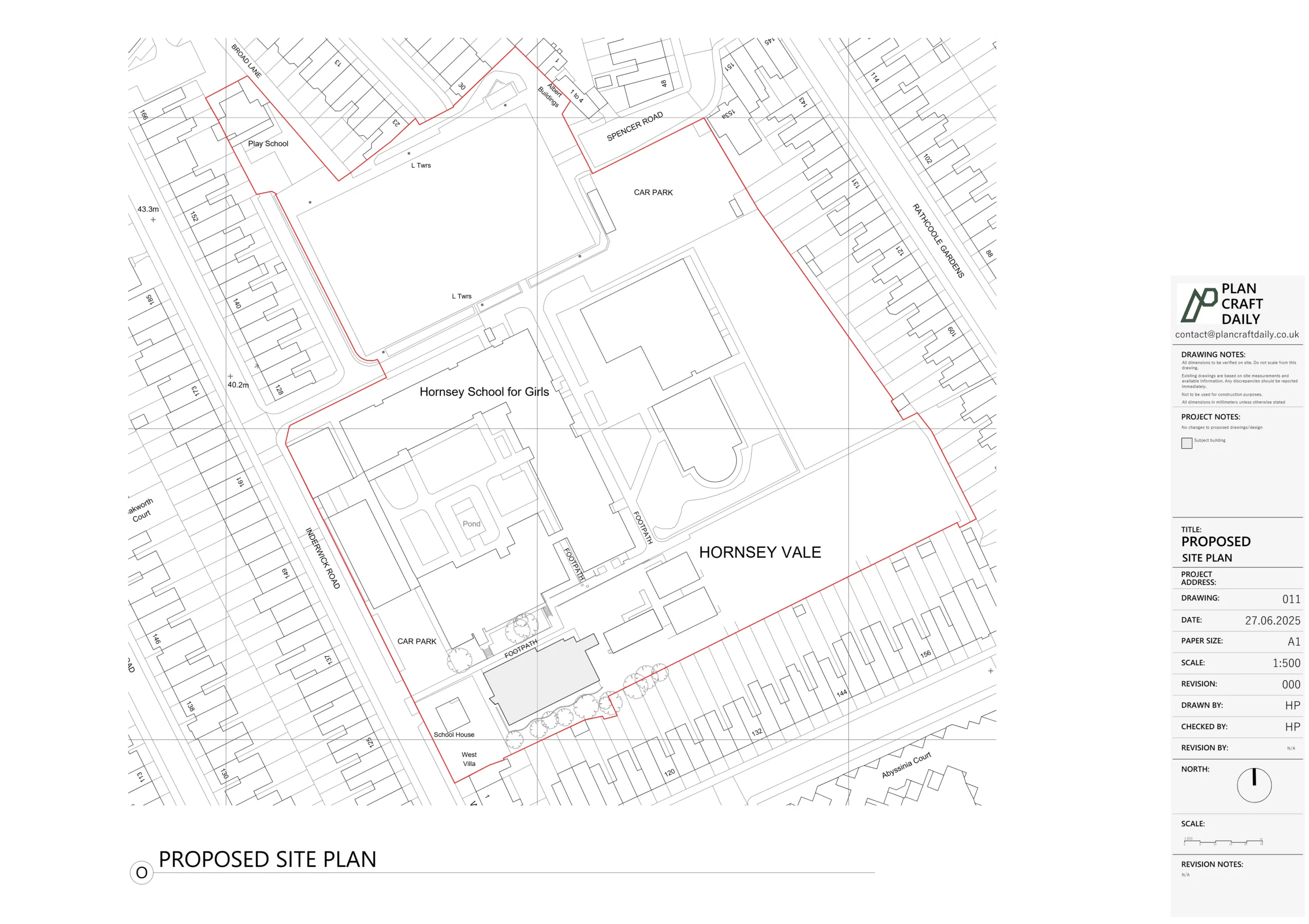
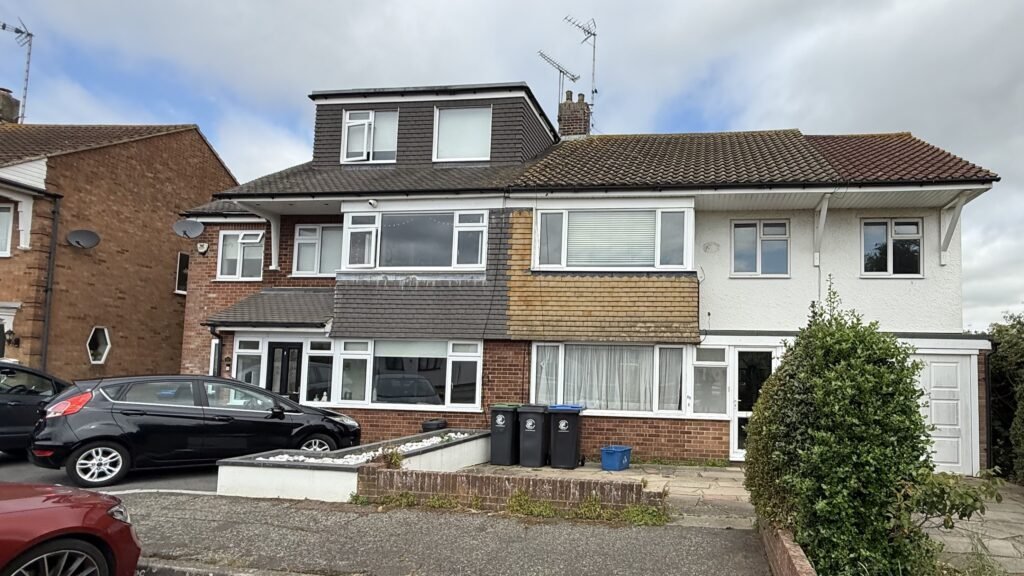
Mark, a RIBA-chartered architect we’d previously worked with on a project in South Woodford, got back in touch about a new scheme in Ongar, Essex.
His brief was very clear:
“A survey similar to the one you did for me recently… showing all plans, elevations and site boundaries at 1:100 scale on PDF sheets with a drawn scale and north points etc.”
He was acting for his client, Bill, who owned an empty house and needed:
- A full measured building survey
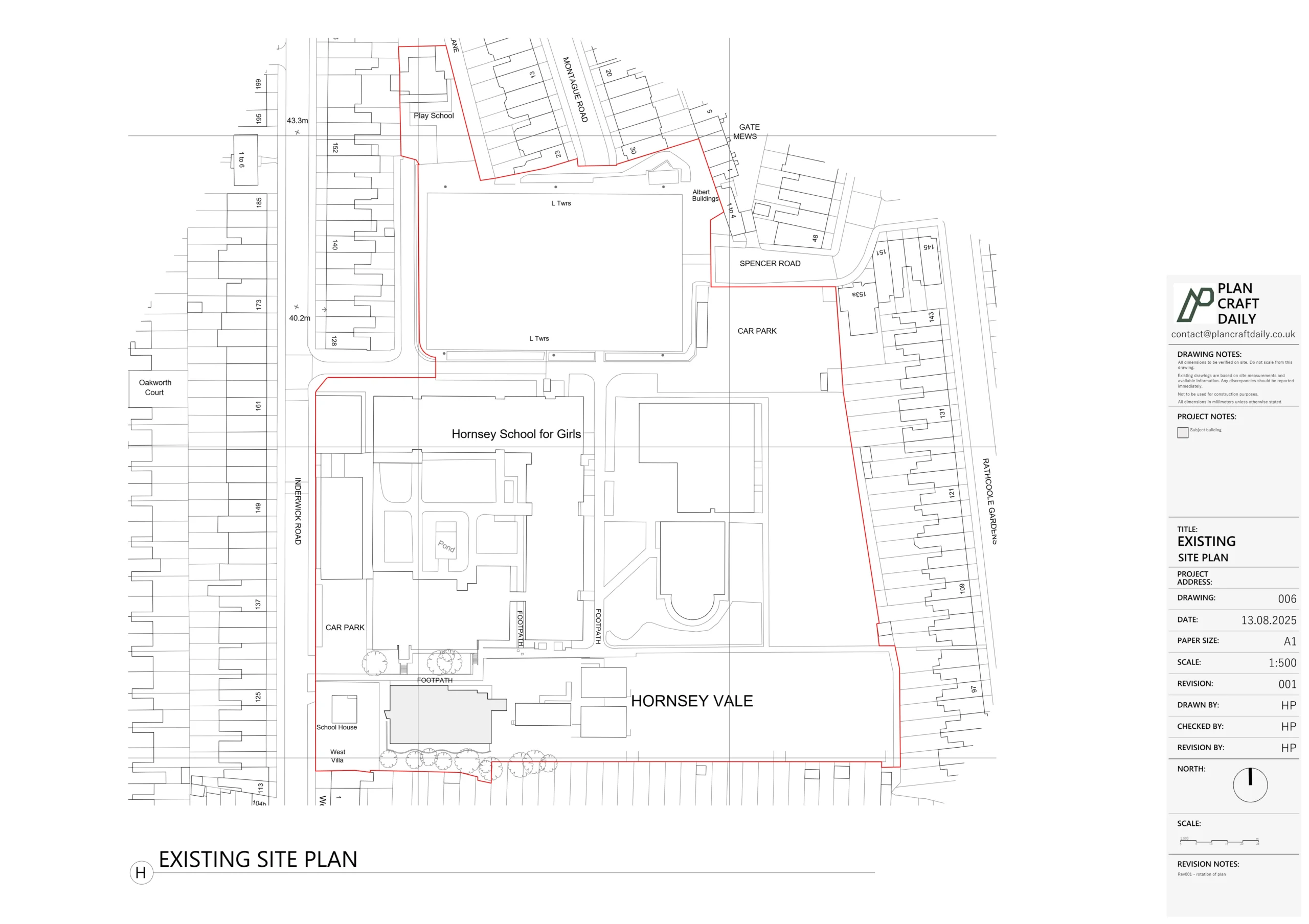
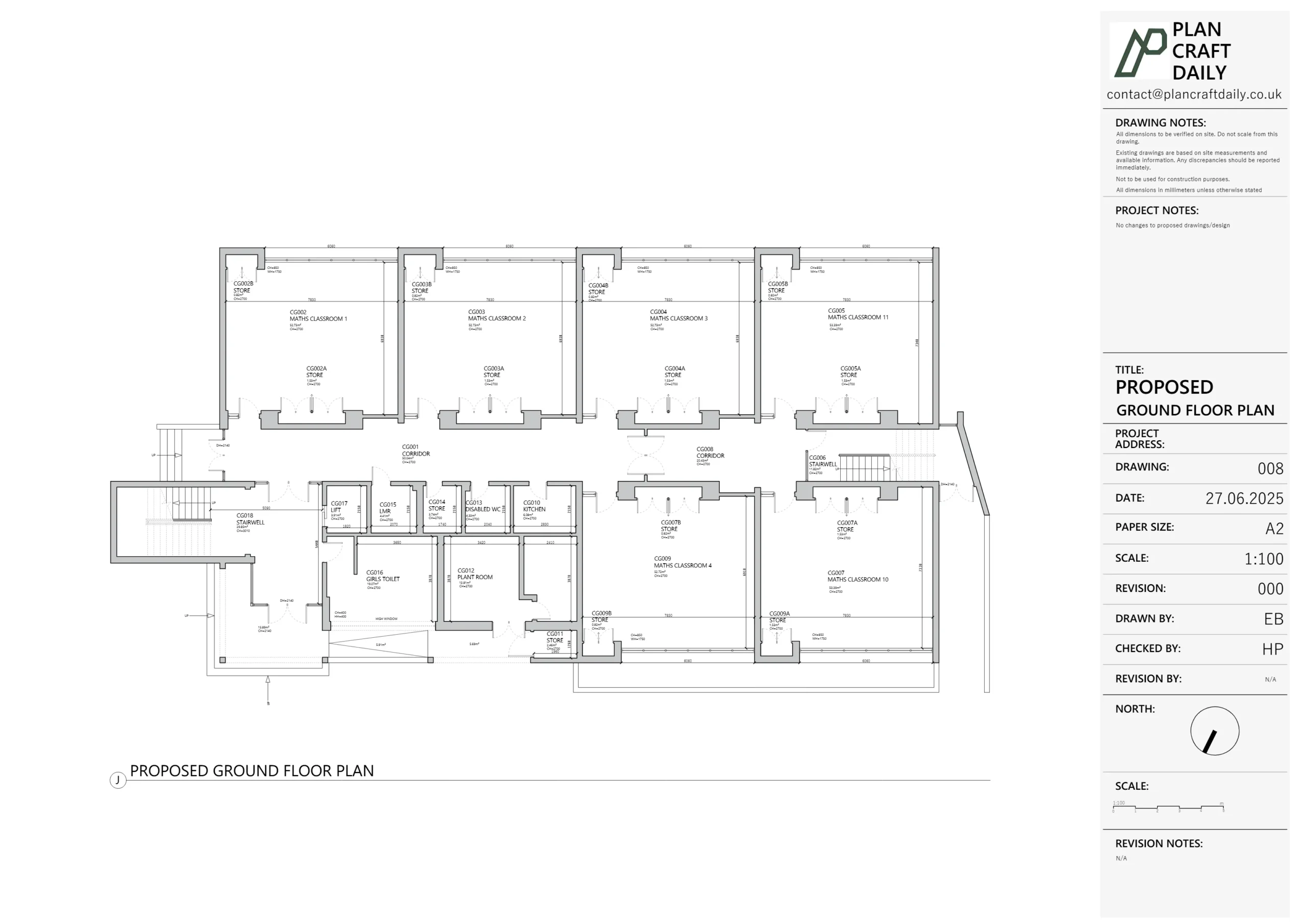
- Existing plans and elevations
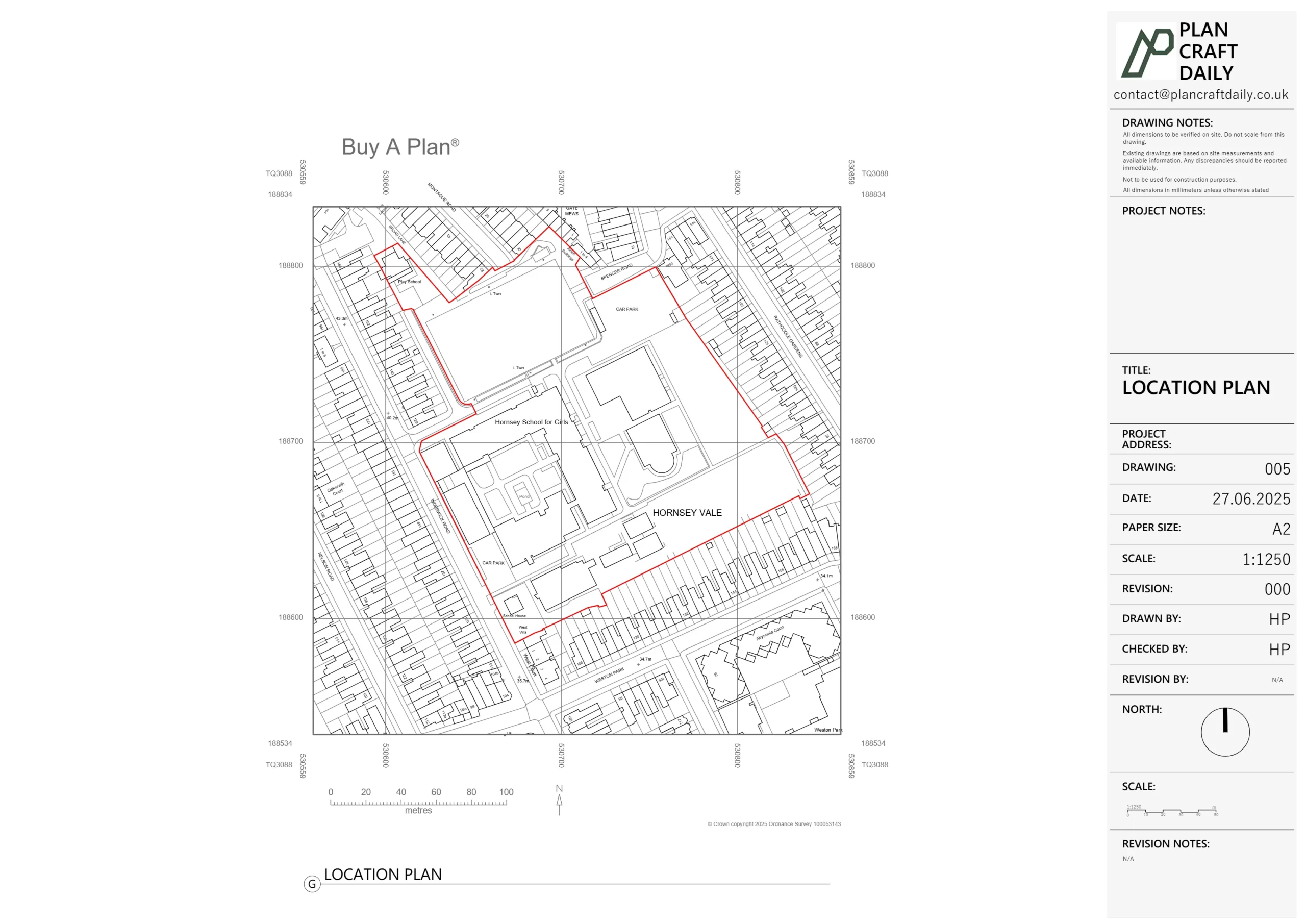
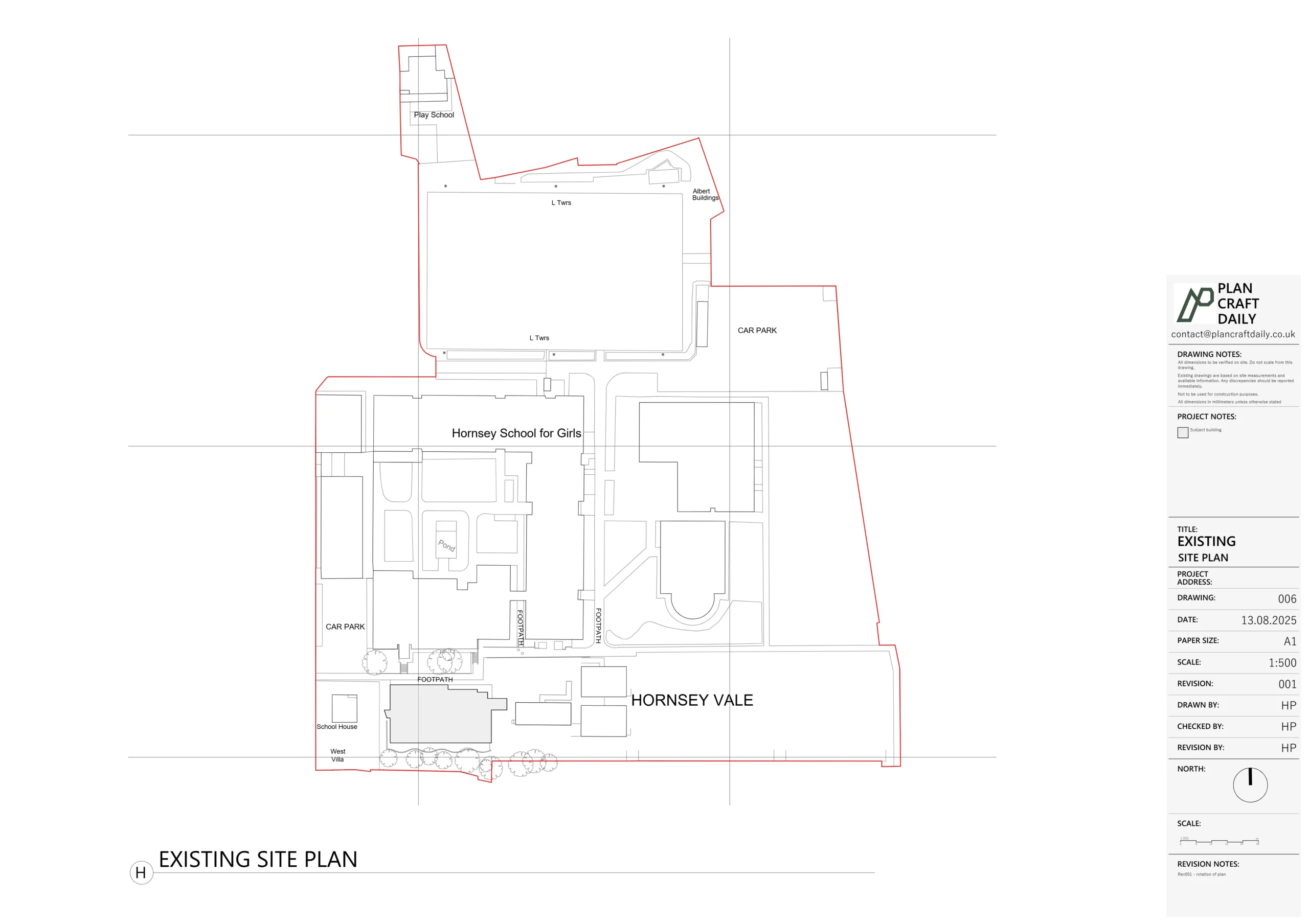
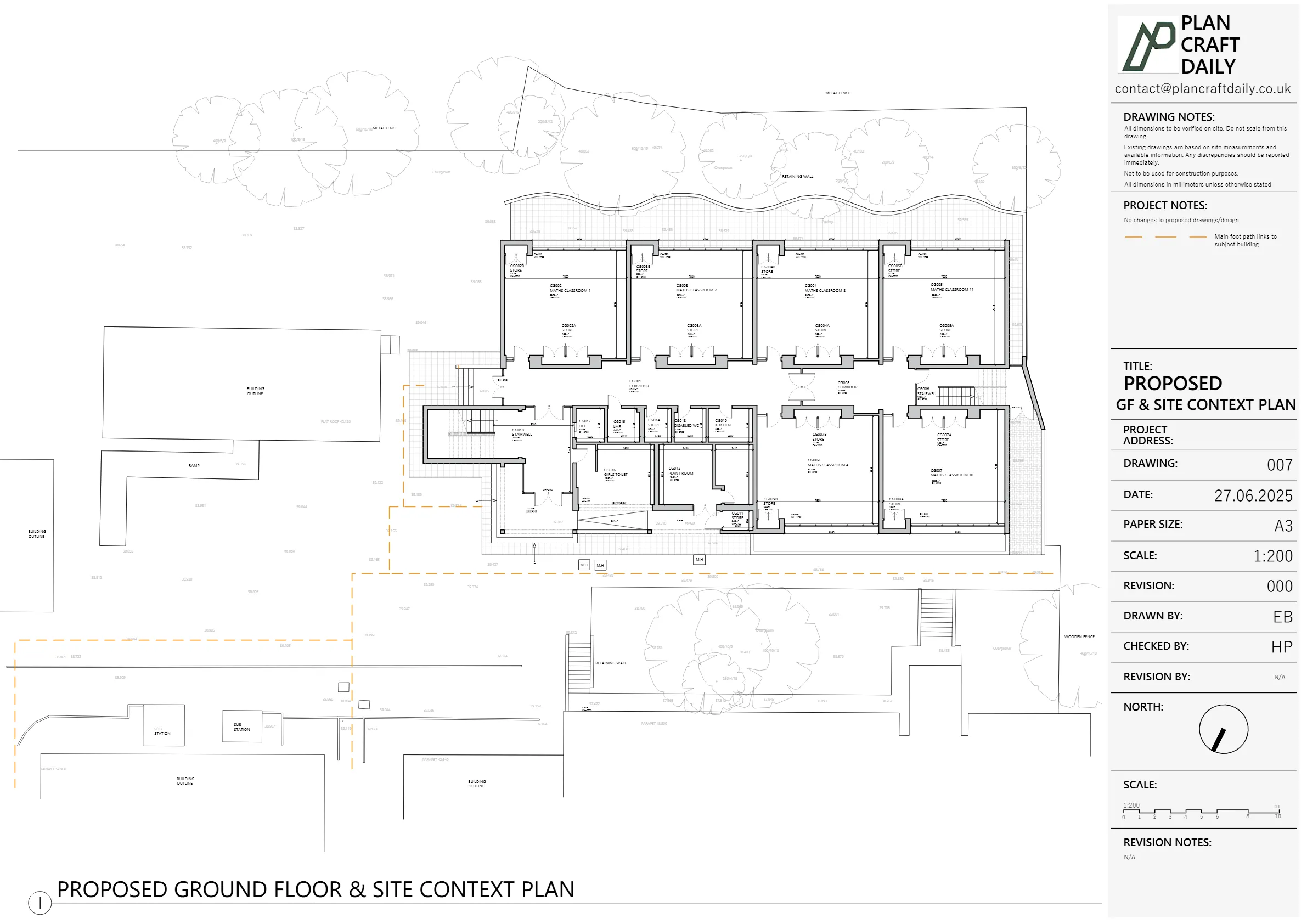
- A site layout with boundaries
- Everything delivered at 1:100, properly scaled and annotated, plus CAD files and photos
The idea was to give the architect a trusted “existing” base they could plug straight into design and planning work without redrawing anything.
Booking the survey – making empty-property access easy
Once we’d sent over a quotation, Bill replied to say they were happy to go ahead and asked:
“When is your next availability?”
We proposed Tuesday 24 June at 10:30 am.
Because the property was empty, there were two practical questions:
- Did Bill need to stay on site the whole time?
- How would access work if he had to leave for another job?
We confirmed:
- Bill only needed to provide access – there was no requirement for him to stay.
- Our surveyor would secure the property and let themselves out once the survey was complete.
Bill then suggested a lock box arrangement:
- He gave us his mobile number,
- Asked the surveyor to call when on the way,
- So he could share the lock box code remotely if he wasn’t able to meet at the door.
Process-wise we:
- Issued the initial invoice, explaining that payment would secure the survey slot.
- Confirmed payment received and sent over:
- A payment receipt, and
- The surveyor’s details (Mustafa, our senior surveyor).
That gave everyone a clear, professional paper trail before we even set foot on site.
On-site – measured survey and 3D capture
On the agreed date, Mustafa attended at around 10:30 am and carried out a full measured survey of the empty property.
Key elements of the survey:
- External shell & site context
- Perimeter walls and key external dimensions
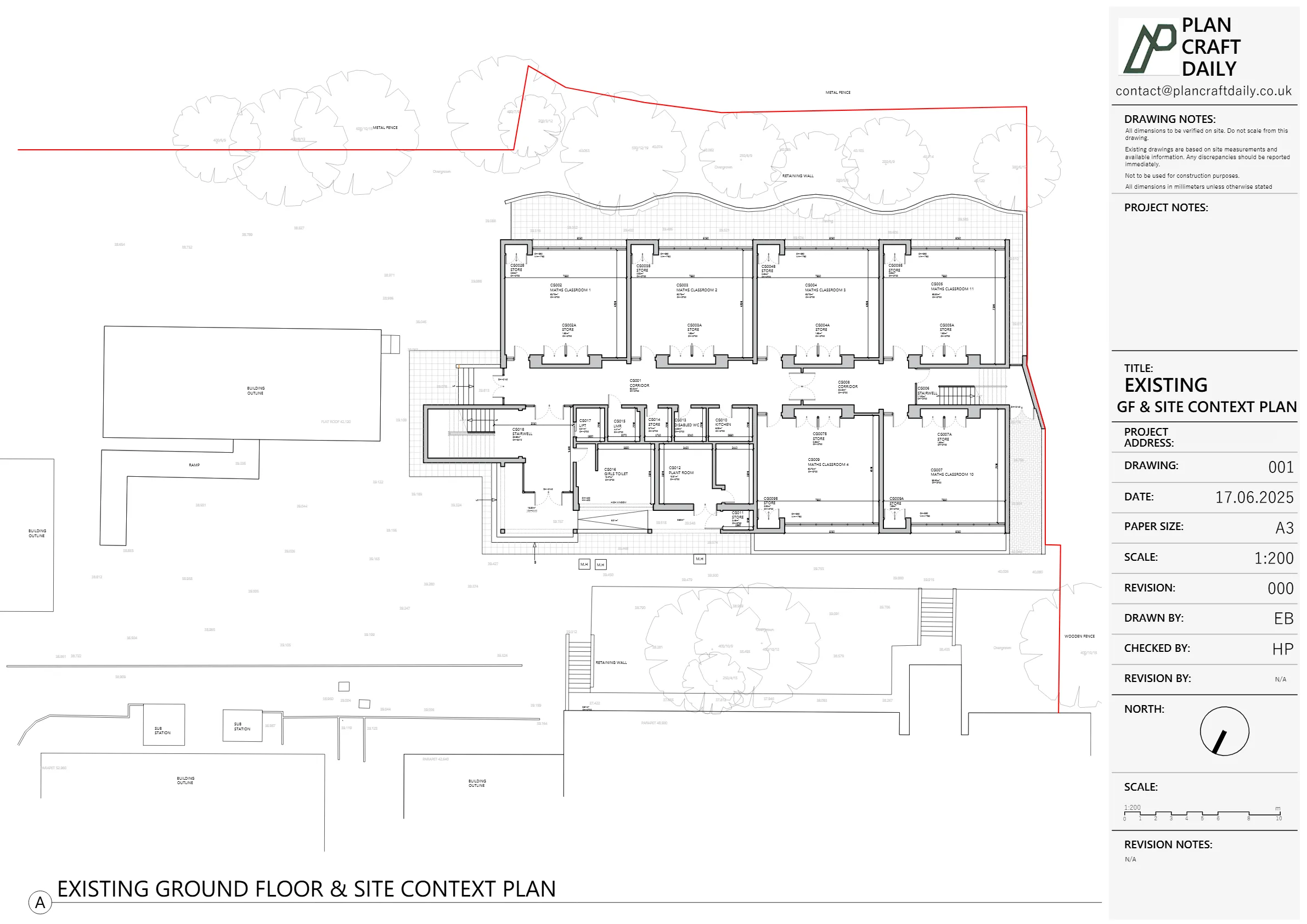
- Relationship to site boundaries
- Any changes in wall line or projections that might matter for planning or design
- Internal measured survey
- Room sizes, wall thicknesses and openings using a laser distance meter
- Floor-to-ceiling heights and stair geometry
- Structural indicators (nibs, thicker walls, beam positions) useful later for engineering
- 3D scan & photographs
- An internal 3D scan of the house, providing a point cloud for cross-checking geometry
- A photo set of each room and key externals to support remote design decisions
Because the house was unfurnished, the survey was efficient and the 3D data was particularly clean – no furniture blocking lines of sight.
After the survey, Bill emailed to ask when to expect the drawings. We replied to say:
- The survey had gone well
- We would need around 8 working days to produce the drawings
- If complexity grew, we might need a little extra time, but we’d keep him updated
That set a realistic expectation and allowed the architect to plan ahead.
Turning the survey into drawings
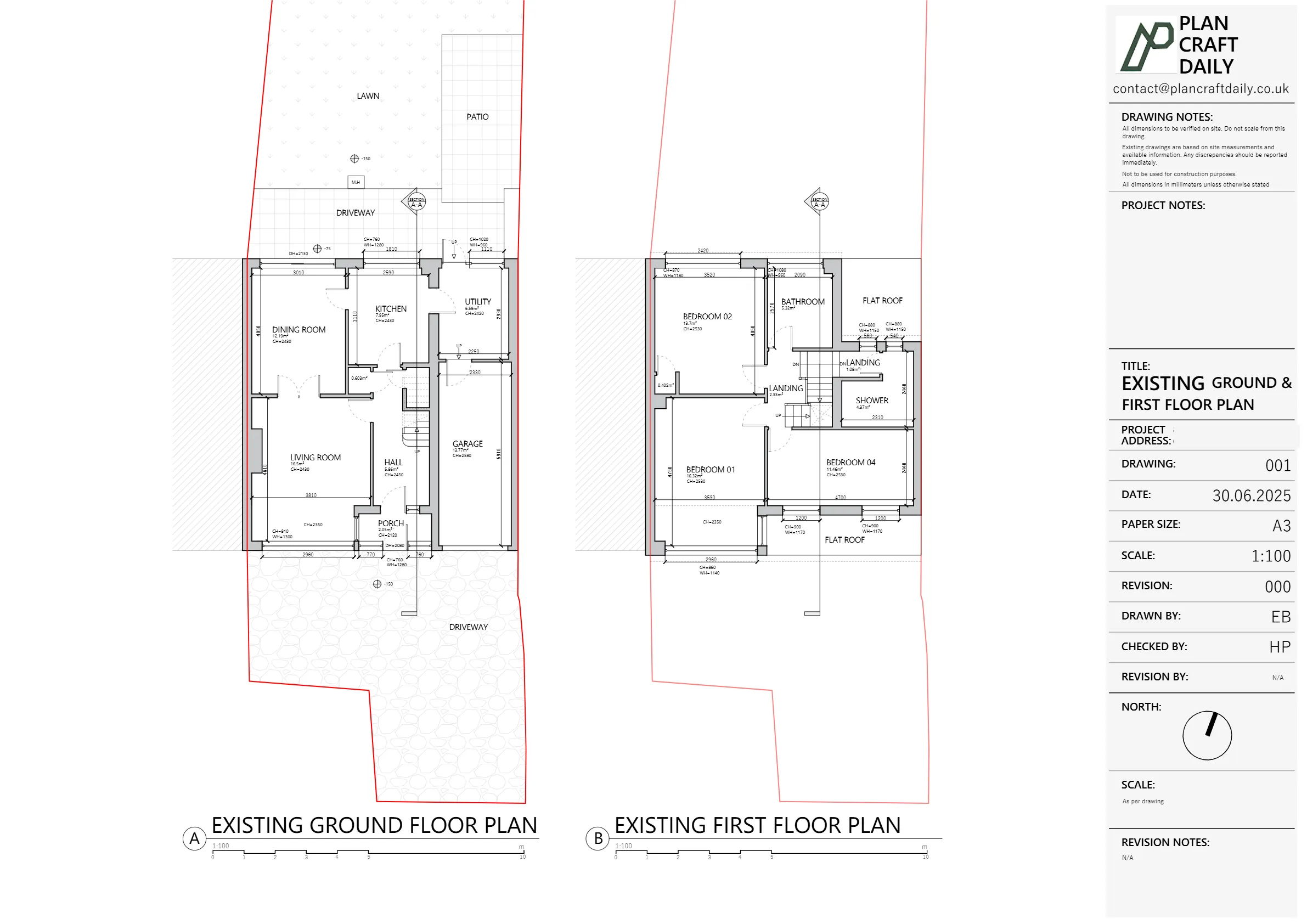
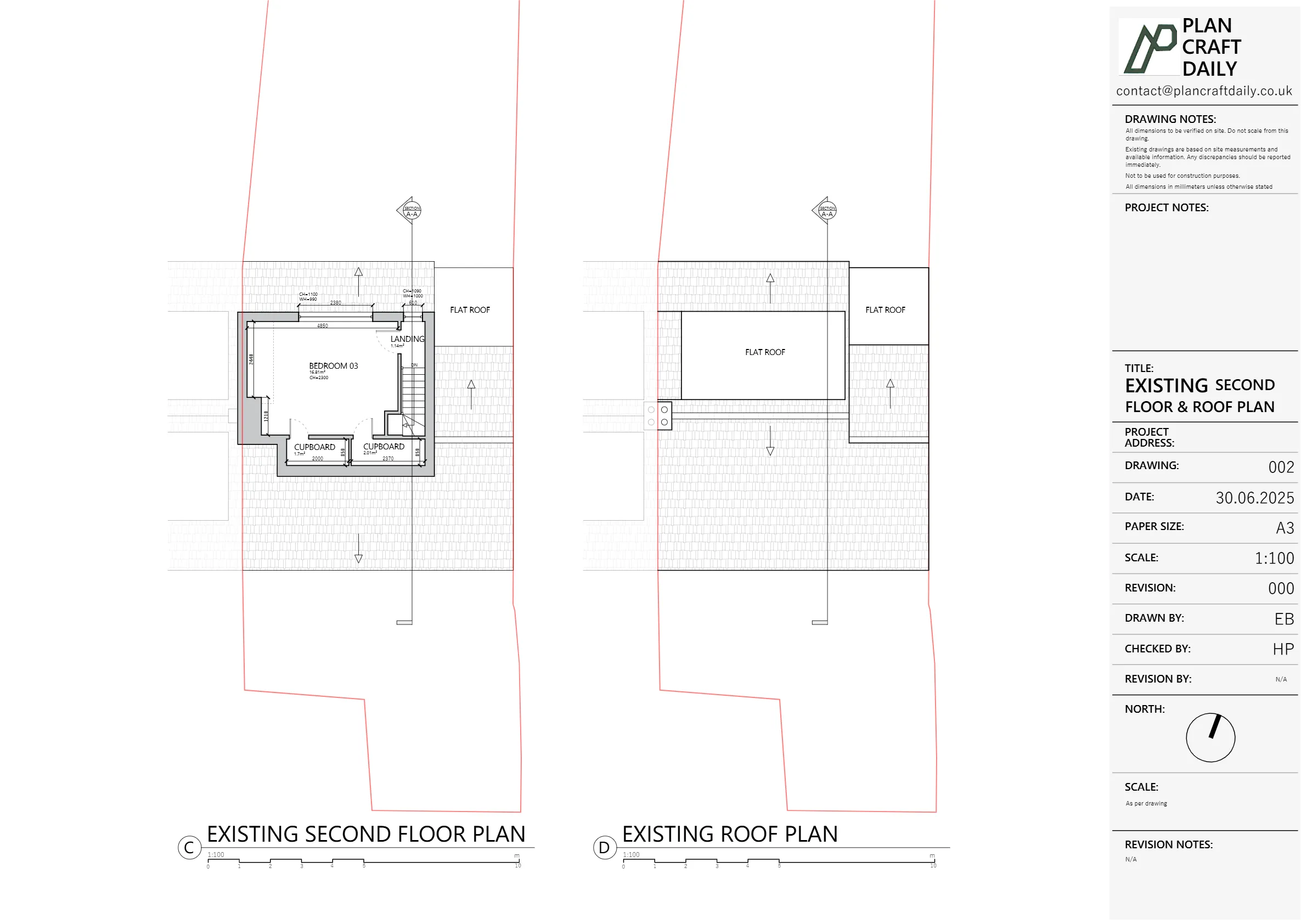
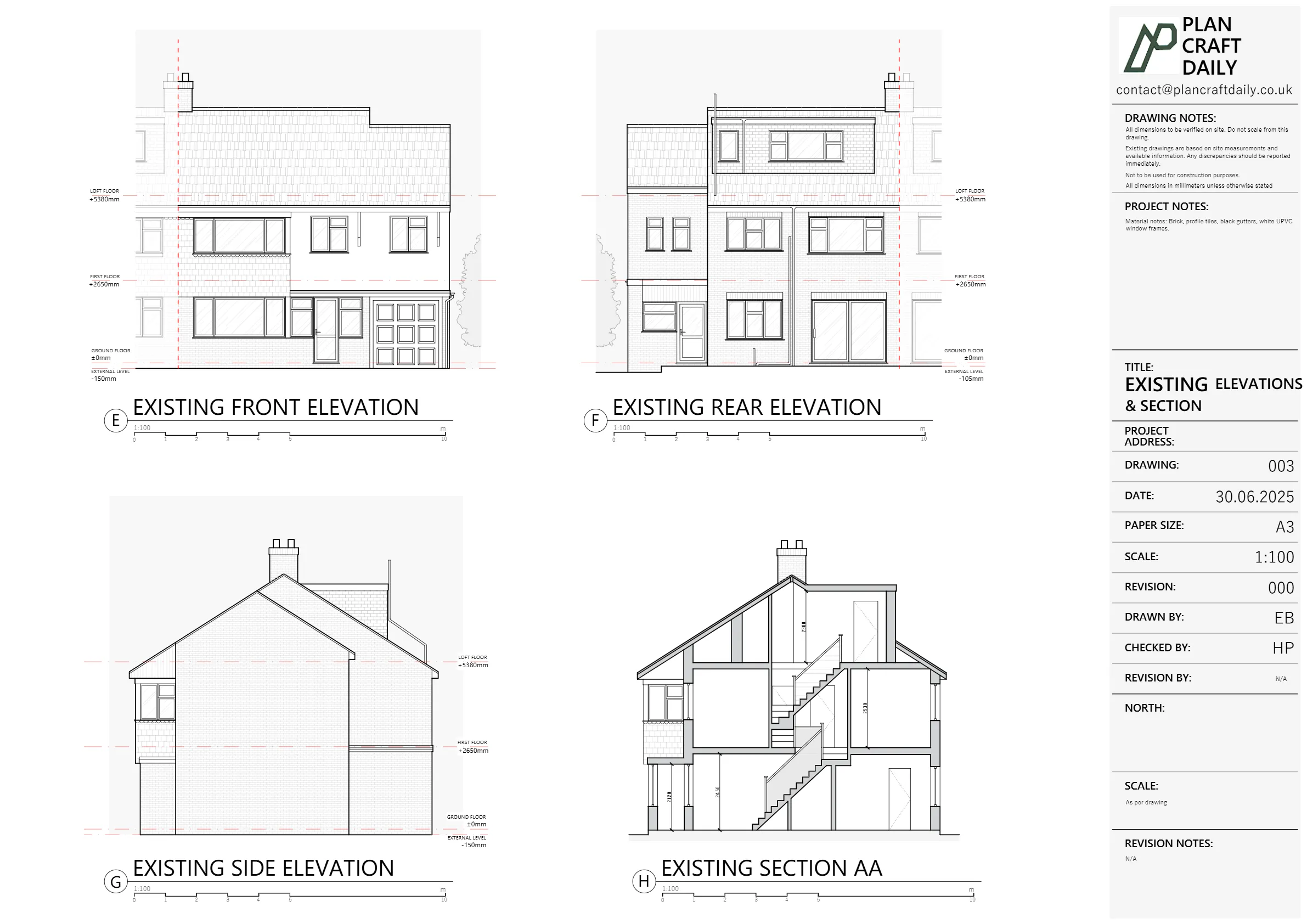
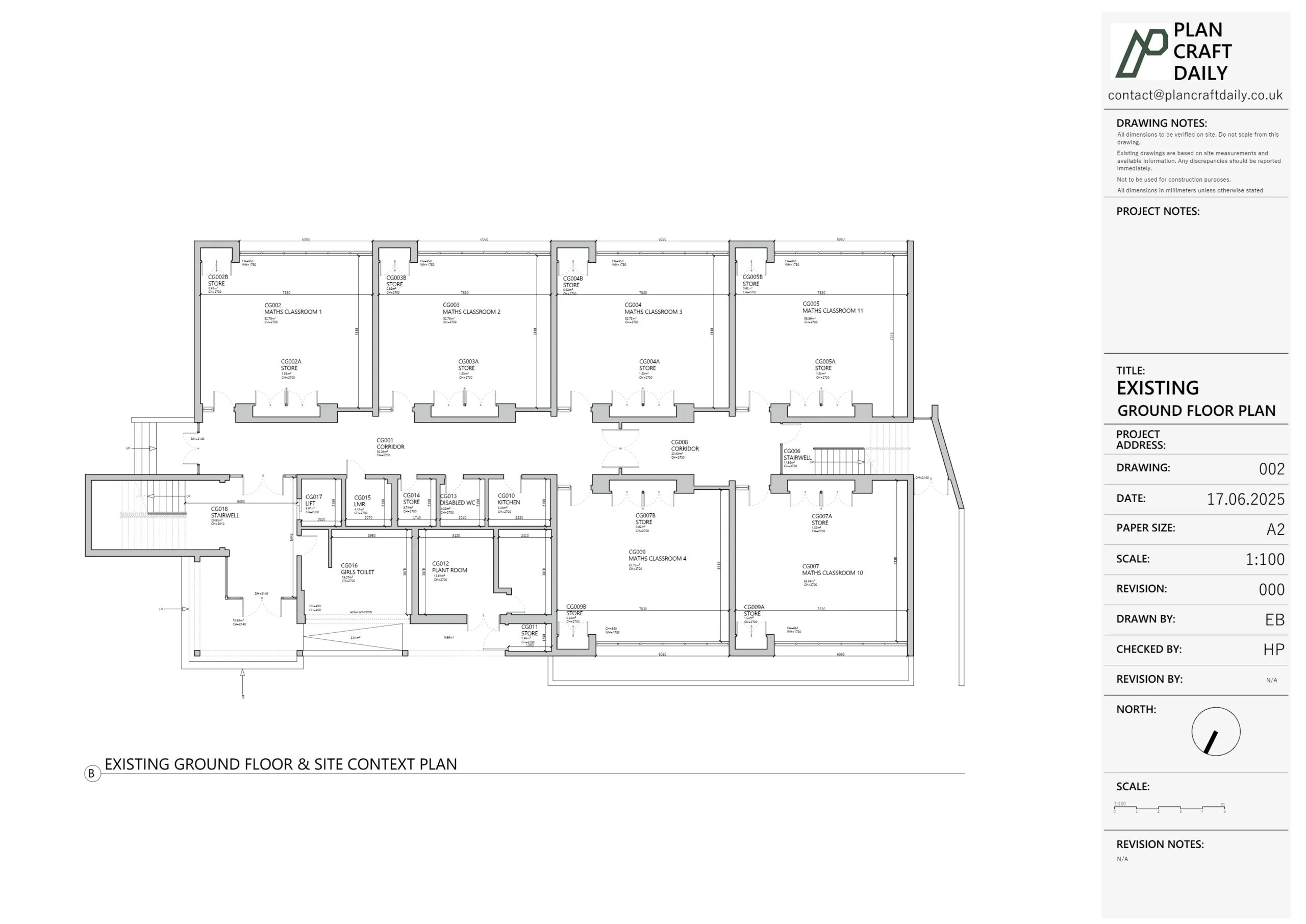
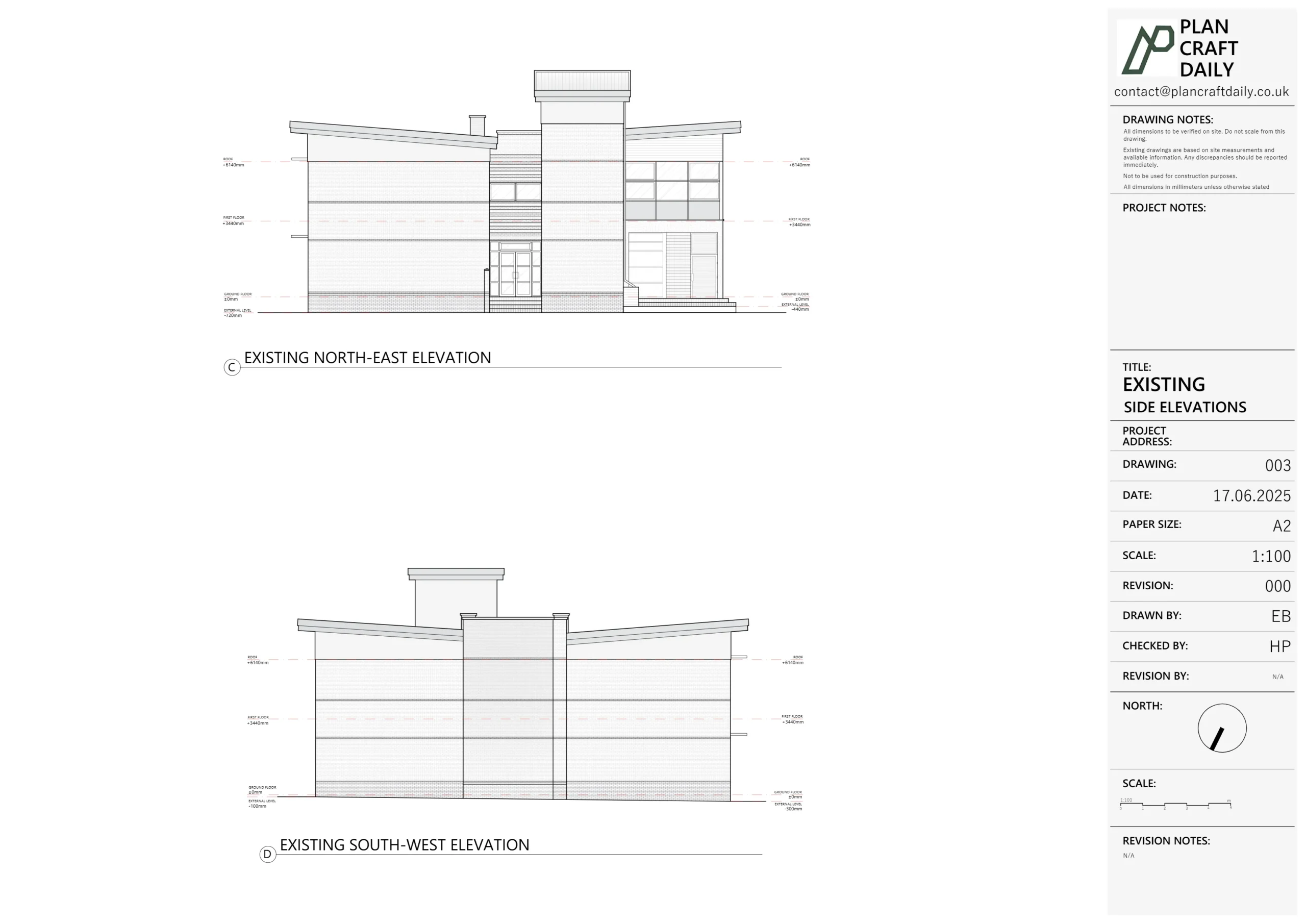
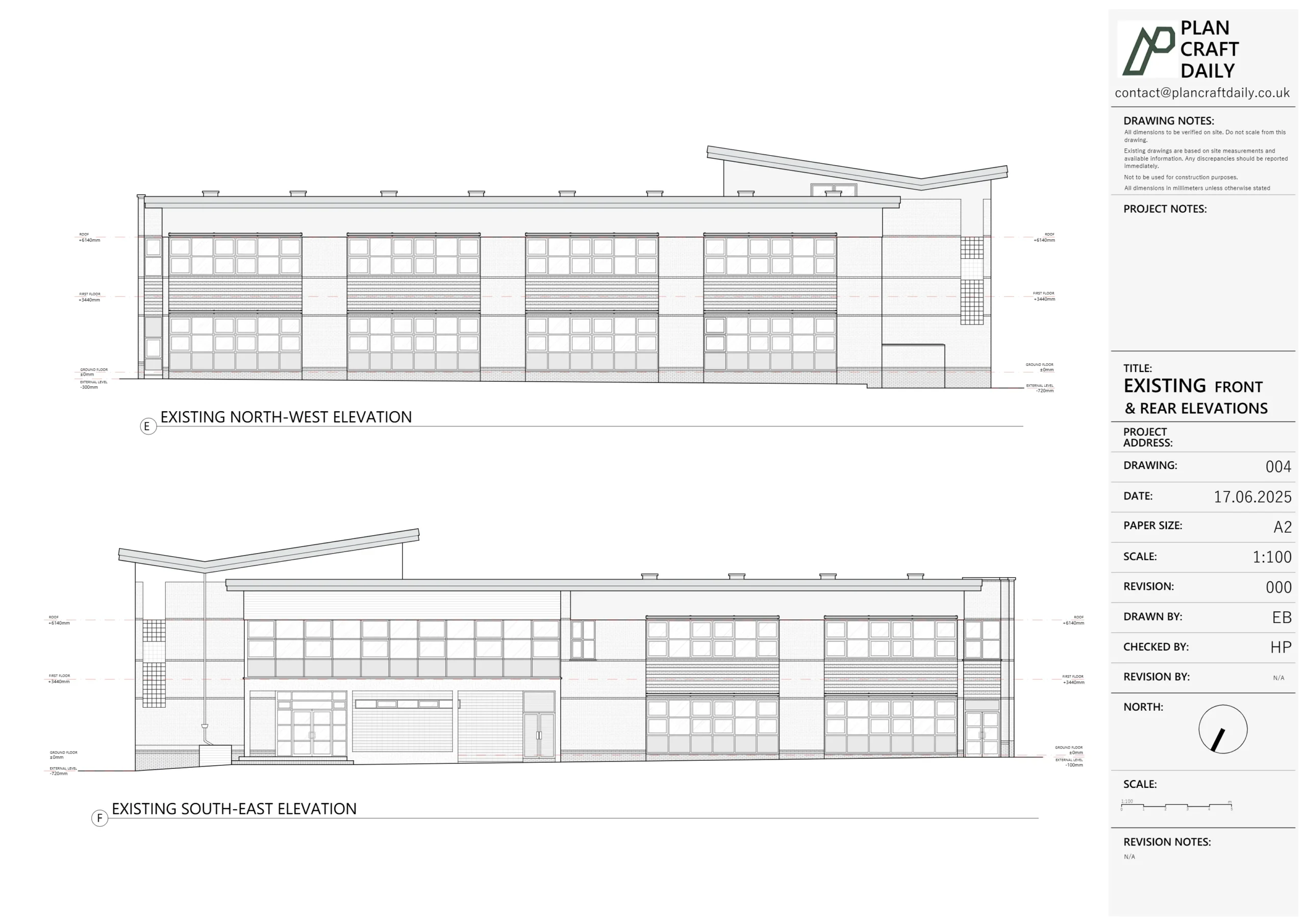
Back in the studio, our CAD team converted the surveyed data into a proper existing-drawings pack:
- Existing floor plans at 1:100
- Roof plan and site boundaries
- Front and rear elevations
- Sheet-ready layouts with:
- Scale bars
- North points
- Title blocks suitable for planning use
We used:
- The 3D scan as our geometric backbone
- Hand-measured check dimensions to lock everything down
- Site photos to confirm window types, sill heights, door swings, etc.
Once QA was complete, we:
- Sent Bill a draft drawings pack (ZIP) for review
- Attached the final invoice, explaining that once settled we’d release:
- Final CAD (DWG)
- Final PDF sheets
- The full photo set
Bill confirmed he would settle the invoice as soon as he got home, and then emailed again to say payment had been sent and he was looking forward to receiving the rest.
Final issue – drawings, CAD and 3D scan link
After confirming payment, we closed the loop with a final email:
- Confirming receipt of funds and attaching a payment receipt
- Providing links to:
- Final existing drawings (PDF)
- DWG CAD file
- Photographs
- The 3D scan link, so Bill and the architect could walk the property virtually at any time
The Trello card was then moved to Completed.
For Mark and Bill, this meant:
- A repeatable survey/drawings format they already trusted from previous work
- The ability to design and brief builders from a distance, using the 3D scan and photos
- A clear record of quotation → invoice → survey → draft → final drawings + 3D scan
For us, this project is a nice example of how we handle empty properties:
- Simple, remote access arrangements (e.g. lock boxes)
- A tight 8-working-day drawing turnaround once surveyed
- And a complete existing-conditions pack (plans, elevations, site plan, photos and 3D scan) ready for architects, planners and builders to build on.
Project Details
| Service Type | Measured Building Survey, Existing Drawings, Site Plan & 3D Scan |
| Time Taken | 2 weeks |
| Location | Ongar, Essex |