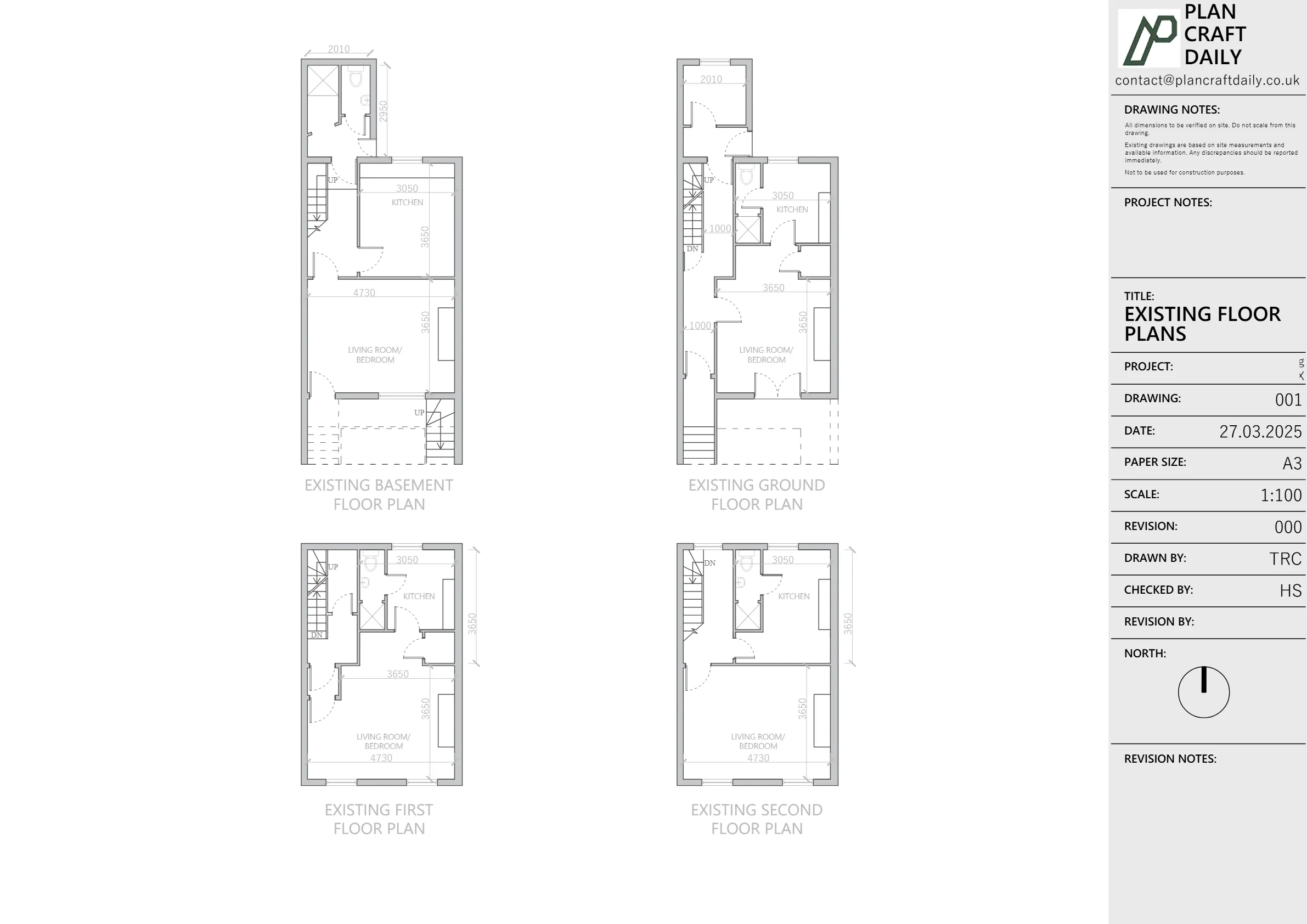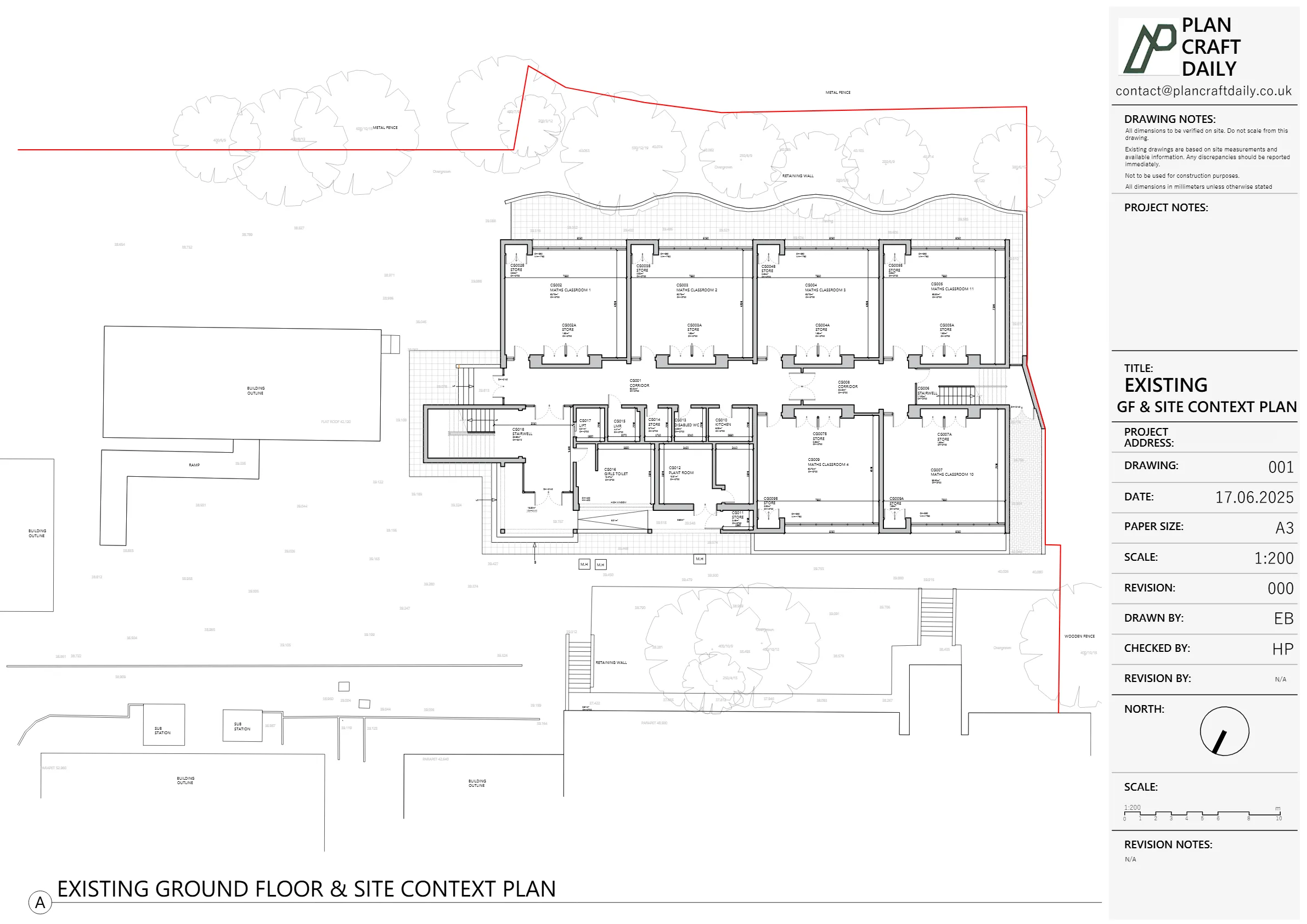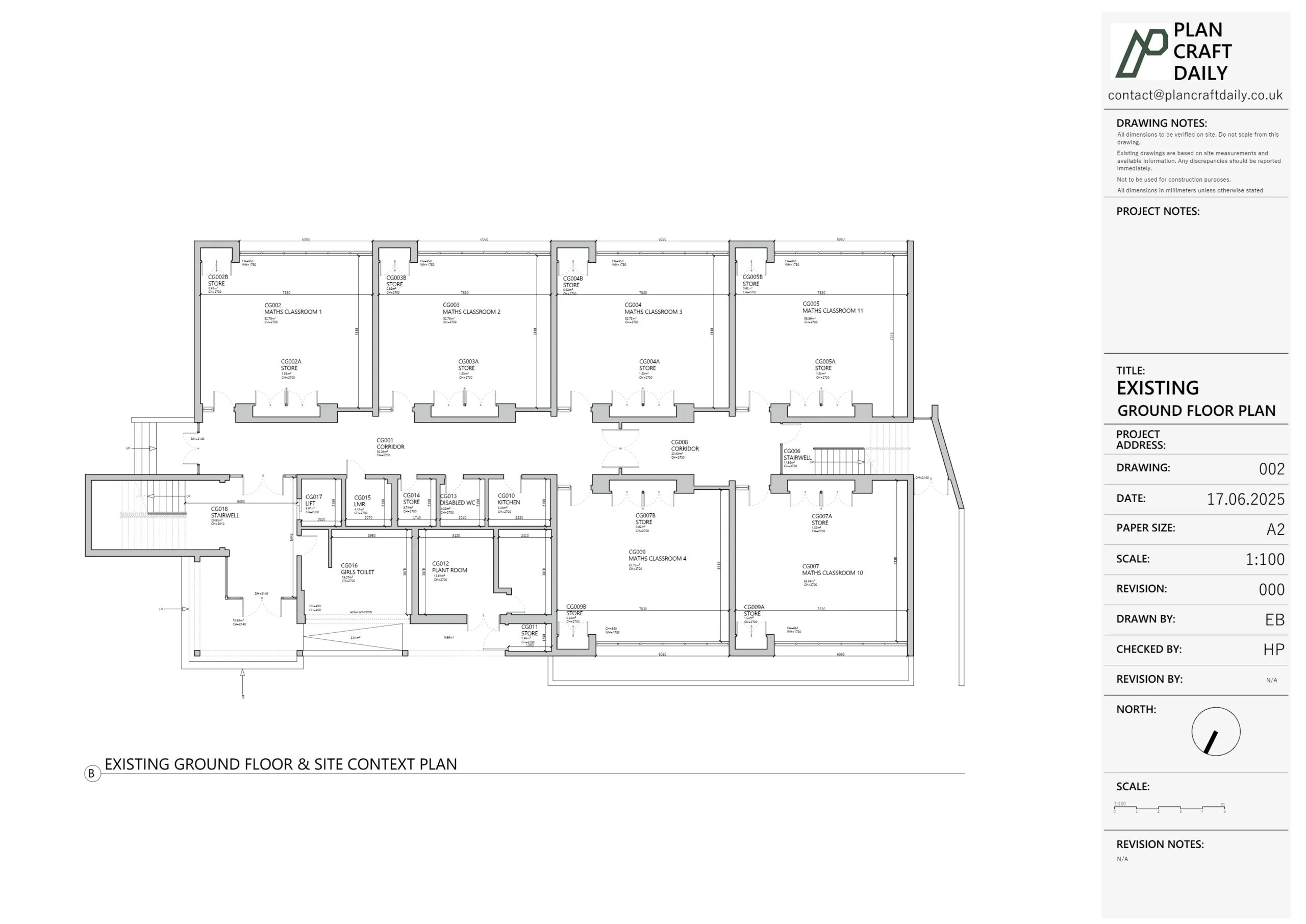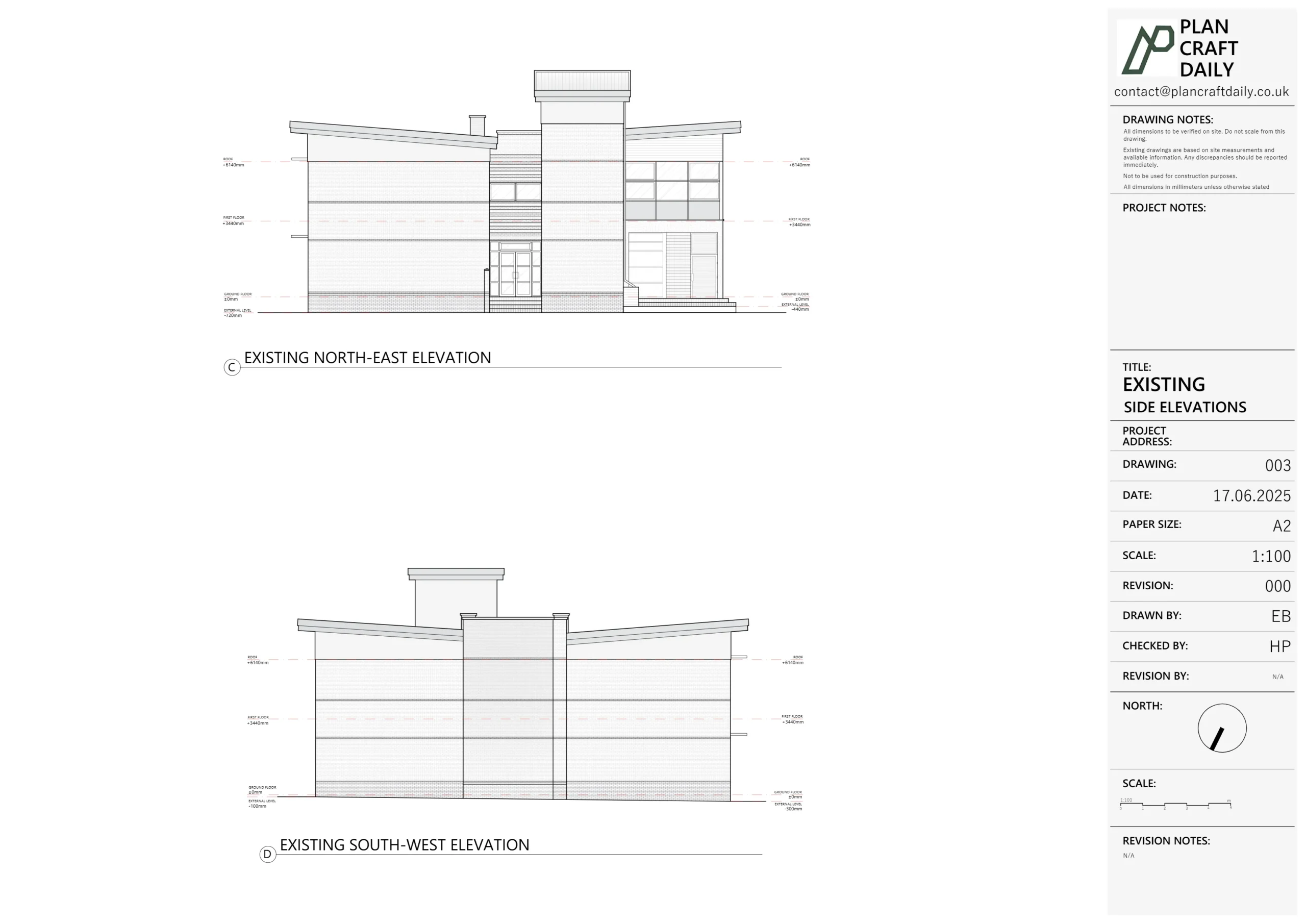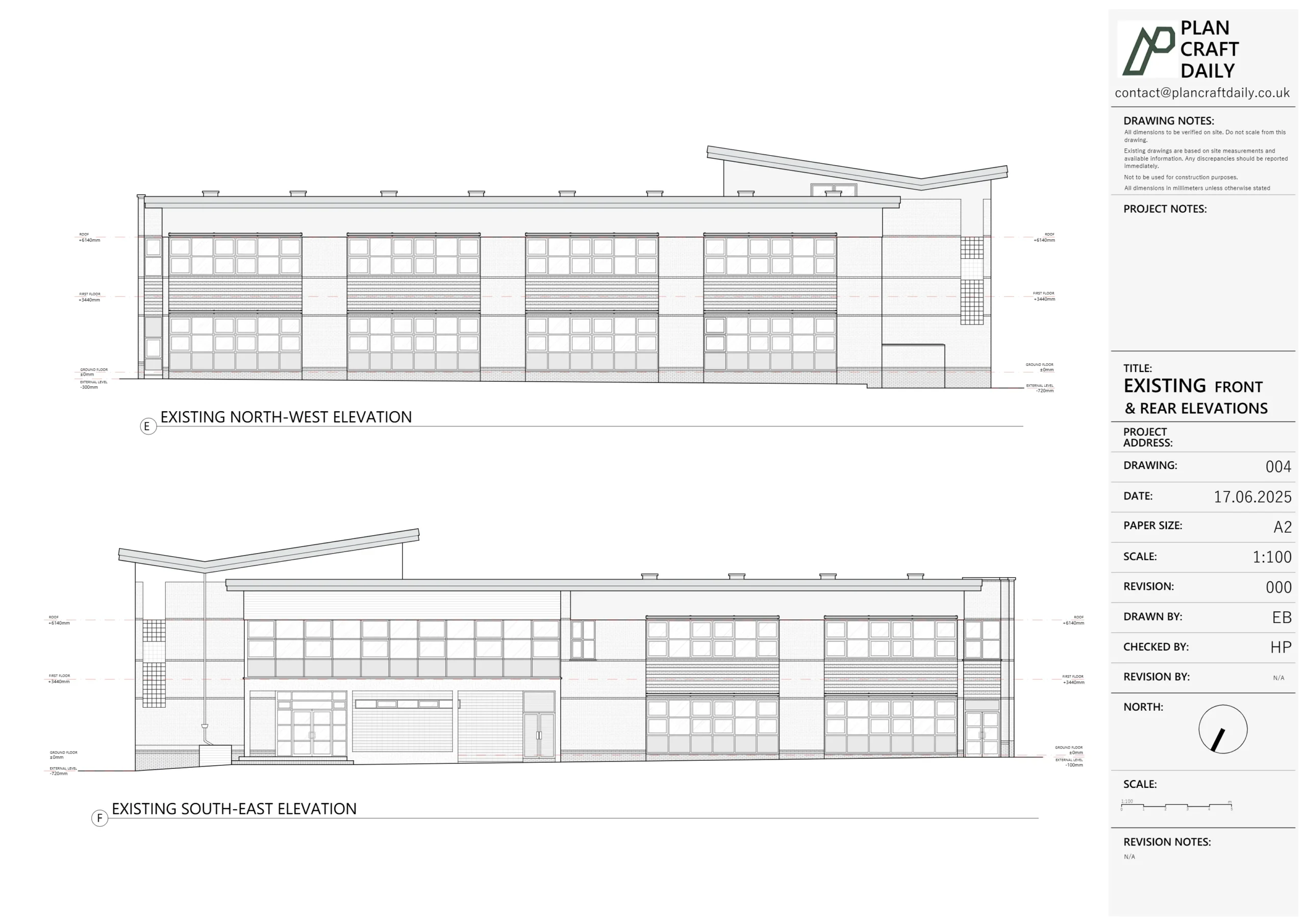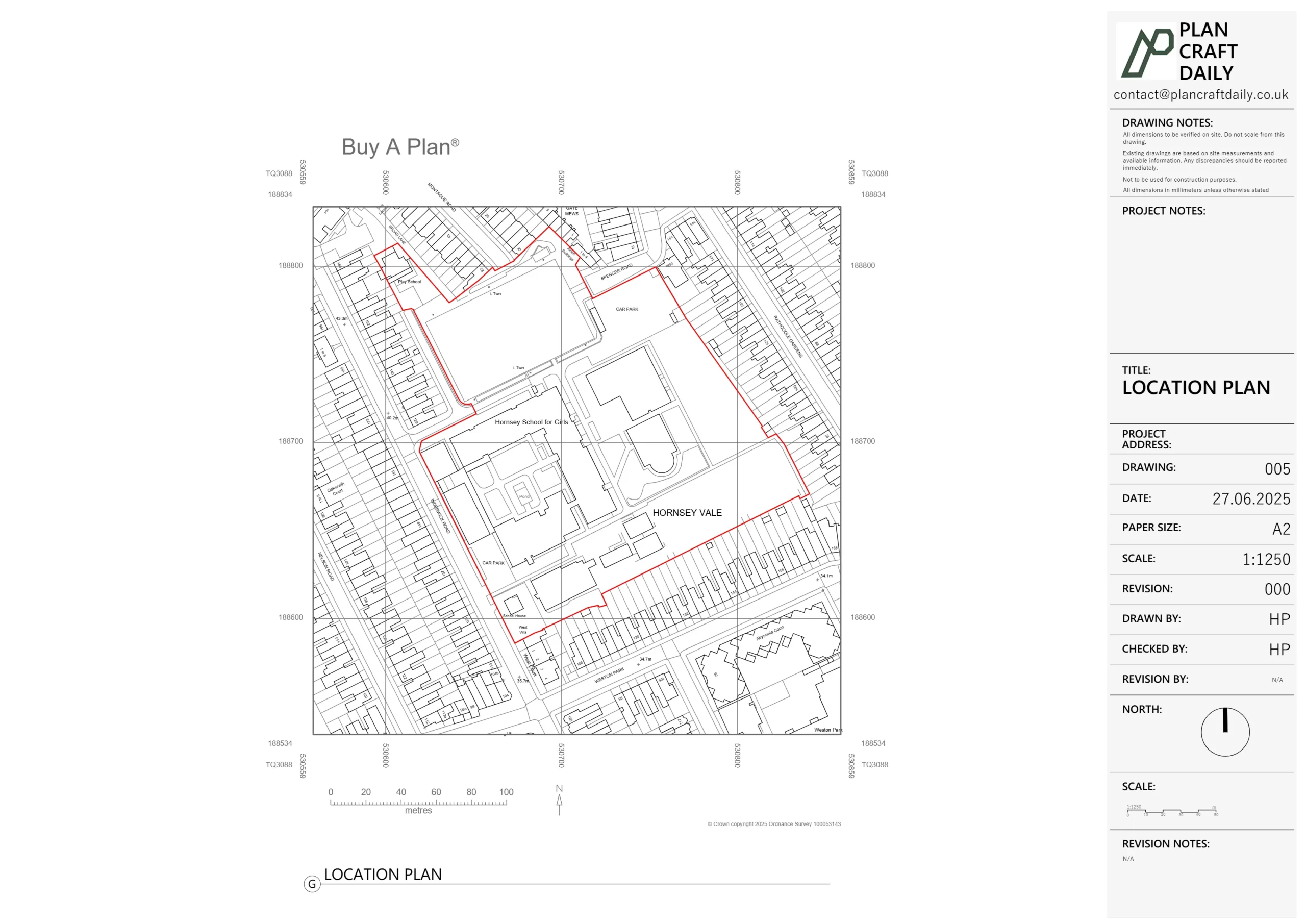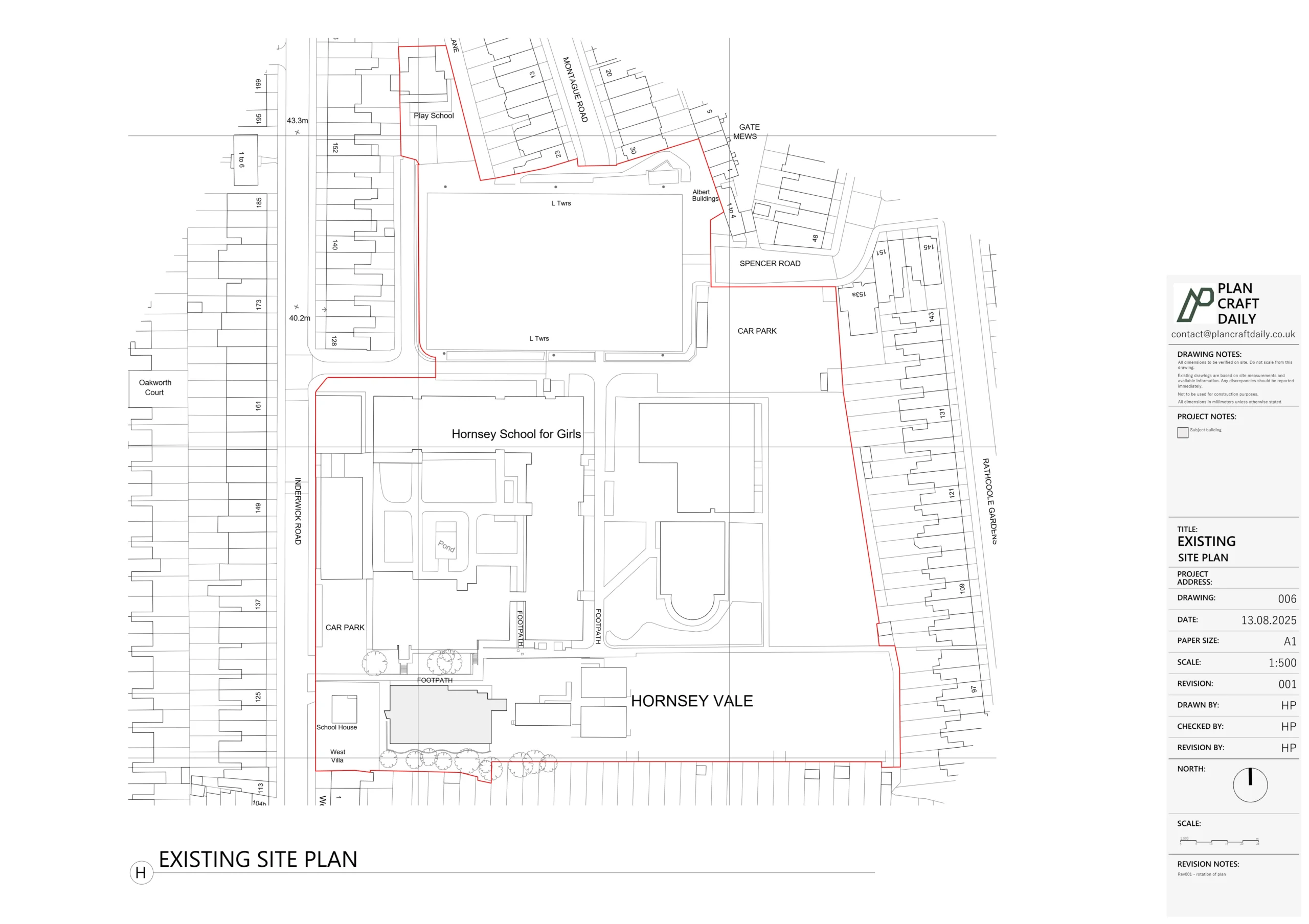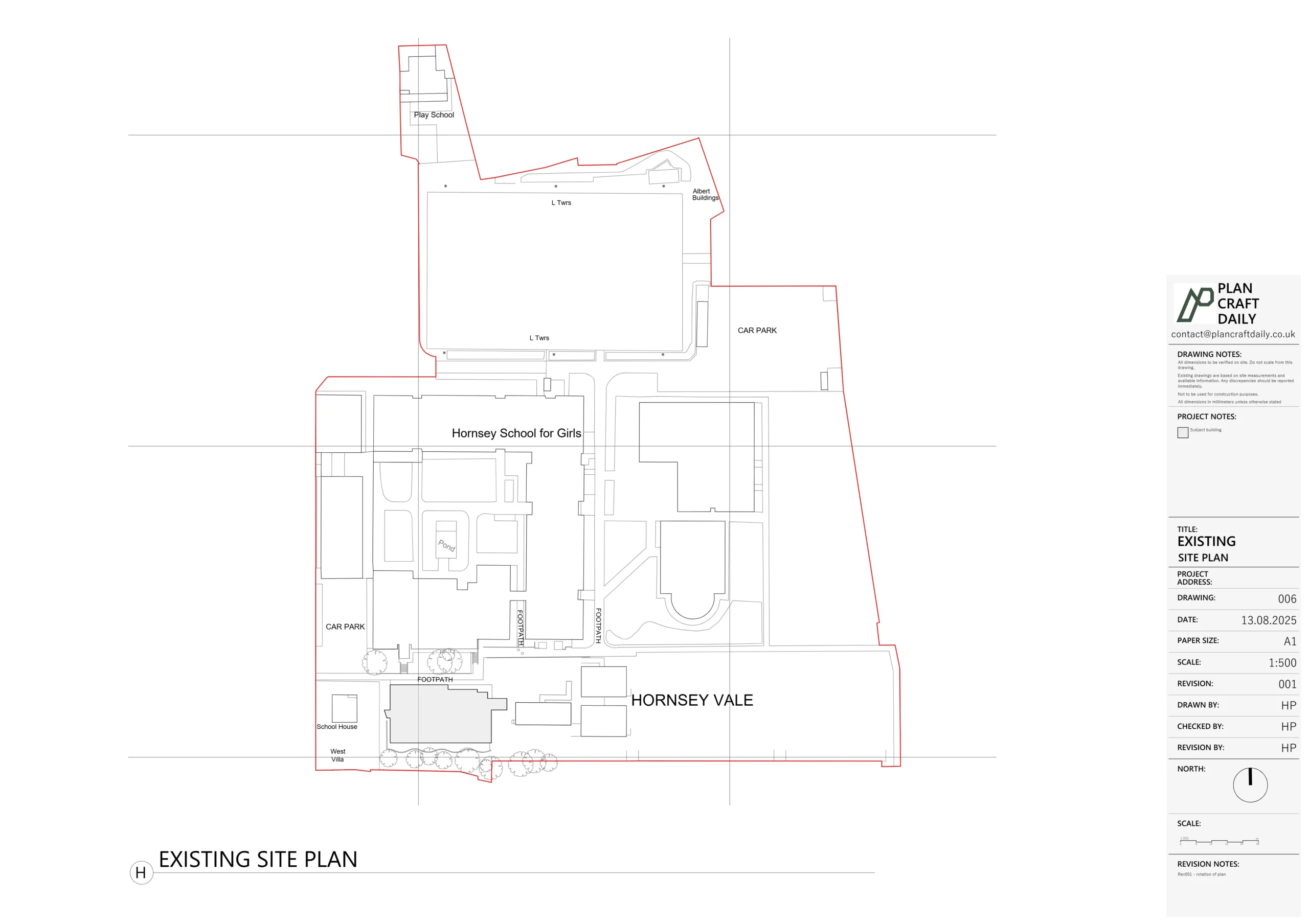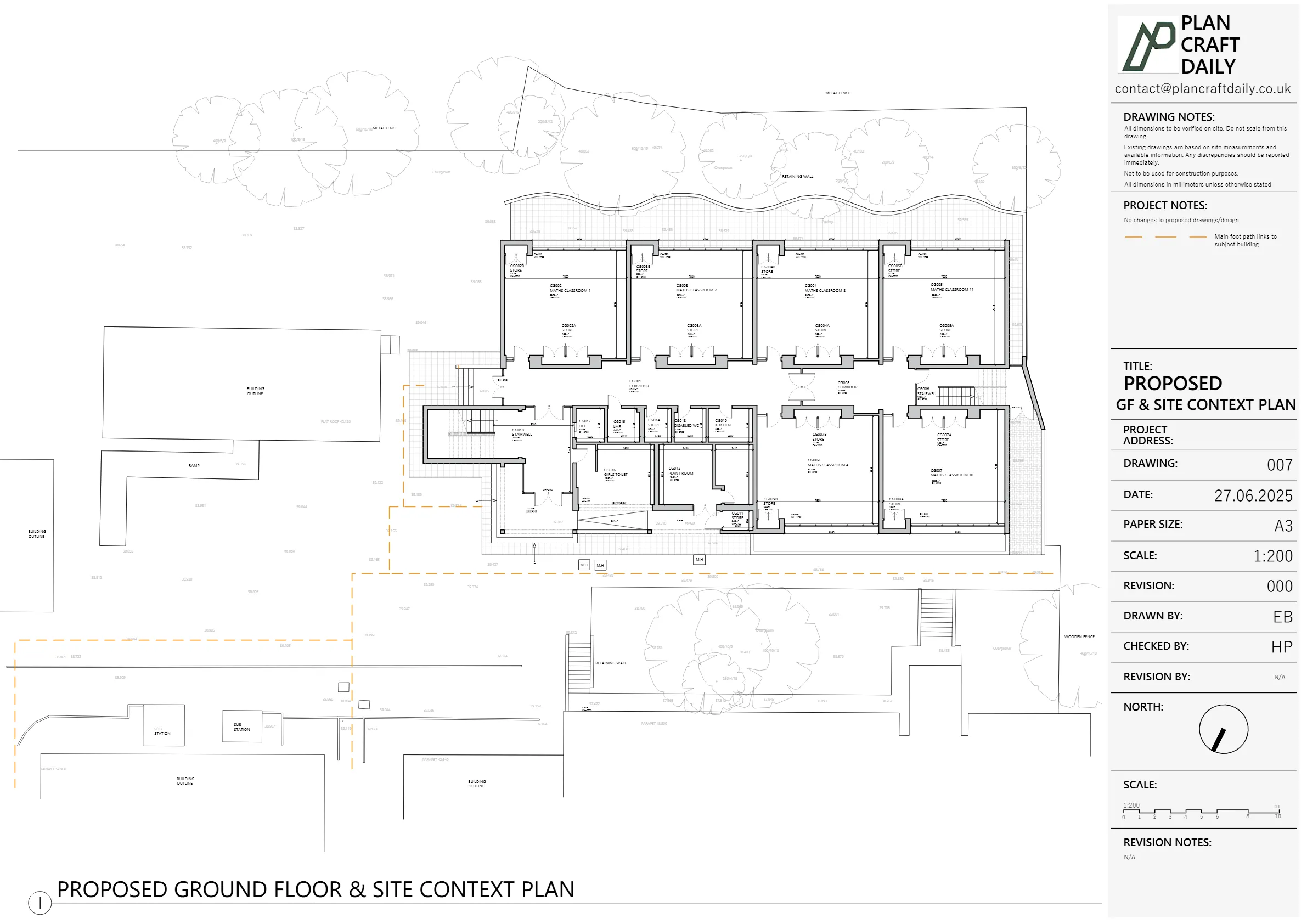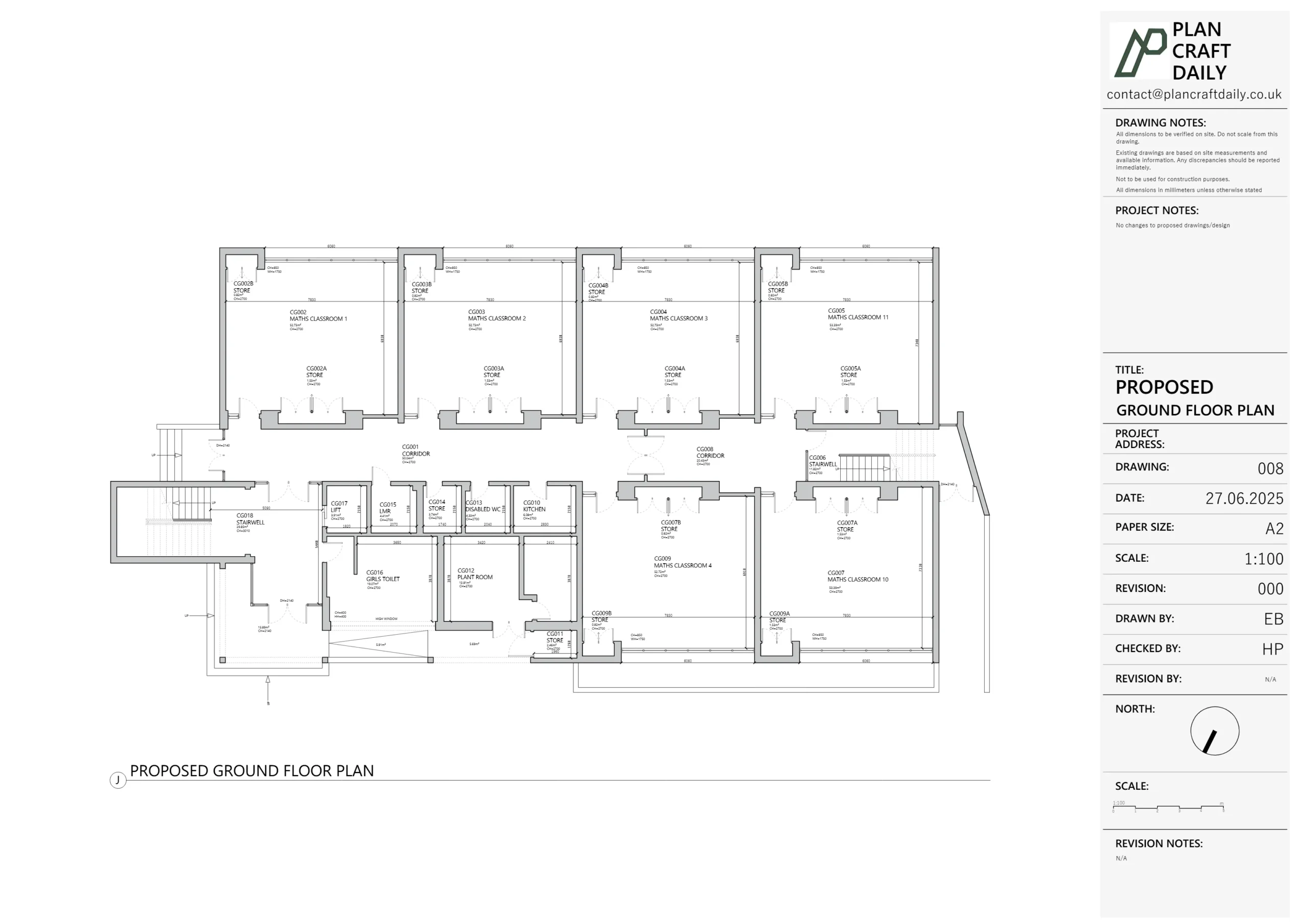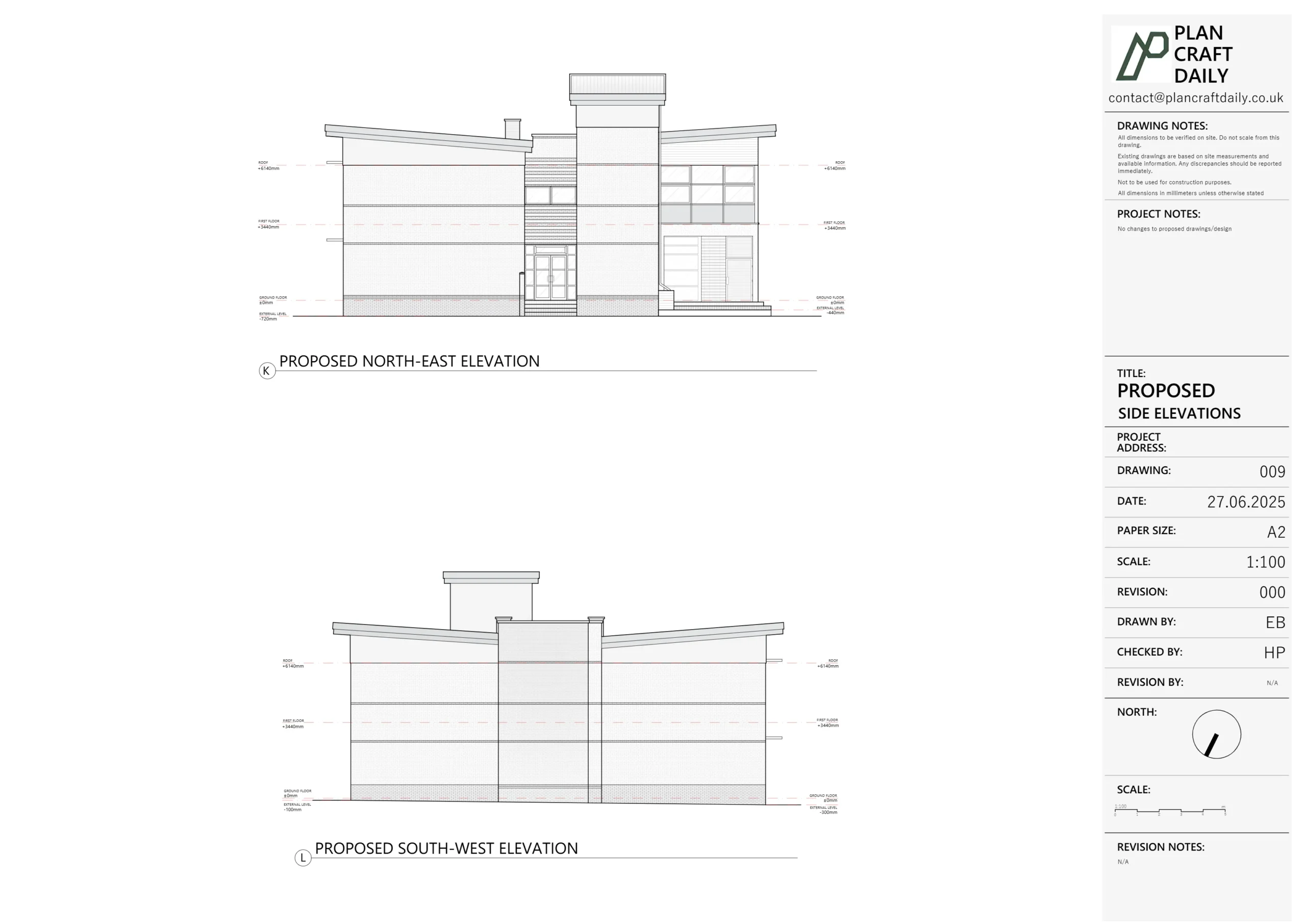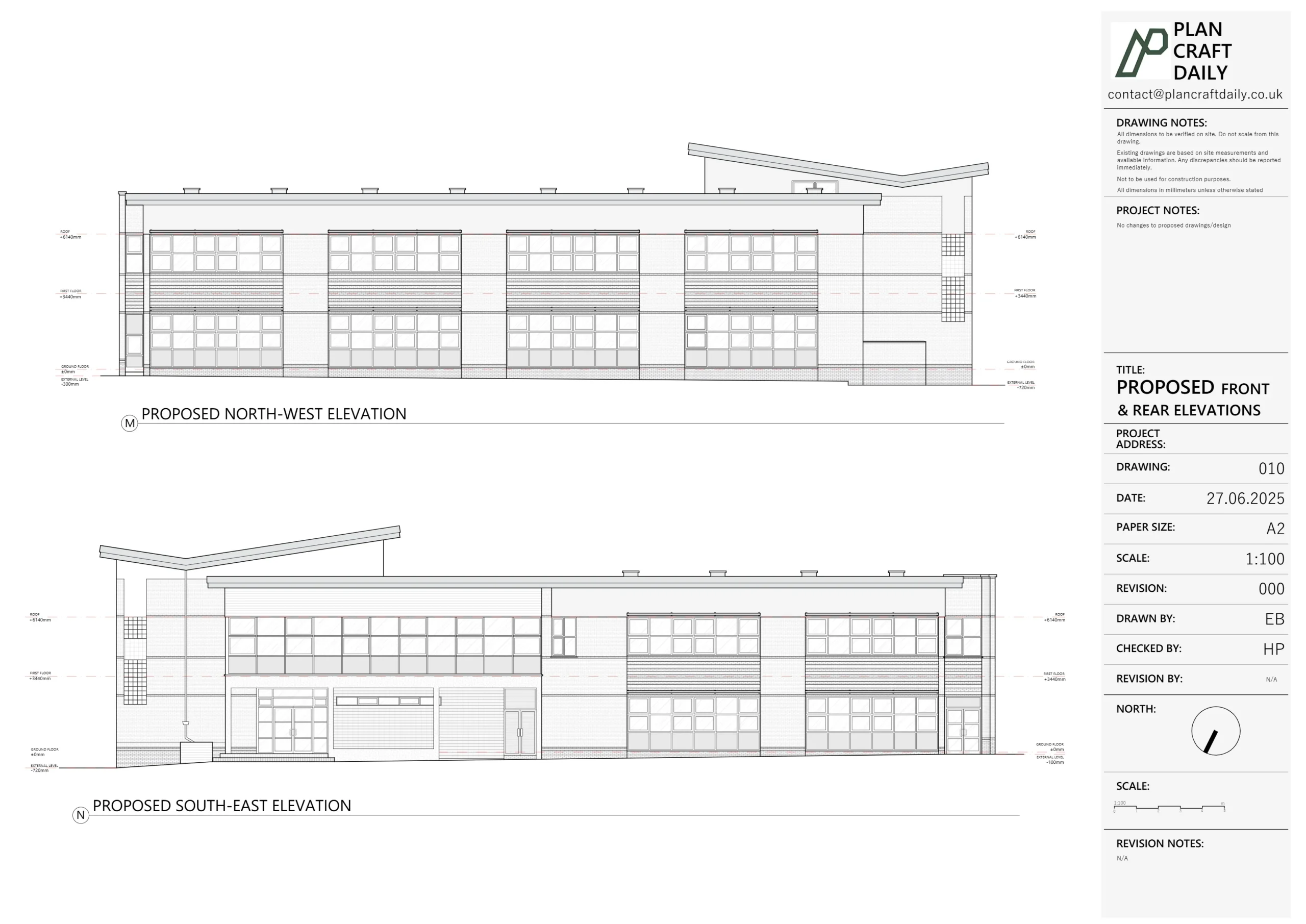
Emily, a RIBA architect, approached us with a slightly different request from our usual measured surveys:
- Her client already had existing plans in TIFF format plus dimensioned photos.
- She needed those plans carefully copied into AutoCAD DWG, fully to scale and ready for design work.
- Accuracy mattered, but she also wanted a quick turnaround and a clear fixed fee.
She sent over:
- The original existing plans as a .tif file.
- Supporting photos and dimension notes from the client.
We:
- Provided a clear fixed-fee estimate for converting the plans into DWG.
- Explained that the resulting DWG would be as accurate as the source information allowed, because we were tracing and scaling an existing drawing rather than re-surveying the building.
- Clarified that we work on the assumption she holds the rights to use and modify the original drawings.
- Confirmed that we are not VAT-registered, so there would be no VAT added on top.
Once Emily approved the quote and we issued the invoice, she made payment and confirmed she was looking forward to receiving the drawings the next day, so we prioritised the job accordingly.
How we carried out the “survey”
There was no physical site survey on this project; all of our work was based on the drawings and dimensions Emily supplied.
Our internal process for this type of CAD conversion looked like this:
- Set up the CAD environment
- Created a new AutoCAD file at 1:1 metric scale.
- Imported the TIFF plans into model space and aligned them to a working grid.
- Calibrated the scale
- Used the known dimensions (from Emily’s notes/client measurements) to scale the TIFF so that one or two key reference measurements matched exactly in CAD.
- Ran a quick set of check dimensions around the drawing to ensure the scale factor was consistent across the plan and that distortion was within an acceptable tolerance.
- Traced and structured the information
- Carefully traced walls, doors, windows, and key structural lines.
- Used separate layers for walls, doors, windows, text and dimensions so Emily would have a clean file to build on.
This approach allowed us to replicate the original plan geometry in DWG format without needing to visit site.
Turning the source plans into CAD drawings
Once the scaling and base trace were in place, our CAD team focused on making the file genuinely useful to Emily in her day-to-day design workflow:
- Clean linework
- Snapped all corners and intersections properly so there were no gaps or overlaps in the wall outlines.
- Simplified any fuzzy or unclear lines from the TIFF into clear, straight polylines.
- To-scale verification
- Re-ran several spot dimensions across key rooms and structural spans to confirm the CAD geometry matched the provided dimensioned information.
- Where the original drawing showed minor inconsistencies, we followed Emily’s supplied dimension notes as the priority reference.
- Output preparation
- Produced a clean floor plan DWG:
- Correct scale.
- Clear layer structure.
- Ready for Emily to apply proposed layouts or export to PDFs for client presentations.
- Generated a PDF floor plan directly from the DWG so Emily could visually check the result before working further in CAD.
- Produced a clean floor plan DWG:
We then:
- Emailed Emily to confirm that everything was ready, attaching:
- The PDF floor plan for immediate viewing.
- Confirmation that the DWG file would follow upon payment, as per our normal process.
Managing changes and expectations
Even on a relatively small CAD conversion project, there were a few points to manage carefully:
1. Fee, VAT and scope
- Emily asked whether the quoted fee included VAT.
- We confirmed that we don’t charge VAT, and that the quoted figure covered the full scope:
- Converting the existing floor plans to DWG.
- Ensuring everything was to scale based on the dimensions provided.
This kept the billing side transparent and straightforward.
2. Turnaround and timing
- Emily made it clear she was working to a tight timescale and wanted the drawings by the following day.
- We aligned our internal scheduling accordingly and confirmed:
- Invoice issued.
- Payment received.
- Drawings delivery planned for the requested time.
3. Payment receipts & admin clean-up
After payment and delivery of the drawings:
- Emily confirmed that “all looks great” and that she had paid the invoice, and was looking forward to receiving the DWG file (which we then provided).
- Later, Harry noticed that the first payment receipt might not have come through correctly at her end.
- To avoid any confusion, we:
- Re-sent the payment receipt as a new email with the file clearly attached.
- Kept the message simple: acknowledging the issue and making sure she had the document for her records.
4. Relationship and follow-on work
In the same thread, Emily mentioned she would get back regarding another address (54 Crookham Road). That told us two things:
- The Lorne Street conversion had gone well enough that she was already considering us for the next job.
- Good communication and quick turnaround on smaller CAD tasks can be an effective way to build long-term relationships with architects.
Final outcome
By the end of the project, Emily had:
- A fully to-scale DWG floor plan converted from her original TIFF, with:
- Clean, layered CAD linework.
- Dimensions aligning with the values provided by her and her client.
- A matching PDF floor plan for quick review and client communication.
- A clear payment trail, with the corrected receipt safely reissued and stored.
For us, this project:
- Demonstrated how we can add value even without a site visit, by turning legacy or scanned drawings into clean, usable CAD files.
- Opened the door to future work with a RIBA architect on additional properties like Crookham Road.
It’s a good example of the “light-touch” end of our service range: taking existing material, applying care and structure in CAD, and delivering something that plugs straight into an architect’s design process with minimal friction.
Project Details
| Service Type | 2D CAD Conversion – Existing Floor Plans to DWG (to scale) |
| Time Taken | 1–2 working days from confirmation to final DWG issue |
| Location | Lorne Street area, Reading |