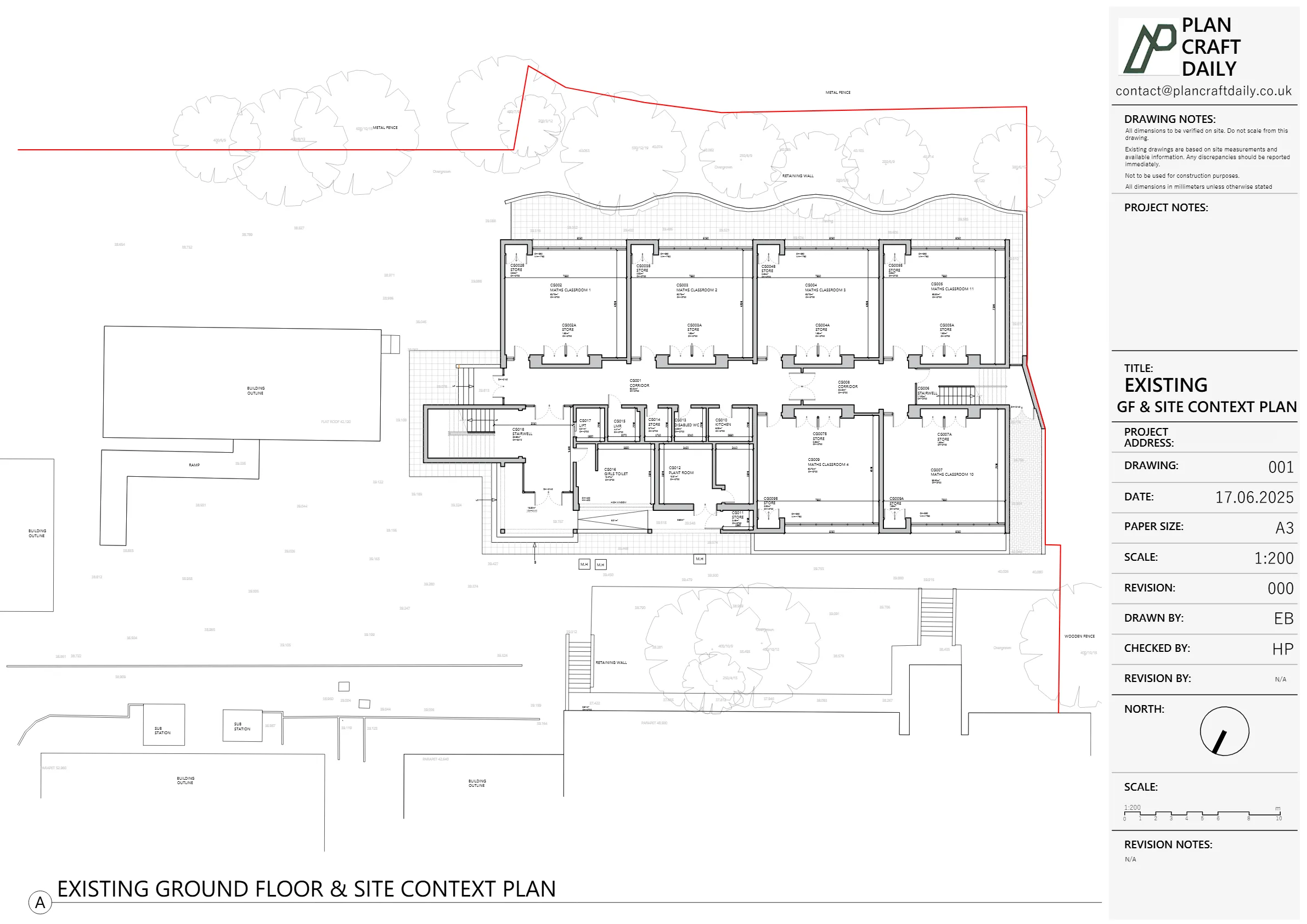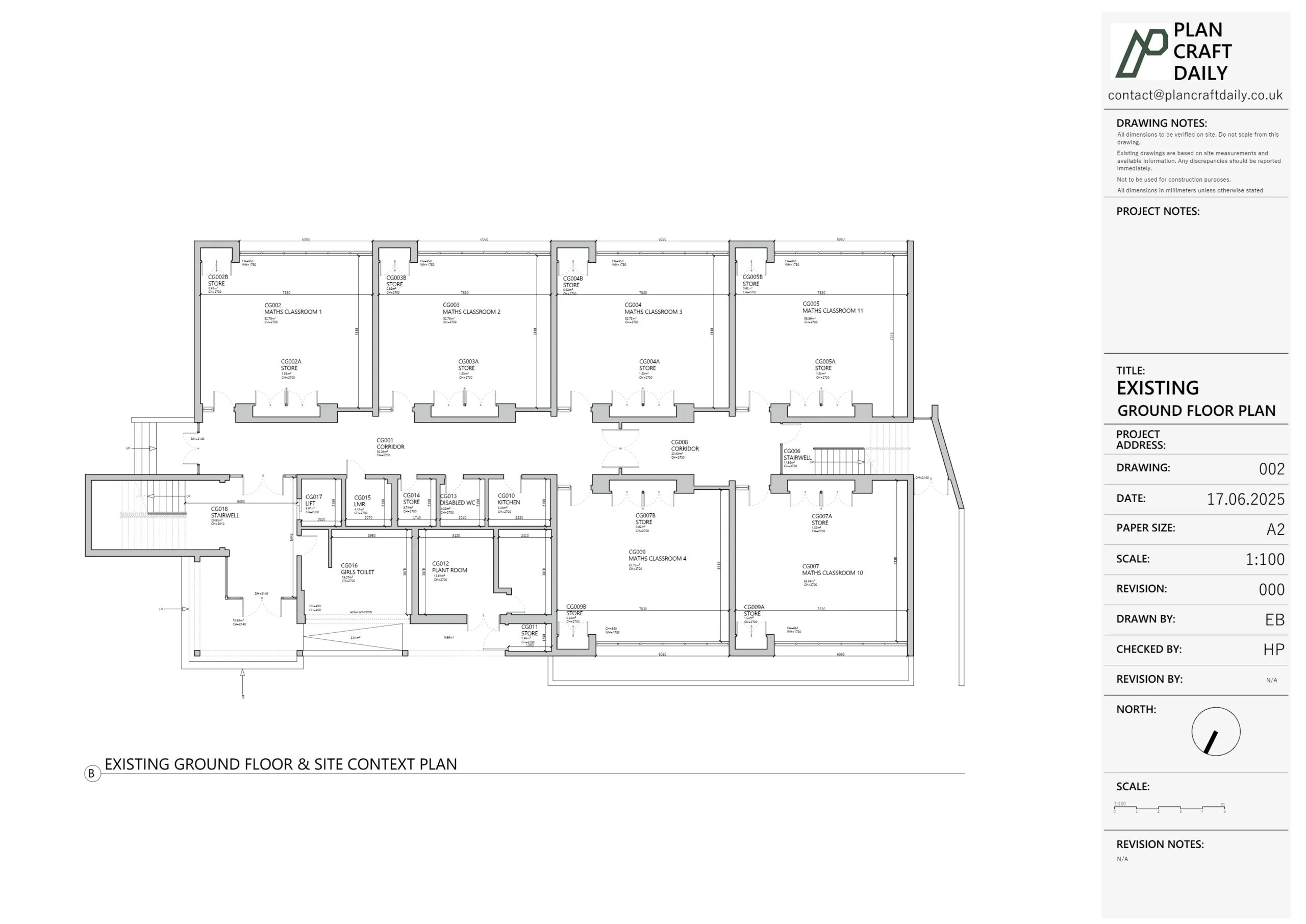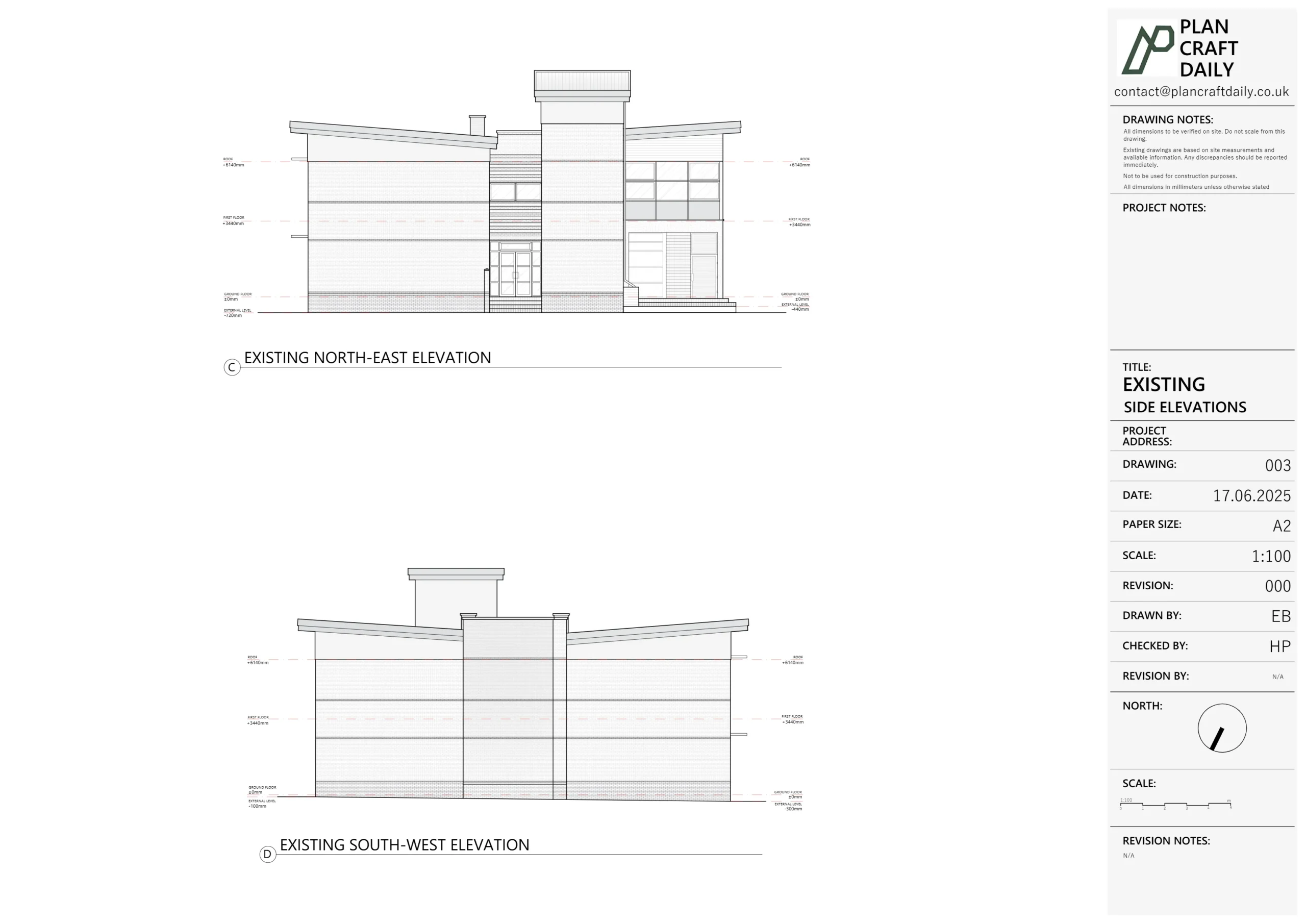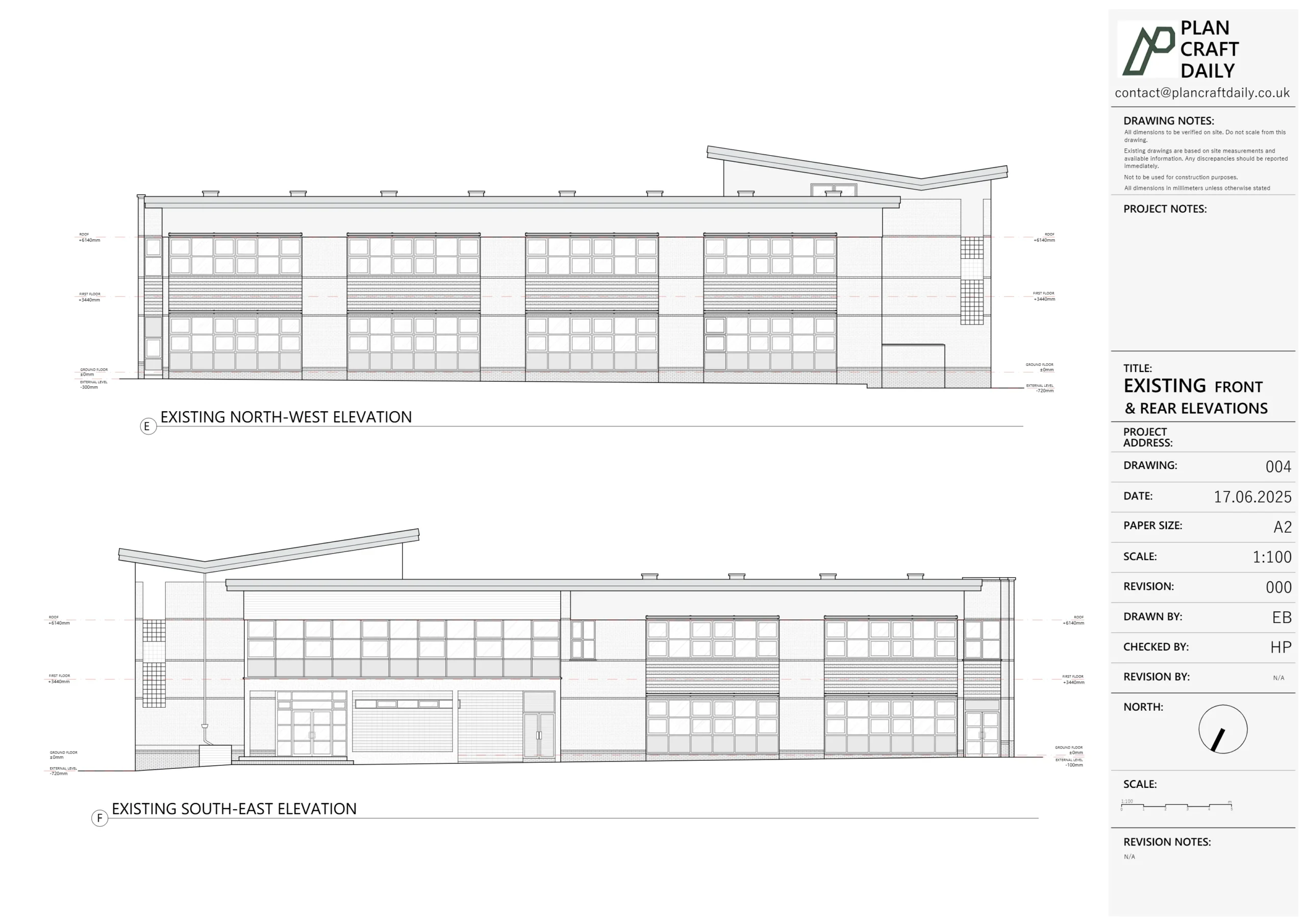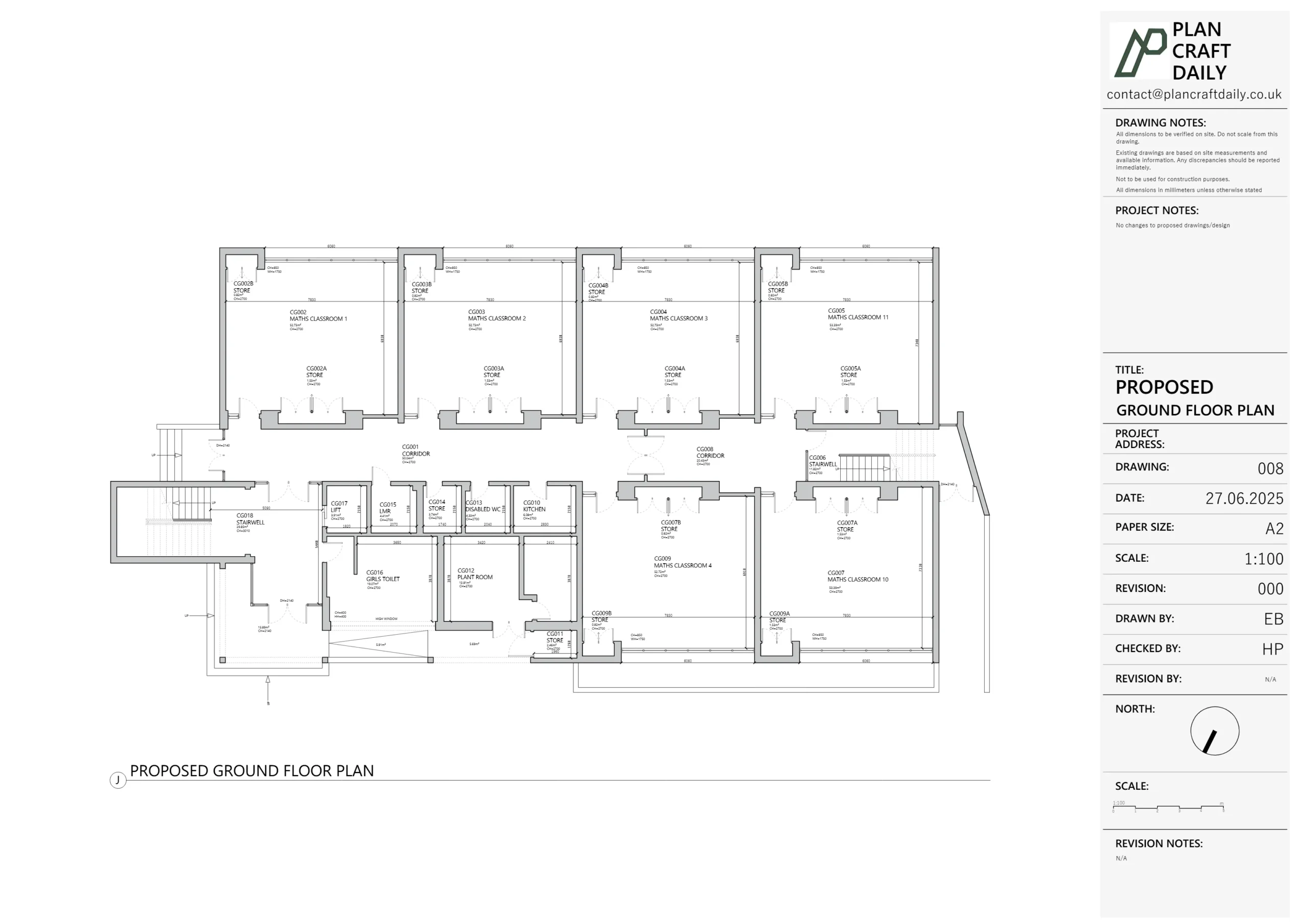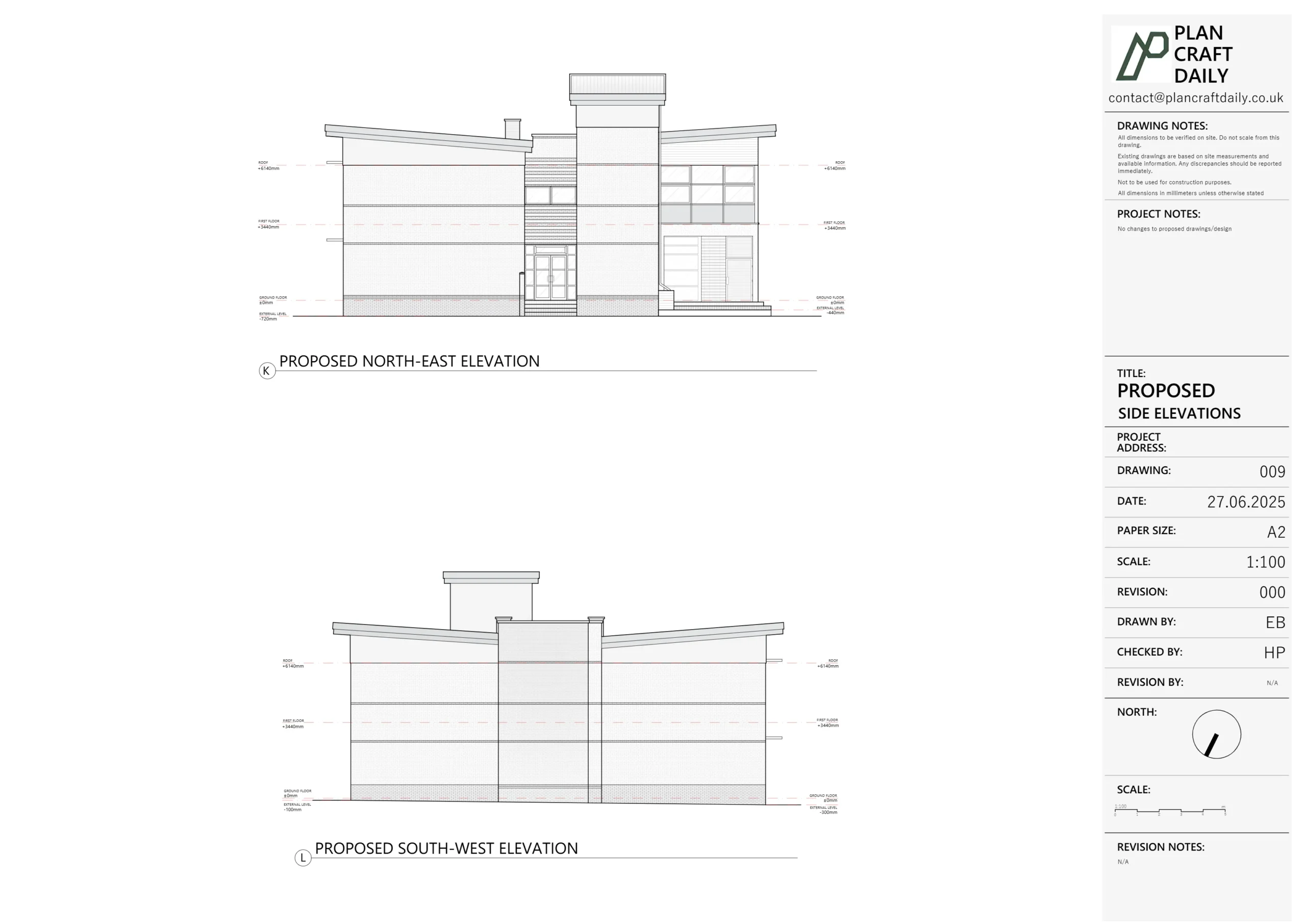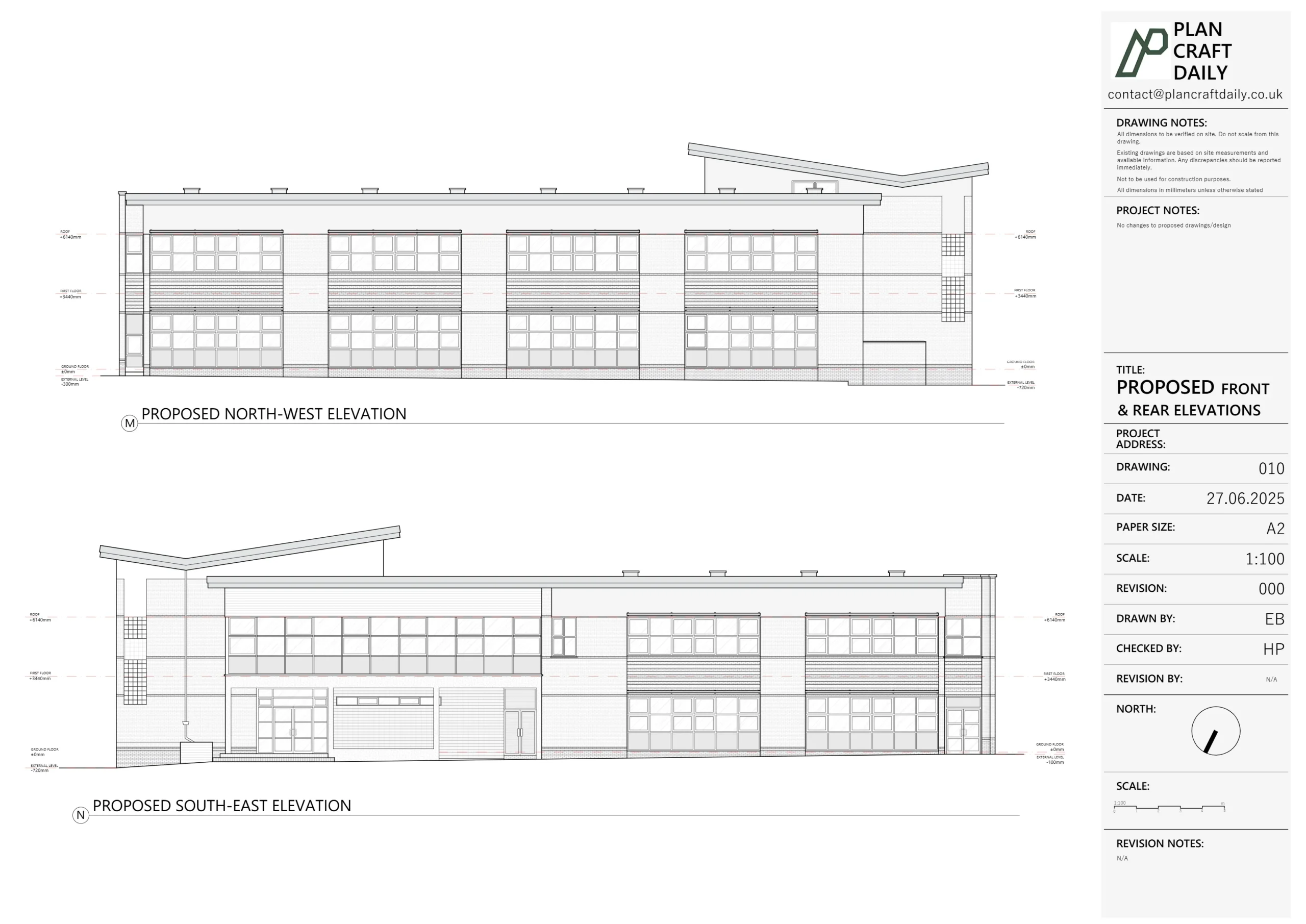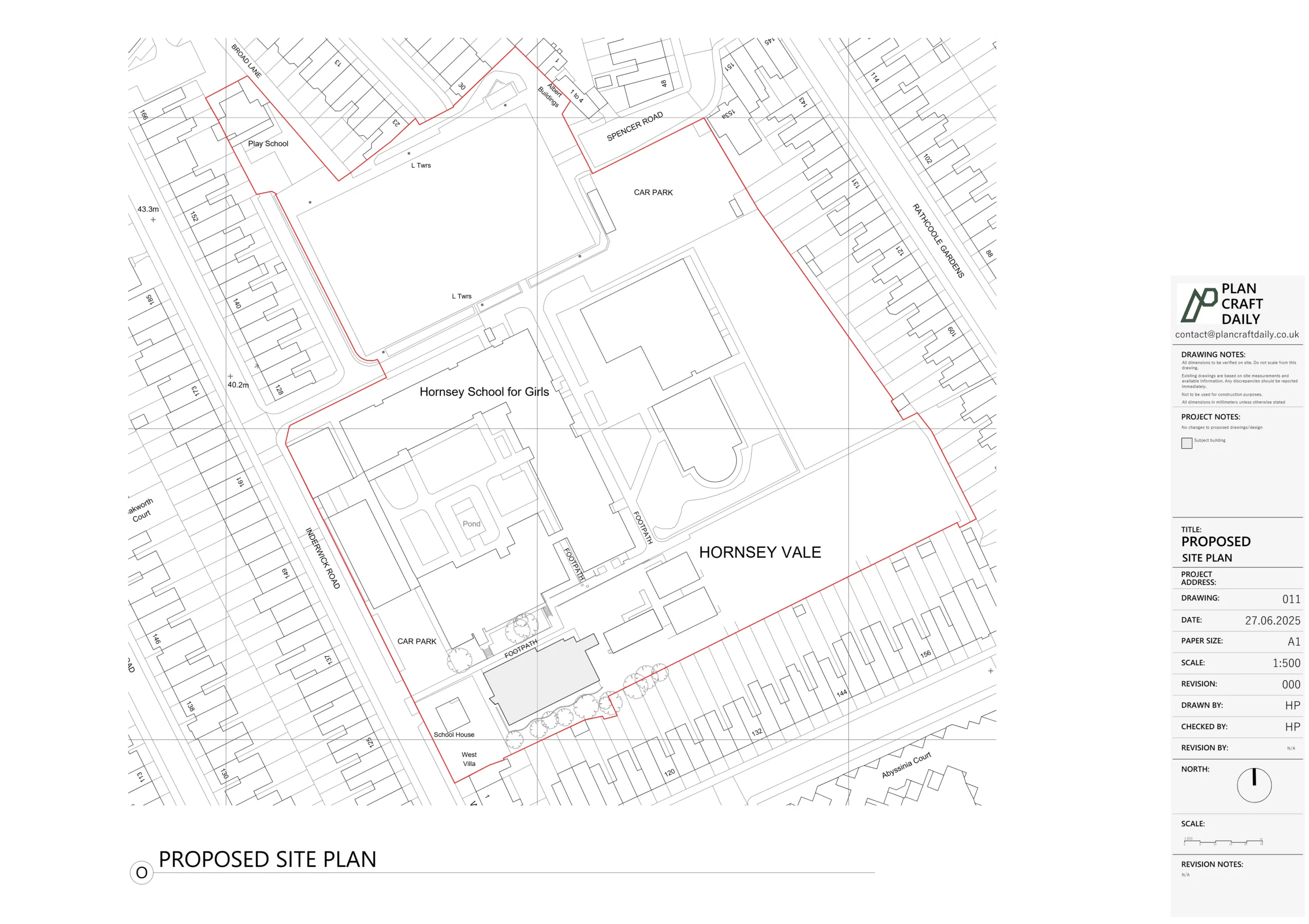
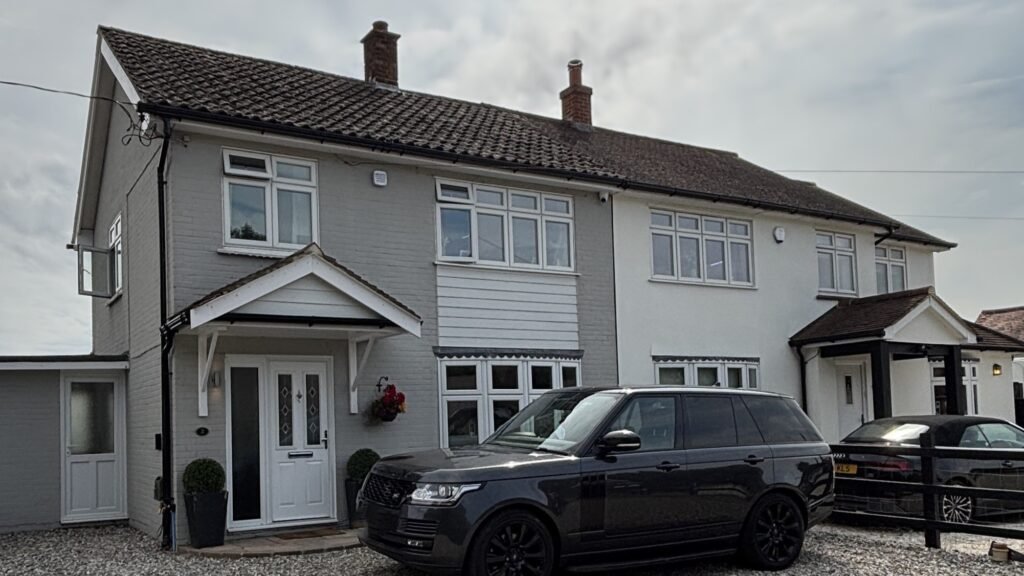
A client team contacted us for a measured survey and existing drawings of a semi-rural cottage near Willingale in Essex. They needed a reliable base for design and planning, with a few important extras:
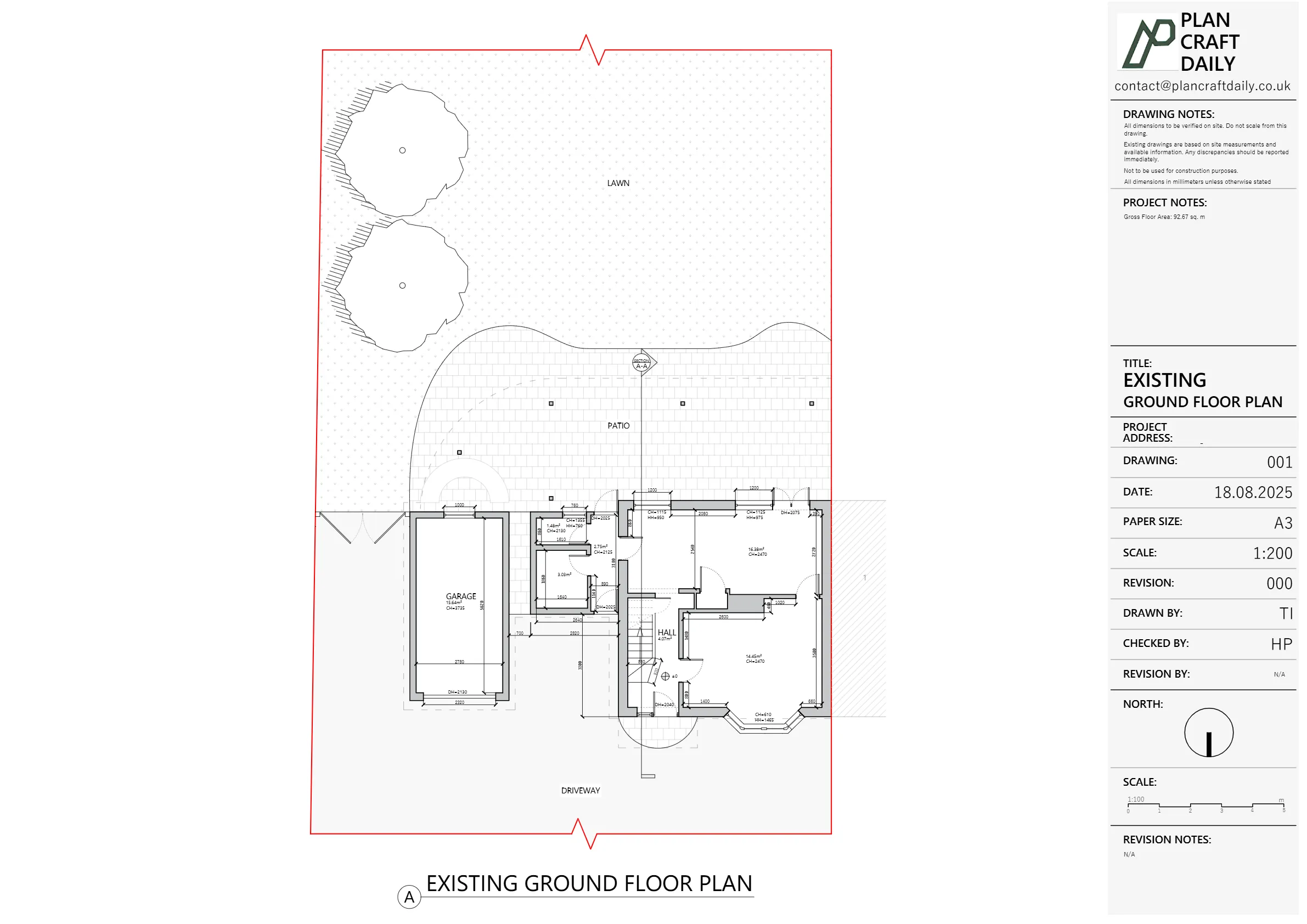
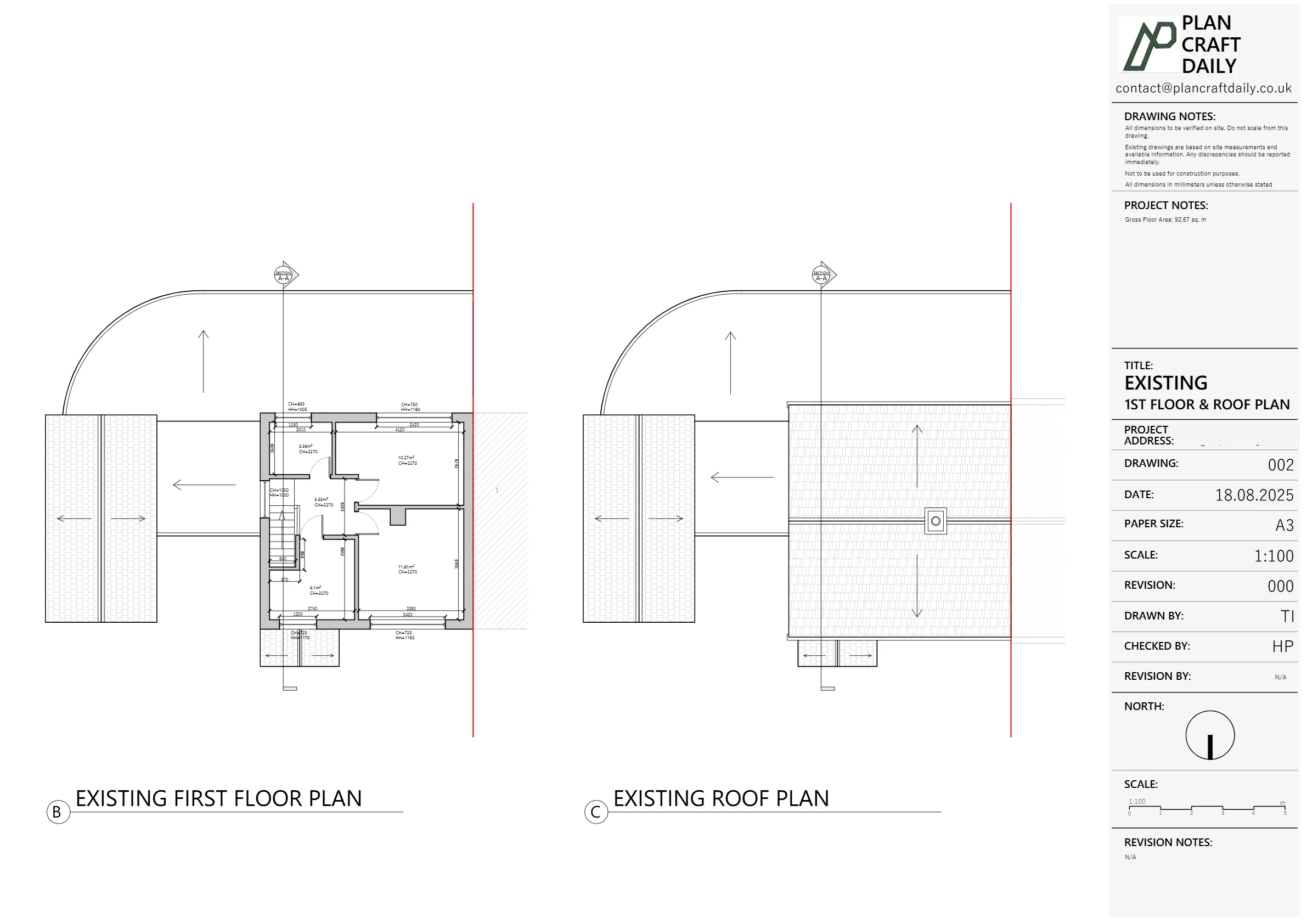
- Measured survey of ground and first floors
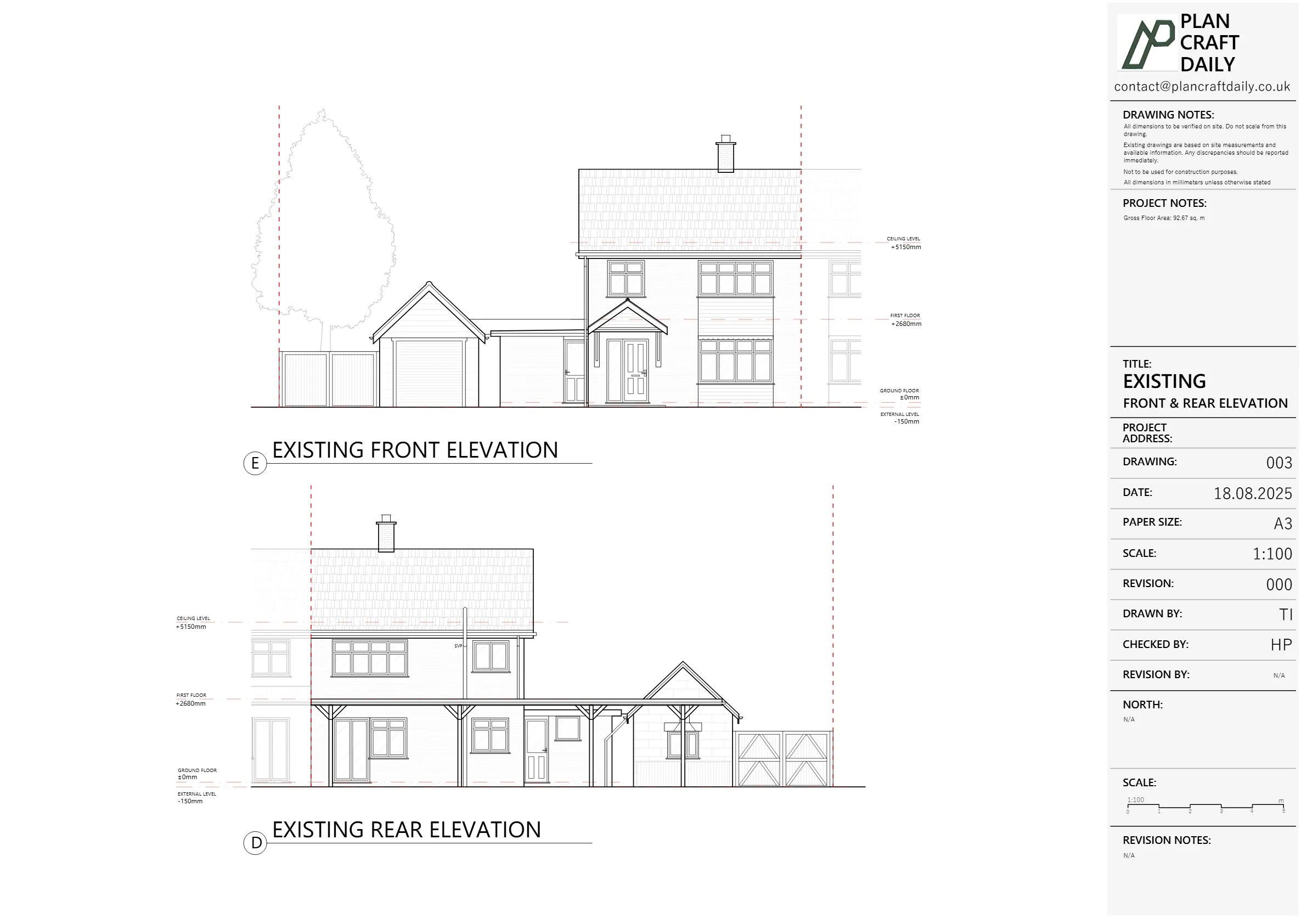
- Existing front and rear elevations
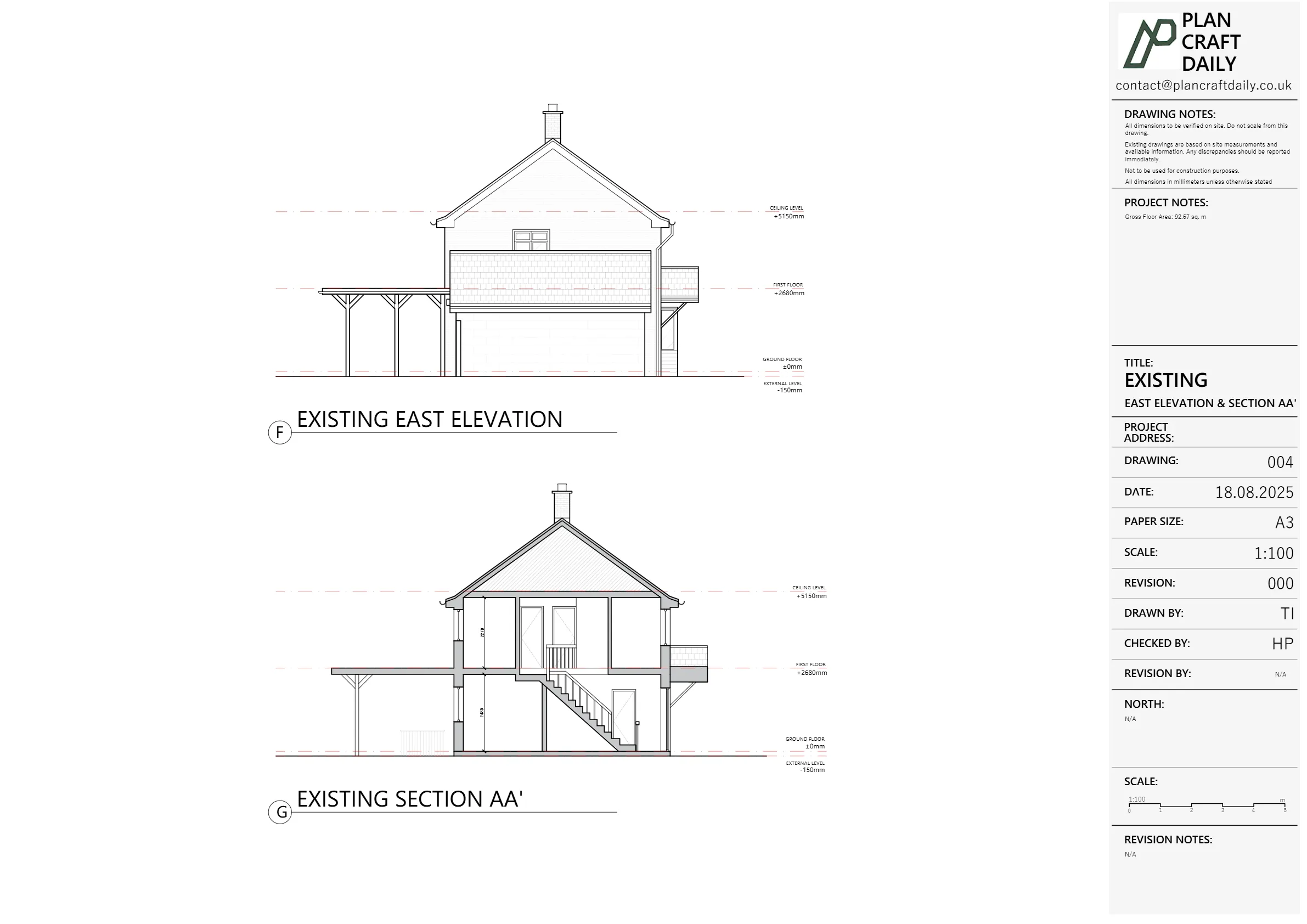
- Open side elevation and one cross-section
- Garage included in the scope
- Perceived boundaries plotted
- Two large trees shown in their correct proximity to the house and site
The trees were a particular point of interest, as they were likely to be relevant for planning and any future design work.
Once we’d clarified that the garage and boundaries were to be captured, we issued a quotation, then an invoice for the initial payment. After the client confirmed they were happy to proceed, we agreed survey availability for early August.
How we carried out the survey – house, garage and site features
With the initial payment received, we confirmed:
- Surveyor: Ali
- Arrival window: early afternoon, with access arranged via the owner
On the day, Ali carried out a measured building survey covering:
- Ground and first-floor layout of the cottage
- The garage, including its footprint and relationship to the main house
- Front, rear and open side elevations
- One left-to-right section line to pick up key heights and structural information
- Perceived boundaries, including fence lines and main changes in surfacing
- Initial location and size information for two large trees near the property
Our usual approach was followed:
- Primary dimensions taken with a laser distance meter
- Cross-checks between internal and external measurements to keep elevations tight
- A full internal and external photo set to support later CAD drafting
Because this was a semi-rural site, attention to nearby features and boundaries mattered as much as the house itself: the relationship between cottage, garage and trees would influence what the design team could and couldn’t do later.
Turning the survey into drawings – a complete “existing” pack
Back in the studio, we converted the survey data into a full existing drawings pack:
- Ground and first-floor plans
- Front, rear and open side elevations
- A section running left-to-right through the key parts of the building
- Site-level information, including the garage footprint and perceived boundary lines
- The two major trees plotted as accurately as our initial information allowed
We issued a draft PDF pack together with a final invoice, explaining that DWG files and photographs would be released once the invoice was settled and the drawings signed off.
Managing tree accuracy & revisits – no extra cost, flexible timing
As we moved into our internal QA and draft-issue phase, one thing became clear: to guarantee the accuracy expected for the two large trees, we ideally needed a bit more site data.
We therefore:
- Flagged the limitation clearly in our email to the client team, explaining that the trees had been represented as accurately as possible based on available information.
- Proposed a brief revisit at no additional cost to tighten up their exact positions and sizes, if convenient for the client.
- When the client asked for breathing room to review the updated drawings and queried the invoice due date, we extended the payment window and adjusted the invoice accordingly.
Later, the design team confirmed they were happy to:
- Receive the CAD files and drawing set, and
- Add or refine the tree information themselves during a future site visit, using our drawings as the base.
We confirmed we’d still be happy to revisit to update the trees, and we kept our side of the offer at no additional fee.
Final outcome – robust base plans with a clear record of what’s known
By the end of the project, the client team had:
- A measured survey and existing drawings for the cottage and garage, with plans, elevations, section and boundary layout
- A site plan that included perceived boundaries and key outbuildings
- The two significant trees plotted to the best available accuracy, with the option to refine them later
- A complete CAD pack and photos released once the final invoice was settled
For us, the Walden Hall cottage project reinforced a few useful practices:
- When trees and boundaries are important, it’s worth calling out tree and topo limitations explicitly in both the quotation and final drawings.
- Offering a no-cost revisit in targeted cases (like tree checks) can de-stress the relationship, even if the client ultimately decides to refine details themselves.
- Being flexible on review time and payment dates, while still keeping a clear structure (draft → review → final → CAD release), helps professional clients manage their own deadlines with confidence.
Overall, this rural Essex project delivered what the client needed most: a trustworthy, well-documented “existing” base they could safely design from, with clear notes wherever reality on site still needed a second look.
Project Details
| Service Type | Measured building survey, existing drawings, garage & boundary mapping, key trees recorded |
| Time Taken | 1–2 weeks |
| Location | Rural cottage near Willingale, Essex |