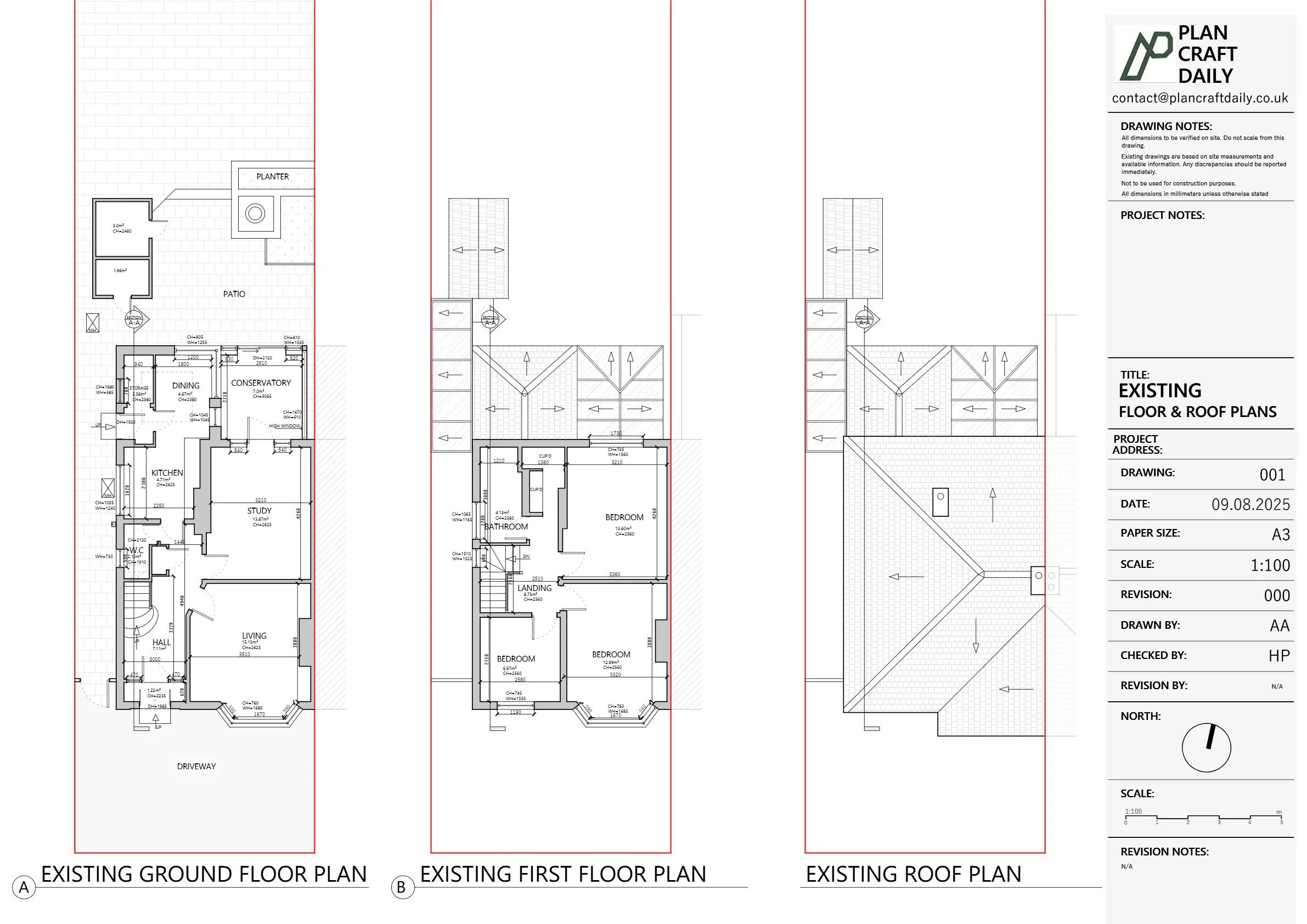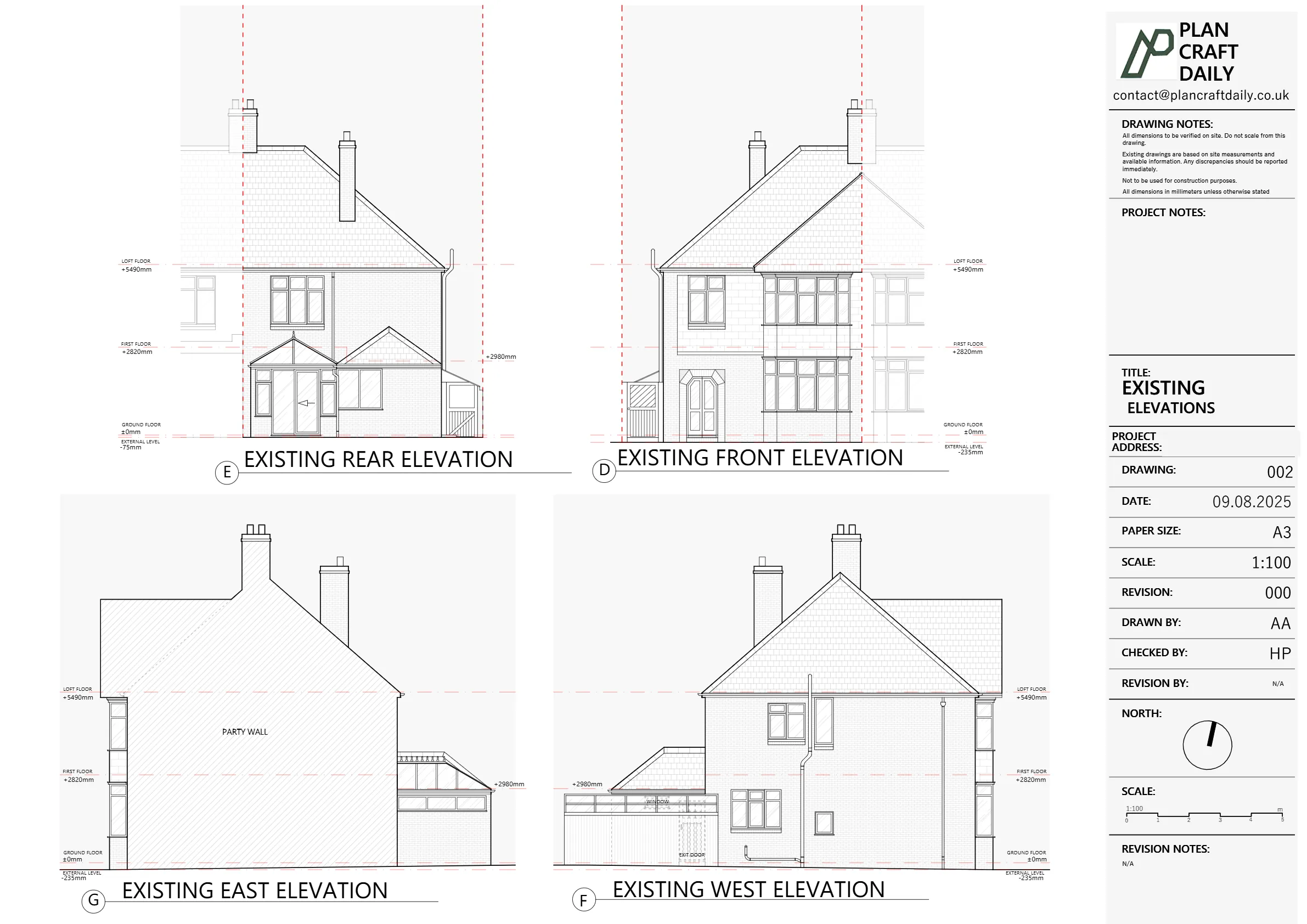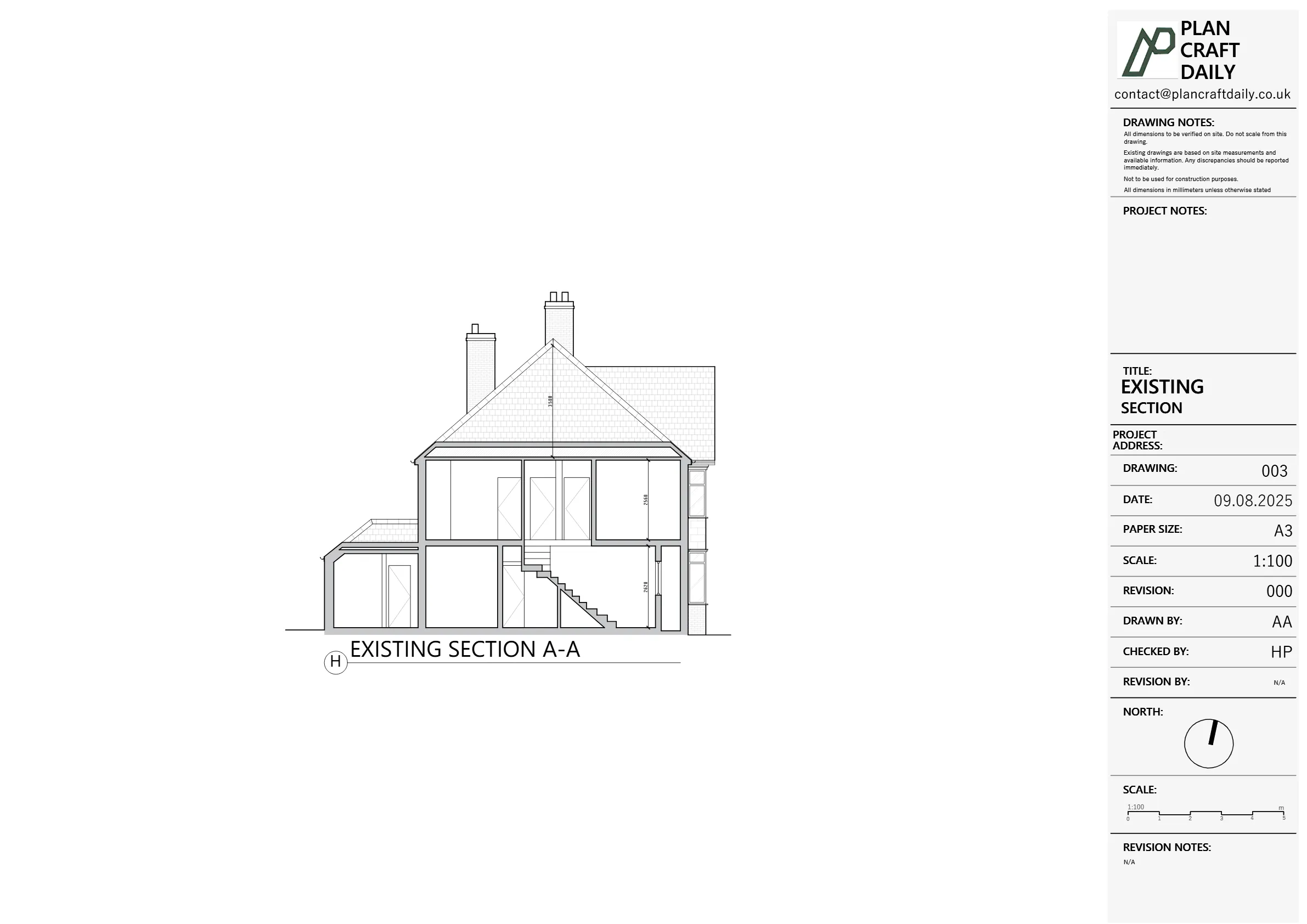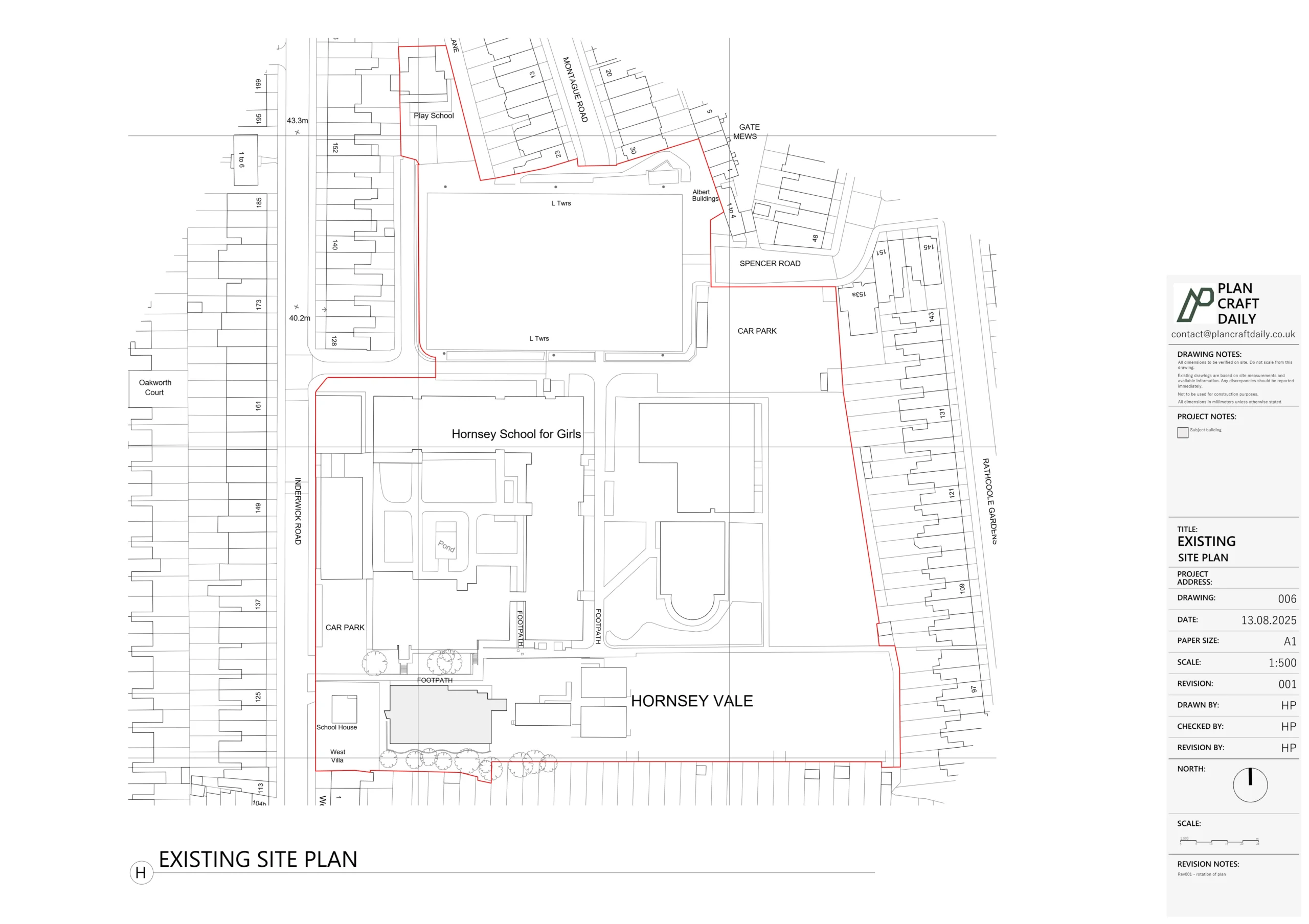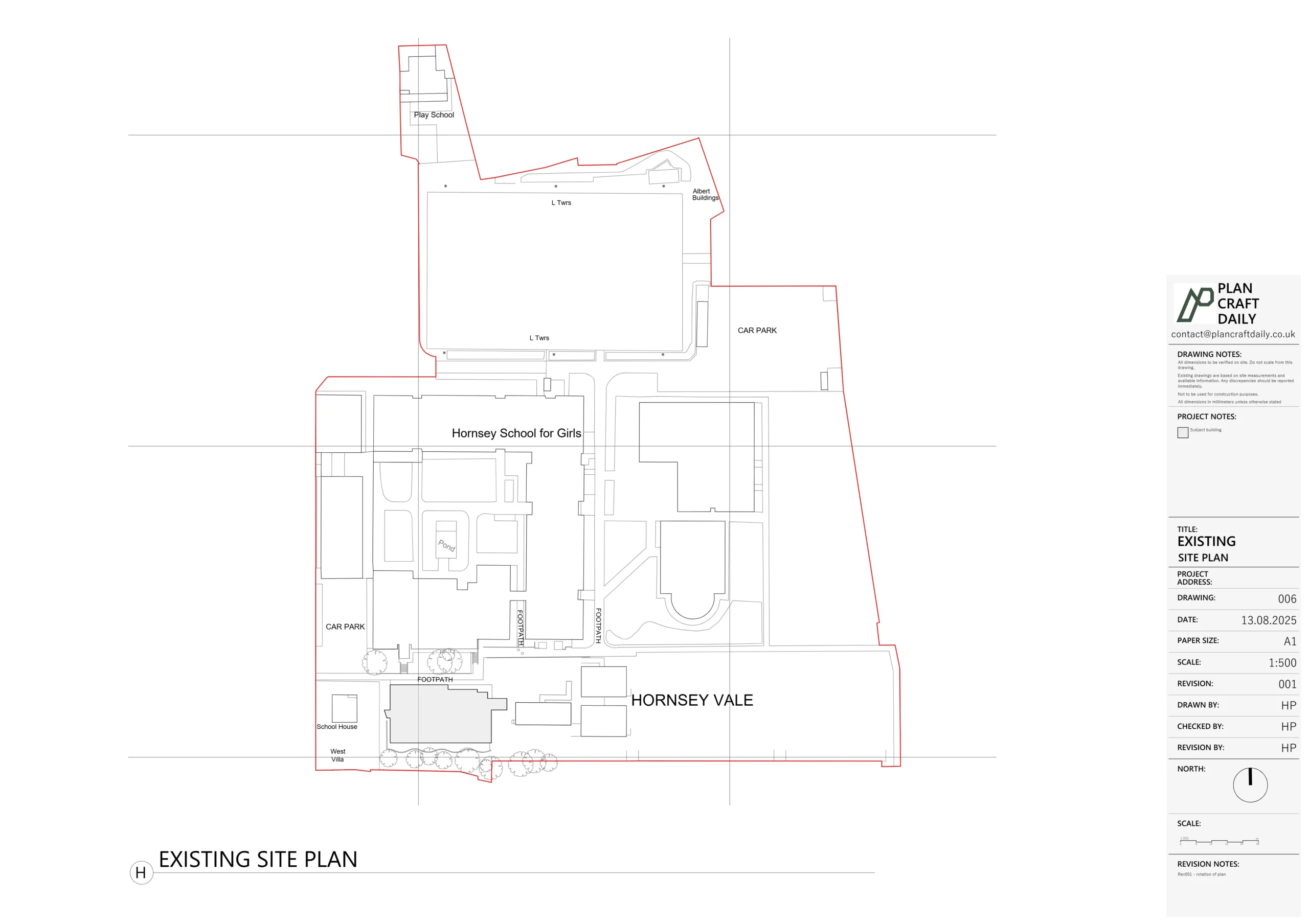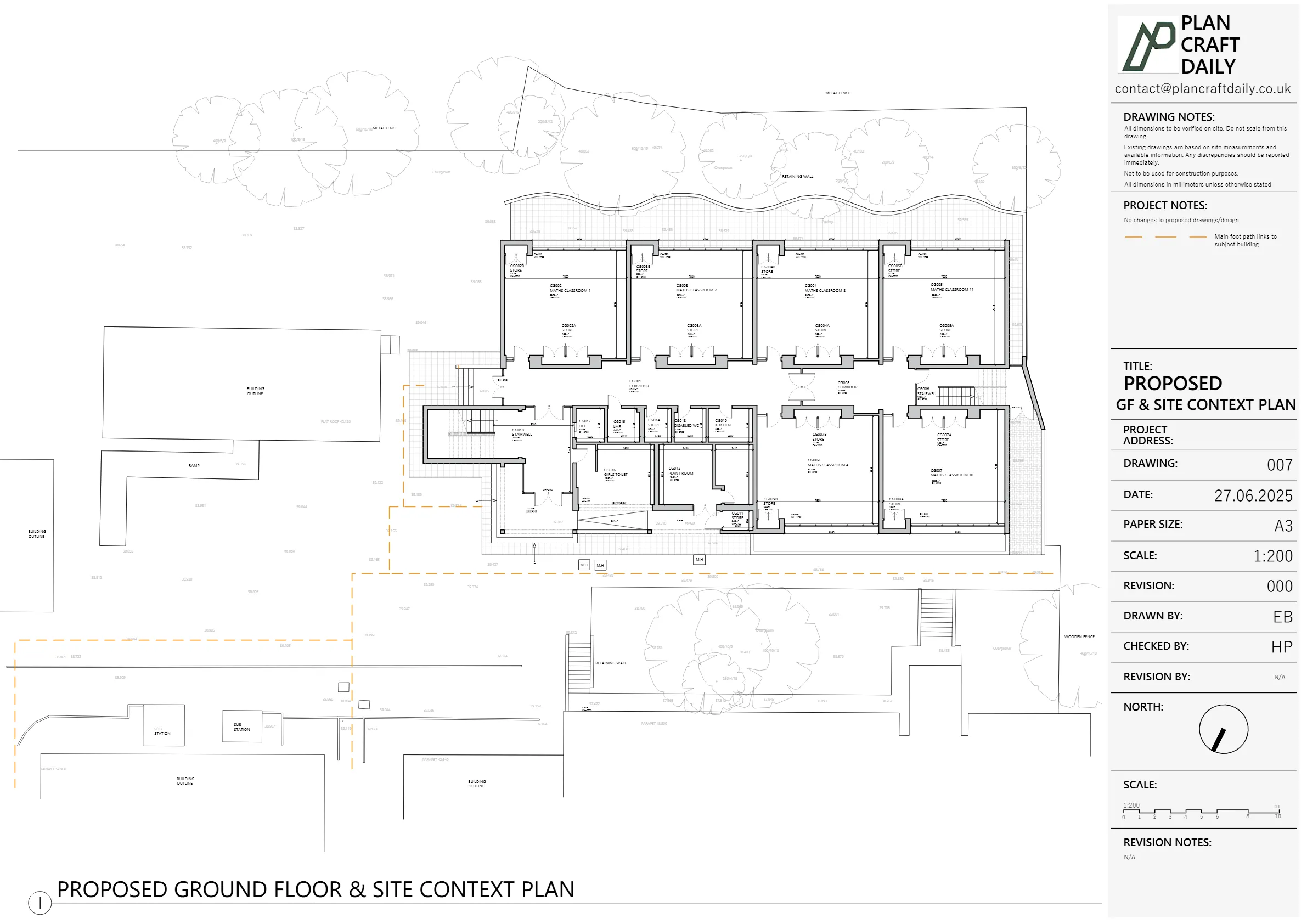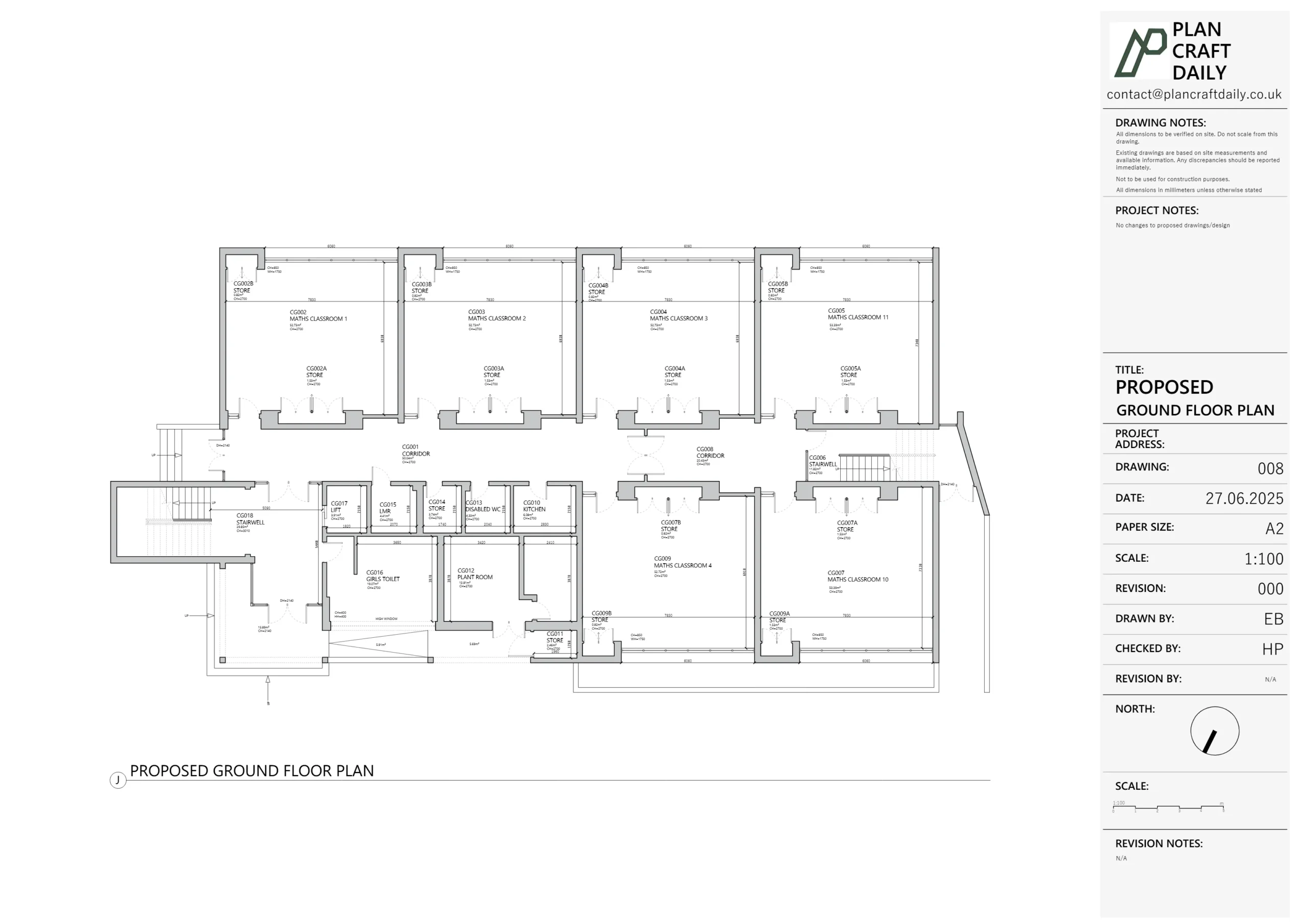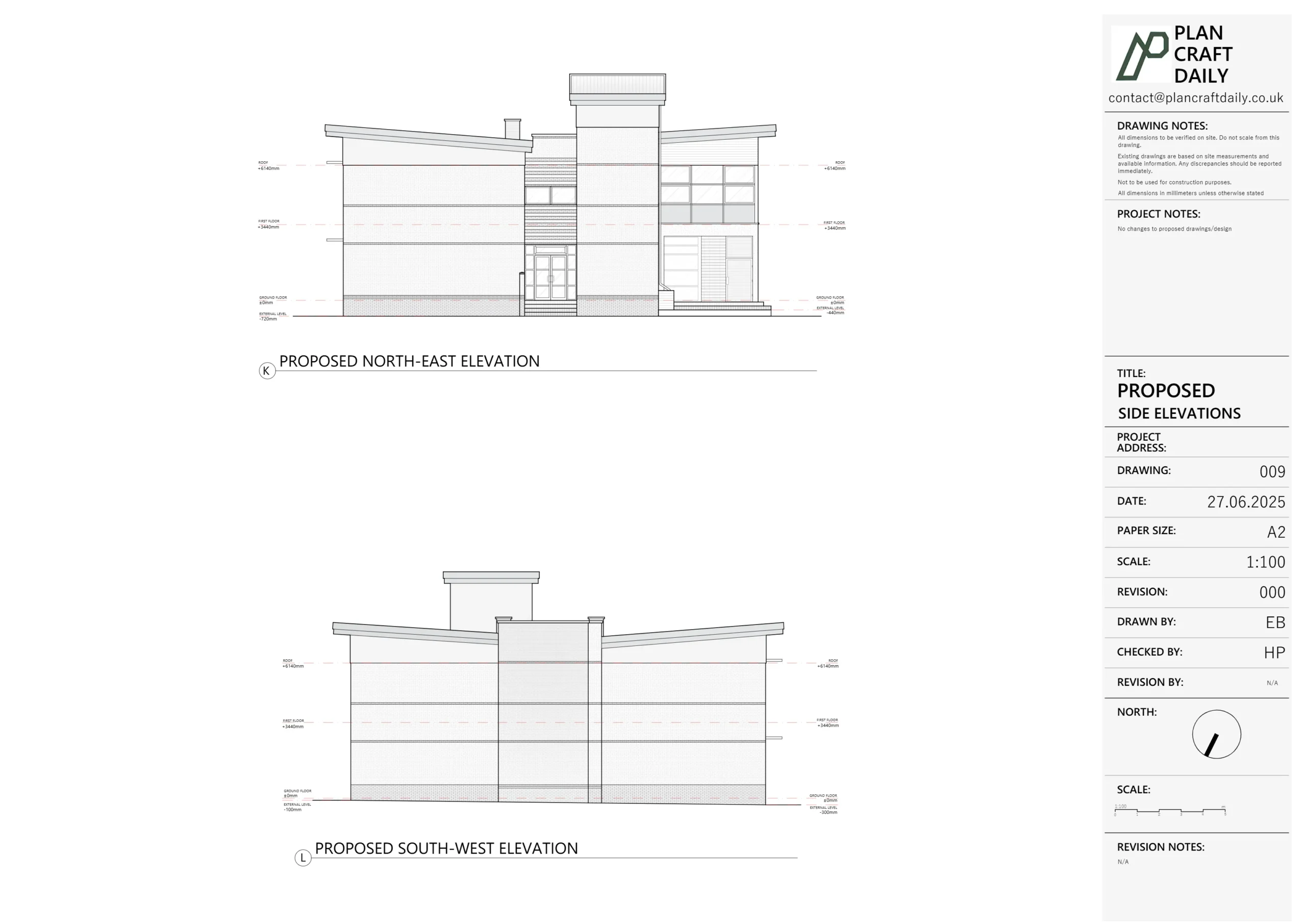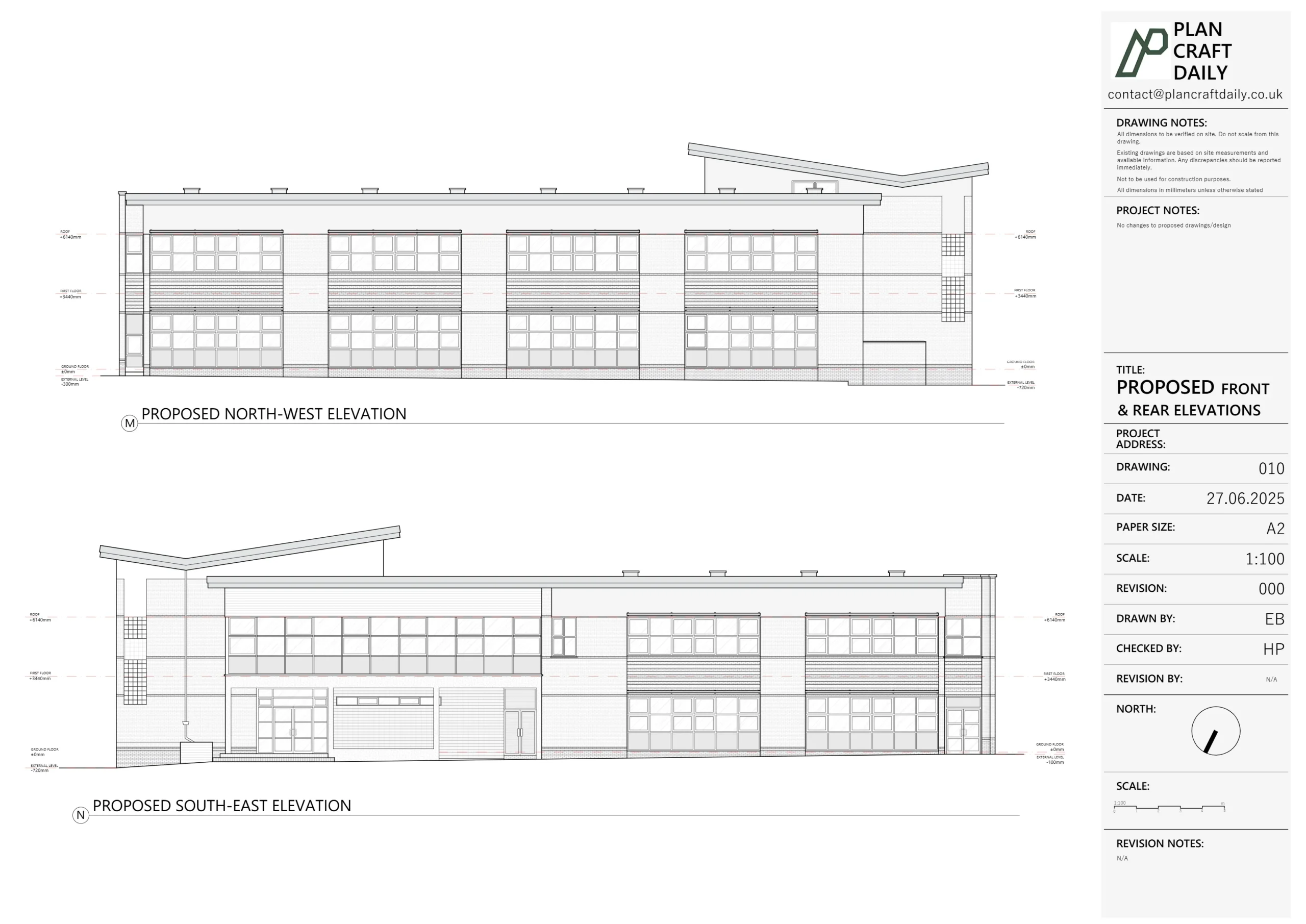
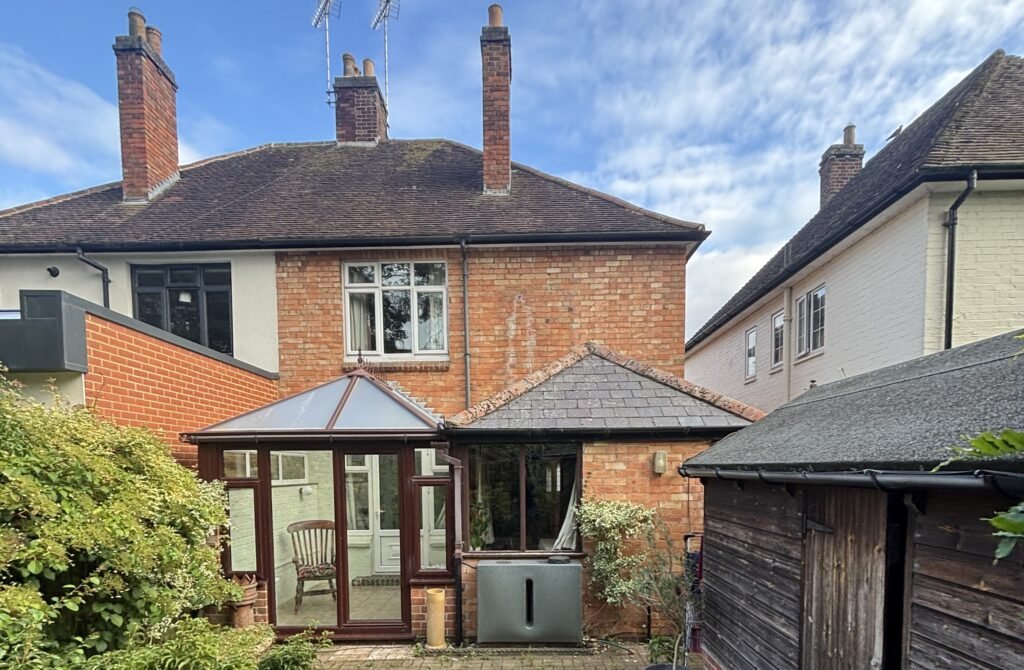
James, an architect based outside our usual London patch, reached out to us about a house on Hillcrest Avenue in Market Harborough.
He explained that a different project they’d been discussing with us was on hold, but he had a new property ready to go and wanted:
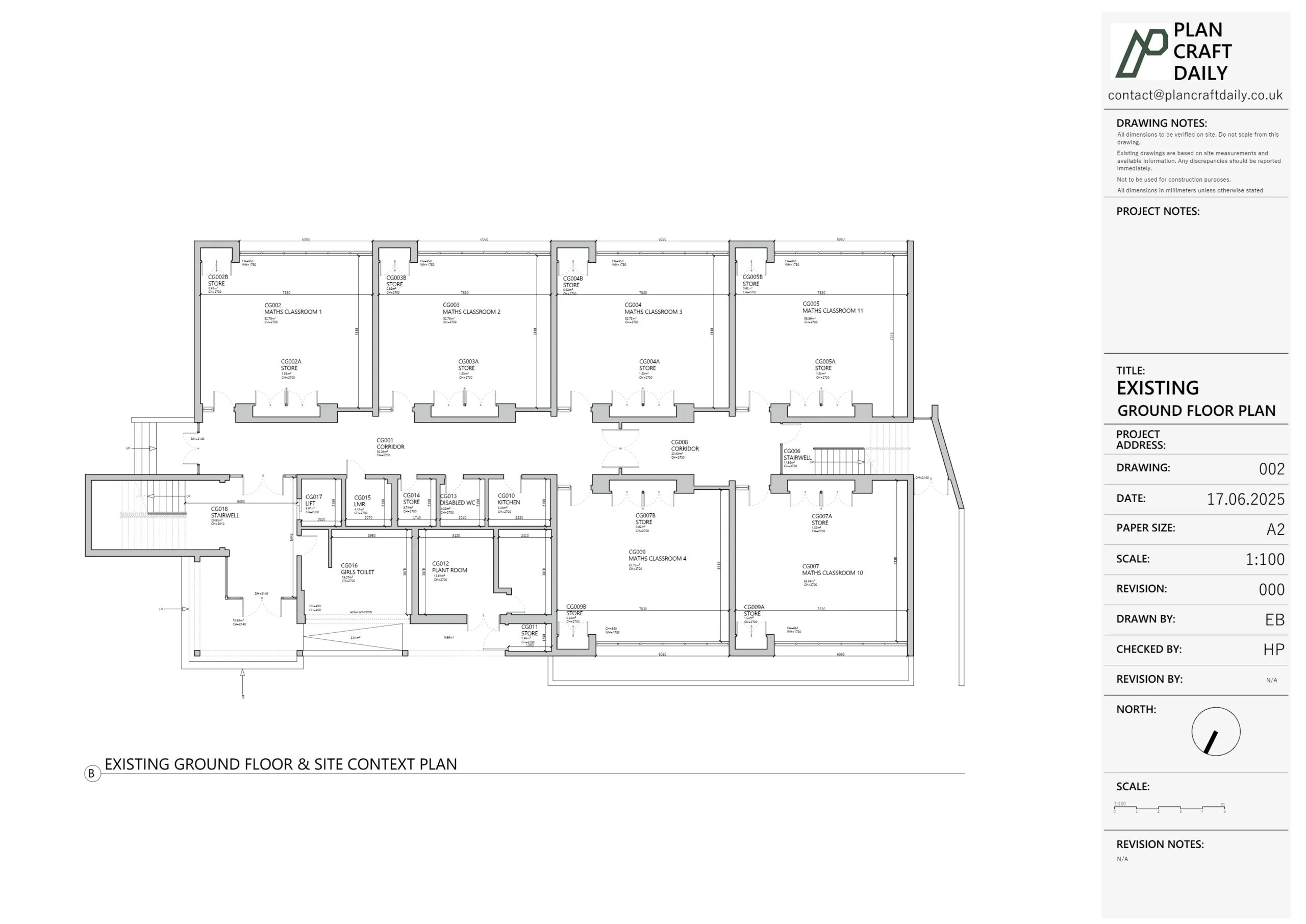
- Ground floor and first floor plans
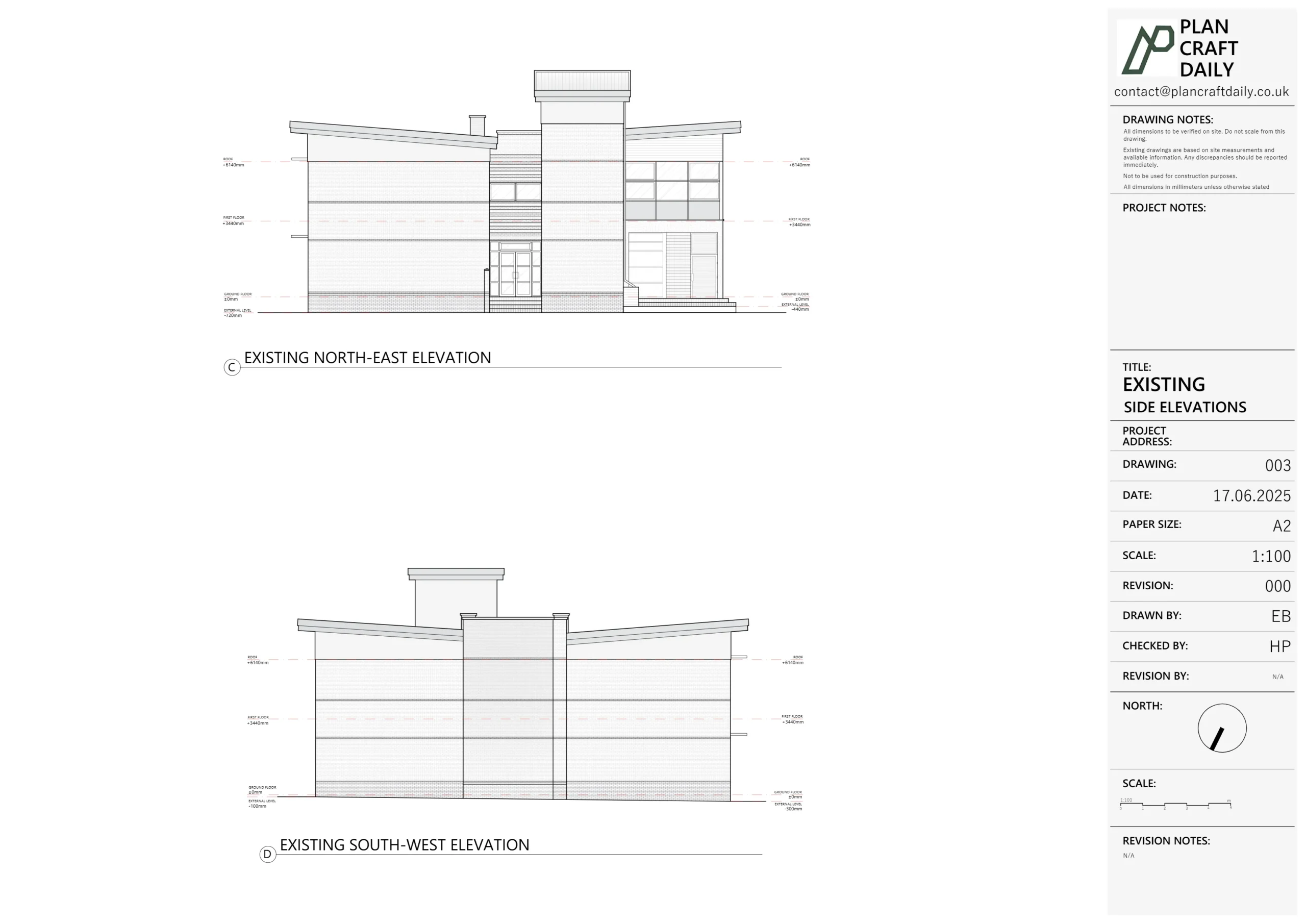
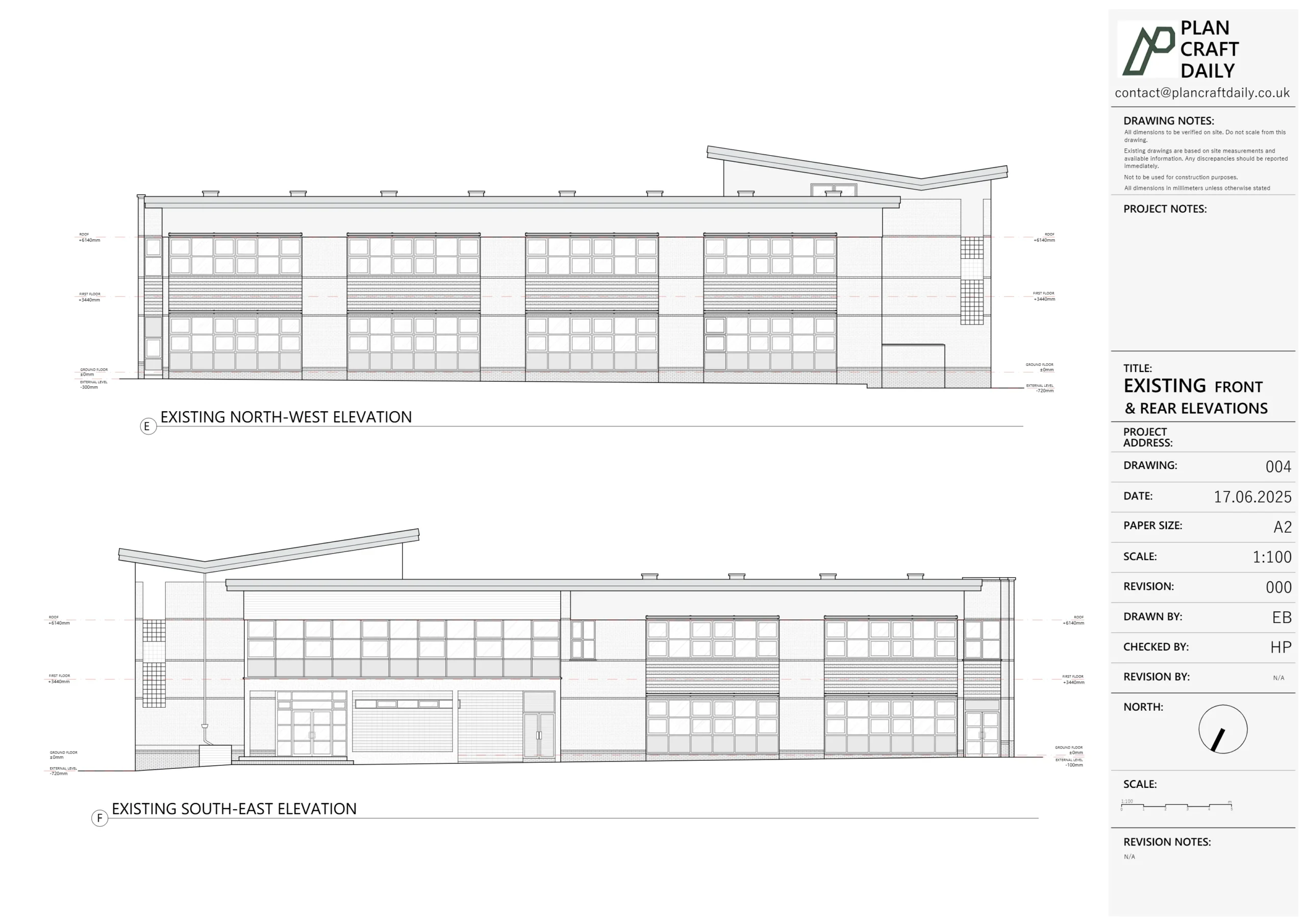
- All four external elevations
- An outline section
He was also very clear that this would be our first live project together, and that he wanted a reliable measured base he could design from without having to redraw anything.
Because the property is some distance from our core area, we flagged from the outset that there would be a slight travel-related uplift in the fee.
Scoping and quotation – balancing scope, distance and fee flexibility
We initially sent James a full quotation covering:
- Attendance for a one-off measured survey
- Production of:
- GF & FF existing plans
- All four external elevations
- A single outline section
- Delivery as PDF sheets plus DWG CAD once everything was signed off and paid
James came back with a very open, honest note: he was keen to get our first project together underway, but he hadn’t allowed quite that much for survey costs in his own fee to the client, and asked if there was any flexibility on the fee.
We reviewed our numbers, taking into account:
- Distance and travel time
- The compact nature of the house
- The importance of starting the relationship on the right footing
We then issued a revised quotation that trimmed what we reasonably could while still covering the travel overhead. James accepted and asked us to proceed.
Booking the survey – holding a slot while the client confirmed
With the fee agreed, the next step was finding a date.
We told James we were available to survey after Thursday 24 July, and proposed Tuesday 29 July with an arrival between 3:00 pm and 4:00 pm.
Because he still needed final confirmation from his own client, he asked:
- If we could hold the proposed survey date,
- While he waited to hear back and arrange payment.
We agreed to hold the slot for up to three days, and promptly issued the initial invoice with a note that payment would secure and activate the survey slot.
The sequence then went:
- James confirmed his client was happy with the date and time.
- He paid the deposit and emailed the payment reference.
- We confirmed:
- Payment received (with a formal receipt),
- Named the attending surveyor (Ali Uddin), and
- Reconfirmed the arrival window of 3–4 pm.
At that point the survey was fully locked in, and everyone knew who was coming and when.
On-site – measured survey for plans, elevations and section
On Tuesday 29 July, Ali attended the property and carried out a full measured survey focused on James’s brief.
What we captured on site
- Internal geometry for plans and section
- Room dimensions and wall thicknesses using a laser distance meter
- Door and window openings, stairs and levels relevant to the proposed section
- Structural indicators (chimneys, nibs, thicker walls) useful for James’s later design work
- External envelope for elevations
- All four sides of the house: overall widths, heights, and offsets
- Window and door positions, cills, heads and key façade proportions
- Roof forms, ridges, eaves and chimneys
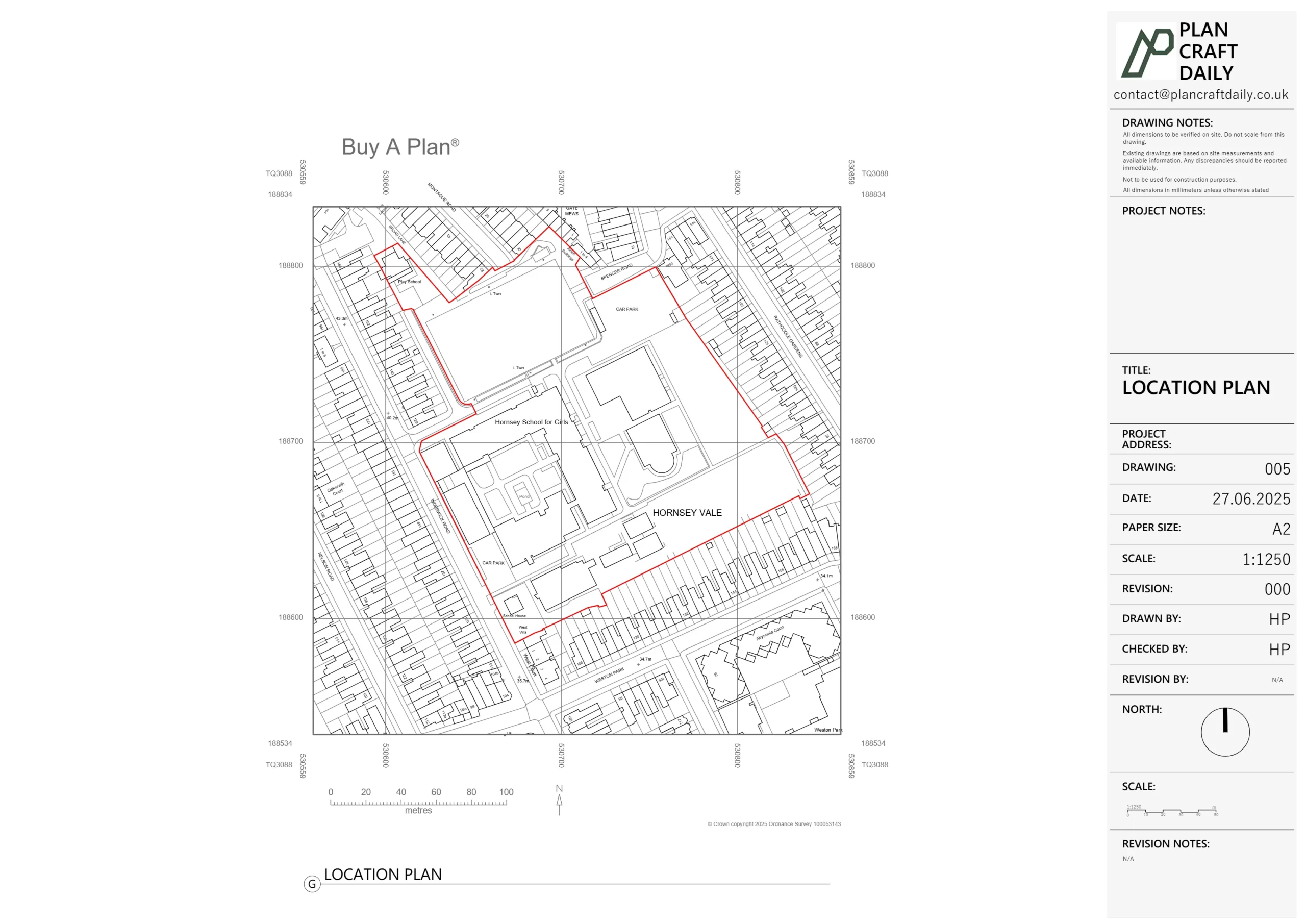
- Site context and reference photos
- External context to support elevation work
- A full photo set so James could revisit details remotely during design
All measurements and notes were logged back to the office against the project card, ready for conversion into CAD.
Turning the survey into drawings – draft pack for review
Once the survey data was in, our CAD team produced a draft drawing pack consisting of:
- Existing ground floor plan
- Existing first floor plan
- All four external elevations
- An outline section through the most relevant part of the house
We set the drawings up in a planning- and design-ready format, with clean line weights and consistent annotation so James could drop them straight into his own template if needed.
After running the set through our internal QA checks, we:
- Moved the card into Approval / Finalisation / Pending
- Issued a draft PDFs ZIP for James to review
- Attached the final invoice, making clear that once payment was settled we would release:
- Final CAD DWG,
- Final PDFs,
- And the associated photo set.
This draft went out on 12 August, well within a typical turnaround considering the travel distance.
Managing holiday timing and payment – staying flexible but clear
Shortly after receiving the draft and invoice, James let us know he was going on annual leave and wouldn’t have access to his payment systems until Thursday 21 September.
Rather than push for immediate payment, we replied to confirm:
- That waiting until his return was absolutely fine, and
- We would pick things back up once he was home.
After his holiday, we sent a polite follow-up asking for a quick update. James responded to say:
- Everything had now been settled,
- He apologised that it had kept slipping his mind, and
- Asked if we could release the DWG, as he was ready to start design work that week.
We:
- Confirmed receipt of the payment again, with an attached payment receipt;
- Provided access to:
- The final drawings and related files, and
- The DWG he needed to begin his design;
- Wished him a smooth start on the project, and invited him to reach out if he needed any further tweaks.
The card was then moved to Completed.
Final outcome – a solid measured base for a new ongoing relationship
By the end of the Hillcrest Avenue, Market Harborough project, James had:
- A fully trusted existing-conditions pack: GF & FF plans, all elevations and an outline section
- Drawings delivered in both PDF and DWG so he could start design work immediately
- A clear record of quotation, booking, survey, draft, and final issue
- The reassurance that we could be flexible around holidays and payment timing without slowing him down once he was ready to begin
For us, this case study captures exactly how we like to handle first-time collaborations with regional architects:
- Transparent scoping and pricing, even with travel overheads
- Pragmatic flexibility when a client’s holiday or internal process delays payment
- And, ultimately, a clean, accurate measured survey that becomes the backbone of their planning and design work.
Project Details
| Service Type | Measured Building Survey, Existing Floor Plans, All External Elevations & Outline Section |
| Time Taken | 1 week |
| Location | Hillcrest Avenue, Market Harborough (Leicestershire) |